|
| Cesare Borgia Le Duc Valentin |
(1475-1507)
Duc de Valentinois
1498-1507
Italian aristocrat, cardinal & politician.
Duca di Romagna, 1501-1403
Principe di Andria & Venafri (Venafra)
Conte di Dyois
Signore di Piombino
Signore di Camerino
Signore di Urbino
Gonfaloniere & Captain-General of the Holy Roman Church 1500-03
Commander of Papal Army 1496
Bishop of Pamplona 1491
Archbishop of Valencia 1492
Cardinal 1493-98.
Son of: Pope Alexander VI & Vannozza dei Cattanei.
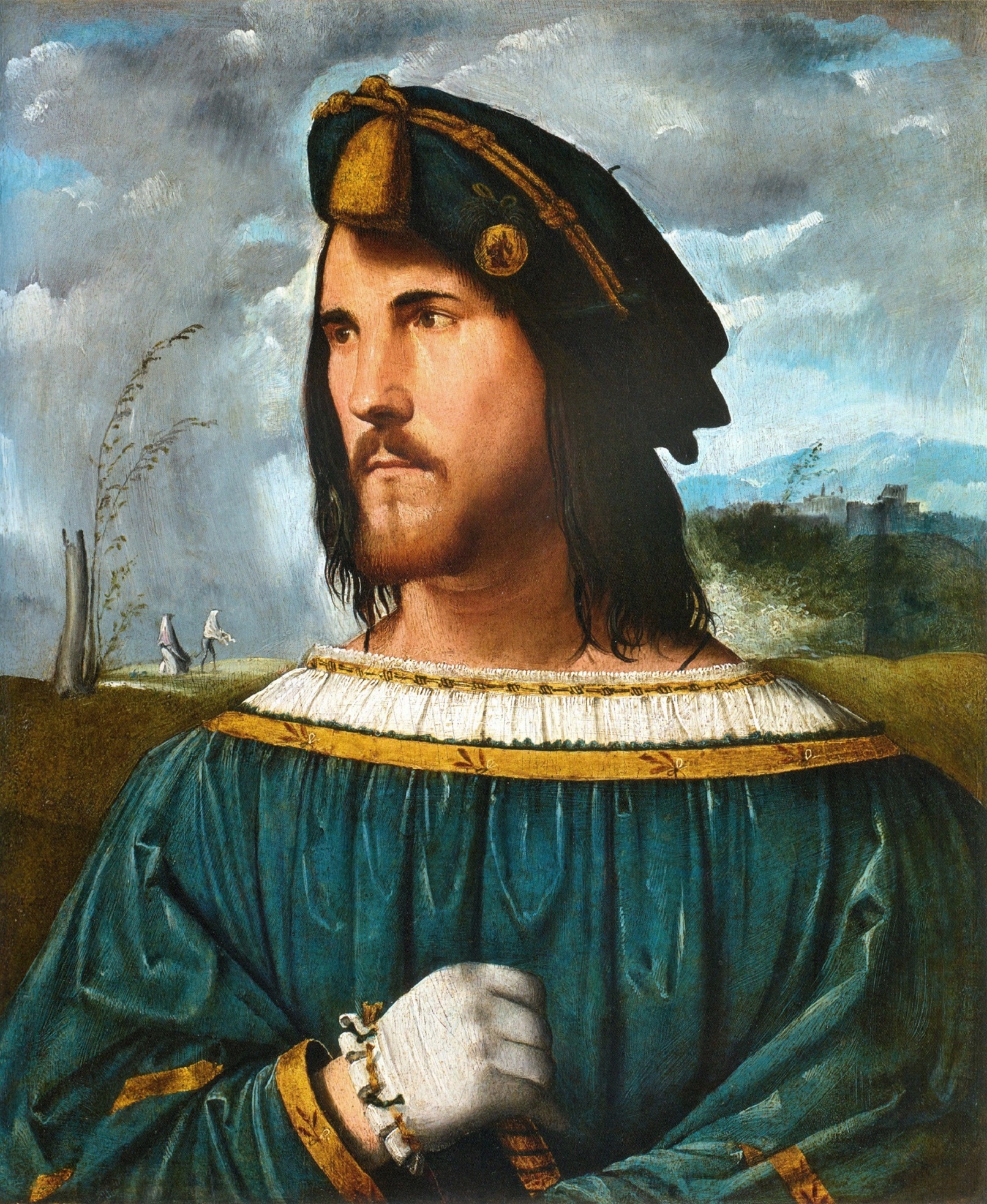 |
| Cesare Borgia by Altobello Melone, 1500-24 @Accademia Carrara |
 |
| Wedding of Cesare Borgia & Charlotte d'Albret |
Husband of:
(1480-1514)
Dame de Chalus.
mar 1499
Daughter of
Alain I d'Albret
& Francoise de Chatillon-Limoges.
The handsomest man of his day: "Cesare grew up to be the handsomest man of his day: at twenty-five the venetian envoy Polo Capello, who by then had reason both to hate and to fear him, wrote '[he] is physically most beautiful, . . . tall and well-made'. The Mantuan envoy Boccaccio, who visited him in his palace in the Borgo, the newly built quarter next to the Varican, in March 1493 described him aged seventeen to the Duke of Ferrara: 'He possesses marked genius and a charming personality. He has the manners of a son of a great prince: above all he is lively and merry and fond of society. . .'. . . ." (Lucrezia Borgia: Life, Love and Death in Renaissance Italy: n.p.)
"The handsomest man of his age: Cesare was twenty-two years of age at the time; tall, of an athletic slenderness, and exceedingly graceful in his movements, he was acknowledged to be the handsomest man of his age. His face was long and pale, his brow lofty, his nose delicately aquiline. He had long auburn hair, and his hazel eyes, large, quick in their movements, and singularly searching in their glance, were alive with the genius of the soul behind them. He inherited from his father the stupendous health and vigour for which Alexander had been remarkable in his youth, and was remarkable still in his old age. The chase had ever been Cesare’s favourite pastime, and the wild boar his predilect quarry; and in the pursuit of it he had made good use of his exceptional physical endowments, cultivating them until—like his father before him—he was equal to the endurance of almost any degree of fatigue." (The Life of Cesare Borgia)
Known for the beauty of his person, his clothes and his women: "Cesare Borgia (1475-1517) was the most brilliant, ambitious and forceful of the illegitimate children of Cardinal Rodrigo Borgia, who became pope as Alexander VI in 1492. Ten years later, in his mid-twenties, Cesare was known for the beauty of his person, his clothes and his women. He was also captain-general of the papal army and busy, with French help, in campaigns north of Rome to re-establish papal authority in Central Italy and carve out a principality as a permanent Borgia family power base. Adopting the motto Aut Caesar, aut nihil (‘Either Caesar or nothing’), in 1499 he took the cities of Imola and Forli, in 1500-01 Rimini, Pesaro and Faenza. In June 1502 Urbino surrendered, its previous master and faithful ally of Cesare, Guidobaldo da Montefeltro, forced to flee in the night with nothing but the clothes on his back." (History Today)
Cesare according to Giovio: The same extremes of reprobation and flattery which alternate in notices of the Duke Valentino puzzle us as to his personal appearance. Giovio, the ardent collector of historical portraits, while describing those which he had brought together, thus comments upon that of Borgia:—"He is said to come of a plague-stricken stock and of corrupted blood; for a livid rush overspread his face, which was full of pimples shedding matter. His eyes, too, were deeply sunk, and their fierce snake-like glance seemed to flash fire, so that even his friends and comrades could not bear to look upon them; yet, while flirting with the ladies, he had a wonderful knack of playing the agreeable.". . . ." (Memoirs of the Dukes of Urbino, Volume II)
Cesare according to Venetian envoy Capello: The pen which inscribed these sentences was evidently charged with even more than its wonted gall; but, after every allowance, they cannot well be reconciled with a report of the Venetian envoy Capello, dated in 1500, and bearing that 'the Pope loves and greatly fears his son the Duke, who is aged twenty-seven years; his head is most beautiful; he is tall and well made, and handsomer than King Ferdinand.'" (Memoirs of the Dukes of Urbino, Volume II)
Cesare's character: "Brave, daring and determined, he was insatiably power-hungry and entirely ruthless. Murder, bribery and deceit were all in the day’s work to him and his pleasures were women, hunting and fashionable clothes. He was considered the handsomest man in Italy, there were inevitably rumours of incest with his sister Lucrezia and he had syphilis from his early twenties." (History Today)
Cesare's ambition: "Indeed, Cesare had inherited none of that streak of piety which ran through his family. Alexander was a devotee of the Virgin Mary while Lucrezia developed a deep sense of religion over the years. Cesare's great-nephew, grandson of his worthless younger brother Juan, even became a saint. But there is little to suggest that Cesare cared anything for God or religion. As a man of the Renaissance, he believed in an egocentric world, taking as his role model his namesake, Caesar. Following the Renaissance concept of the ancient world he believed that the ultimate aim of a man's life was not heaven but fame and power on this earth, a goal to be achieved by his own individual exercise of skill and valour -- 'virtu' -- to conquer the unpredictable force of fortune -- 'fortuna' -- which ruled the world. Indeed everything about Cesare pointed to a career other than the one chosen for him. He was a brilliant student -- even the hostile historian Paolo Giovio admitted that at the University of Pisa, which he had attended after the University of Perugia, 'he had gained such profit [from his studies] that, with ardent mind, he discussed learnedly the questions put to him in both canon and civil law'. And in a world which valued courage in war and physical prowess in the exercise of arms, he excelled in strength and competitiveness. He shared his father's passion for hunting, for horses and hunting dogs and he learned bullfighting from the Spaniards of his own and his father's households. He had everything with which to succeed, backed, all-importantly, by his father's powerful position; it all depended upon his father's life and that, in the nature of things, could not give him unlimited time. Convinced, as he once said, that he would die young, he became driven, devious, dissembling, ruthlessly crushing everyone who stood in his way. As his career progressed, the legend of the Borgia monster was born." (Lucrezia Borgia: n.p.)
"The handsomest man of his age: Cesare was twenty-two years of age at the time; tall, of an athletic slenderness, and exceedingly graceful in his movements, he was acknowledged to be the handsomest man of his age. His face was long and pale, his brow lofty, his nose delicately aquiline. He had long auburn hair, and his hazel eyes, large, quick in their movements, and singularly searching in their glance, were alive with the genius of the soul behind them. He inherited from his father the stupendous health and vigour for which Alexander had been remarkable in his youth, and was remarkable still in his old age. The chase had ever been Cesare’s favourite pastime, and the wild boar his predilect quarry; and in the pursuit of it he had made good use of his exceptional physical endowments, cultivating them until—like his father before him—he was equal to the endurance of almost any degree of fatigue." (The Life of Cesare Borgia)
Known for the beauty of his person, his clothes and his women: "Cesare Borgia (1475-1517) was the most brilliant, ambitious and forceful of the illegitimate children of Cardinal Rodrigo Borgia, who became pope as Alexander VI in 1492. Ten years later, in his mid-twenties, Cesare was known for the beauty of his person, his clothes and his women. He was also captain-general of the papal army and busy, with French help, in campaigns north of Rome to re-establish papal authority in Central Italy and carve out a principality as a permanent Borgia family power base. Adopting the motto Aut Caesar, aut nihil (‘Either Caesar or nothing’), in 1499 he took the cities of Imola and Forli, in 1500-01 Rimini, Pesaro and Faenza. In June 1502 Urbino surrendered, its previous master and faithful ally of Cesare, Guidobaldo da Montefeltro, forced to flee in the night with nothing but the clothes on his back." (History Today)
Cesare according to Giovio: The same extremes of reprobation and flattery which alternate in notices of the Duke Valentino puzzle us as to his personal appearance. Giovio, the ardent collector of historical portraits, while describing those which he had brought together, thus comments upon that of Borgia:—"He is said to come of a plague-stricken stock and of corrupted blood; for a livid rush overspread his face, which was full of pimples shedding matter. His eyes, too, were deeply sunk, and their fierce snake-like glance seemed to flash fire, so that even his friends and comrades could not bear to look upon them; yet, while flirting with the ladies, he had a wonderful knack of playing the agreeable.". . . ." (Memoirs of the Dukes of Urbino, Volume II)
Cesare according to Venetian envoy Capello: The pen which inscribed these sentences was evidently charged with even more than its wonted gall; but, after every allowance, they cannot well be reconciled with a report of the Venetian envoy Capello, dated in 1500, and bearing that 'the Pope loves and greatly fears his son the Duke, who is aged twenty-seven years; his head is most beautiful; he is tall and well made, and handsomer than King Ferdinand.'" (Memoirs of the Dukes of Urbino, Volume II)
Cesare's character: "Brave, daring and determined, he was insatiably power-hungry and entirely ruthless. Murder, bribery and deceit were all in the day’s work to him and his pleasures were women, hunting and fashionable clothes. He was considered the handsomest man in Italy, there were inevitably rumours of incest with his sister Lucrezia and he had syphilis from his early twenties." (History Today)
Cesare's ambition: "Indeed, Cesare had inherited none of that streak of piety which ran through his family. Alexander was a devotee of the Virgin Mary while Lucrezia developed a deep sense of religion over the years. Cesare's great-nephew, grandson of his worthless younger brother Juan, even became a saint. But there is little to suggest that Cesare cared anything for God or religion. As a man of the Renaissance, he believed in an egocentric world, taking as his role model his namesake, Caesar. Following the Renaissance concept of the ancient world he believed that the ultimate aim of a man's life was not heaven but fame and power on this earth, a goal to be achieved by his own individual exercise of skill and valour -- 'virtu' -- to conquer the unpredictable force of fortune -- 'fortuna' -- which ruled the world. Indeed everything about Cesare pointed to a career other than the one chosen for him. He was a brilliant student -- even the hostile historian Paolo Giovio admitted that at the University of Pisa, which he had attended after the University of Perugia, 'he had gained such profit [from his studies] that, with ardent mind, he discussed learnedly the questions put to him in both canon and civil law'. And in a world which valued courage in war and physical prowess in the exercise of arms, he excelled in strength and competitiveness. He shared his father's passion for hunting, for horses and hunting dogs and he learned bullfighting from the Spaniards of his own and his father's households. He had everything with which to succeed, backed, all-importantly, by his father's powerful position; it all depended upon his father's life and that, in the nature of things, could not give him unlimited time. Convinced, as he once said, that he would die young, he became driven, devious, dissembling, ruthlessly crushing everyone who stood in his way. As his career progressed, the legend of the Borgia monster was born." (Lucrezia Borgia: n.p.)
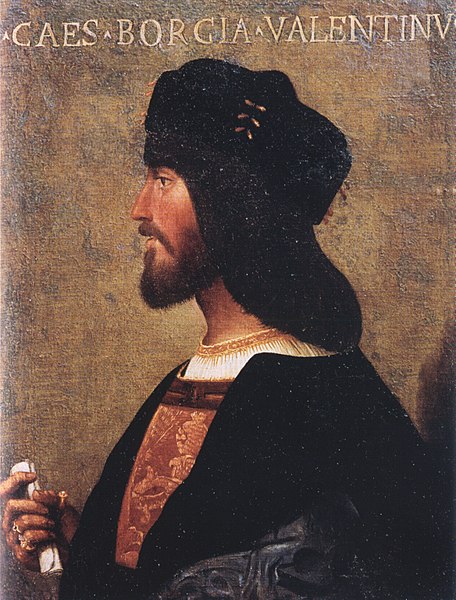 |
| Cesare Borgia |
His lovers were:
1) Dorotea Malatesta.Natural daughter of:
Giovanbattista Caracciolo
(1450-1508)
a.k.a.
Giovanni Battista Caracciolo
Giambattista Caracciolo.
mar 1500
"Dorotea Malatesta was an illegitimate daughter of Roberto Malatesta, ruler of Rimini held in fief for the church. She was reportedly one of the most beautiful noblewomen in all of Italy, and was in residence at the court of Urbino. Dorotea was twenty-three at the time and was recently married by proxy to the Venetian infantry captain, Giovanni Battista (Giambattista) Caracciolo. In August of 1501 she was on her way to join her husband in Venice when her entourage was unexpectedly attacked by an armed group, "all Spaniards." In her book Cesare Borgia, Sarah Bradford states, "at the request of Venice, Cesare had provided an armed escort for the lady, and the abduction had taken place after her company had crossed into Venetian territory...all Venice, the following morning after the news was received, displayed great grief [wrote Sanuto]. Thus this Duke Valentino, if he has had it done, has been ill-advised" (Bradford, pp. 142-3)." (Wikifoundry)
" . . . Dorotea, the twenty-three-year-old natural daughter of Roberto Malatesta of Rimini, was the wife of Giambattista Caracciolo, a Neapolitan nobleman serving as captain of infantry in the Venetian army, whom she had met at the court of Urbino where she had been brought up as a a protegee of the Duchess Elisabetta. The marriage had been celebrated by proxy at Urbino, and at the time of the kidnapping Dorotea had been travelling under Venetian protection to join her husband, who was commanding the garrison of Gradisca against the Turks. At the request of Venice, Cesare had provided an armed escort for the lady, and the abduction had taken place just after her company had crossed into Venetian territory." (Cesare Borgia: n.p.)
"Saddled as he may have been with his newfound responsibilities as a ruler in his own right, Cesare was as always the adventurer and the outlaw. When Dorotea Malatesta Caracciolo, 'one of the most beautiful and notable womn in Italy', traveled through Cesare's lands to meet her arranged husband, a Neapolitan nobleman in the employ of the Republic of Venice, on February of 1501, ten masked horsemen, all heavily armed, abducted her from her party. Seething, the Republic of Venice sent an ambassador to demand that Cesare, who was naturally the number one suspect, return her to her husband safely. Cesare greeted the ambassador with a casual arrogance but proclaimed his innocence, adding that 'he did not lack for women'. Instead, Cesare blamed one of his Spanish mercenaries, Diego Ramires, for the abduction, hinting all the while that Diego had secretly seduced her before she was ambushed, and promised to bring him to justice, which he never did, arguing that Ramires was completely missing in action. Upon hearing of the incident and Cesare's likely involvement, Alexander commented bluntly and publicly, 'If the Duke has done it, he has lost his mind.' In the meantime, Dorotea was not returned and may have stated with Cesare secretly, probably against her will." (Ruthless Rulers: the Real Lives of Europe's Most Infamous Tyrants: n.p.)
" . . . Dorotea, the twenty-three-year-old natural daughter of Roberto Malatesta of Rimini, was the wife of Giambattista Caracciolo, a Neapolitan nobleman serving as captain of infantry in the Venetian army, whom she had met at the court of Urbino where she had been brought up as a a protegee of the Duchess Elisabetta. The marriage had been celebrated by proxy at Urbino, and at the time of the kidnapping Dorotea had been travelling under Venetian protection to join her husband, who was commanding the garrison of Gradisca against the Turks. At the request of Venice, Cesare had provided an armed escort for the lady, and the abduction had taken place just after her company had crossed into Venetian territory." (Cesare Borgia: n.p.)
"Saddled as he may have been with his newfound responsibilities as a ruler in his own right, Cesare was as always the adventurer and the outlaw. When Dorotea Malatesta Caracciolo, 'one of the most beautiful and notable womn in Italy', traveled through Cesare's lands to meet her arranged husband, a Neapolitan nobleman in the employ of the Republic of Venice, on February of 1501, ten masked horsemen, all heavily armed, abducted her from her party. Seething, the Republic of Venice sent an ambassador to demand that Cesare, who was naturally the number one suspect, return her to her husband safely. Cesare greeted the ambassador with a casual arrogance but proclaimed his innocence, adding that 'he did not lack for women'. Instead, Cesare blamed one of his Spanish mercenaries, Diego Ramires, for the abduction, hinting all the while that Diego had secretly seduced her before she was ambushed, and promised to bring him to justice, which he never did, arguing that Ramires was completely missing in action. Upon hearing of the incident and Cesare's likely involvement, Alexander commented bluntly and publicly, 'If the Duke has done it, he has lost his mind.' In the meantime, Dorotea was not returned and may have stated with Cesare secretly, probably against her will." (Ruthless Rulers: the Real Lives of Europe's Most Infamous Tyrants: n.p.)
2) Drusilla.
Lady-in-waiting to sister Lucrezia.
Natural offspring:
1. Girolamo Borgia.
married
a. Isabella Pizzabernari
b. Isabella
Contessa di Carpi.
married
a. Isabella Pizzabernari
b. Isabella
Contessa di Carpi.
2. Camilla Borgia.
(d.1573)
Abbess of Sand Bernardino, Ferrara
(d.1573)
Abbess of Sand Bernardino, Ferrara
3) Fiammetta de' Michelis.
Florentine courtesan.
Lover in 1500.
Florentine courtesan.
Lover in 1500.
"Meanwhile, Cesare was beginning to enjoy his enforced rest from the battlefield; and while his wife Charlotte d'Albret, who had given birth to his daughter, remained in France, Cesare spent much of his time with his mistress, an extremely pretty and entertaining young woman. Fiammetta de' Michelis, whose accomplishments and complaisance as a cortigiana had enabled her to buy three houses in Rome as well as a country house outside the city walls. Cultivated as well as desirable, she spoke Latin, knew pages of Ovid and Petrarch by heart, sang well, and played the lyre; her handsome lover was often to be seen on his way to and from her house near the Piazza Navona." (The Borgias and Their Enemies, 1431-1519: 159)
" . . . As for Cesare himself, it was not in his nature to pine for any woman; the most famously beautiful courtesan in Rome, a Florentine named Fiammetta, had by this time become his principal mistress. . . ." (The Borgias: The Hidden History: 303)
"Indeed Cesare, once again confident in himself and his future, seemed determined to enjoy life to the full in this summer of 1500. He had a beautiful mistress, a Florentine courtesan name Fiammetta de' Michelis, who owned three houses in the city, including one on the piazza named after her near the Piazza Navona, and a country villa, or vigna, outside the Porta Viridaria. Fiammetta was typical of the rich courtesans of her day, called corgiane honeste -- 'honest courtesans' -- to distinguish them from the poor prostitutes called cortigiane delle candelle, since they often worked out of candle merchants' ships. The poor whores ;of the candles' ended their lives begging for alms on church steps as soon as they lost their looks, and died as paupers in the Hospital of the Consolazione (Cesare's one charitable endowment). The lives of the fashionable courtesans were very different. . . ." (Cesare Borgia: n.p.)
" . . . As for Cesare himself, it was not in his nature to pine for any woman; the most famously beautiful courtesan in Rome, a Florentine named Fiammetta, had by this time become his principal mistress. . . ." (The Borgias: The Hidden History: 303)
"Indeed Cesare, once again confident in himself and his future, seemed determined to enjoy life to the full in this summer of 1500. He had a beautiful mistress, a Florentine courtesan name Fiammetta de' Michelis, who owned three houses in the city, including one on the piazza named after her near the Piazza Navona, and a country villa, or vigna, outside the Porta Viridaria. Fiammetta was typical of the rich courtesans of her day, called corgiane honeste -- 'honest courtesans' -- to distinguish them from the poor prostitutes called cortigiane delle candelle, since they often worked out of candle merchants' ships. The poor whores ;of the candles' ended their lives begging for alms on church steps as soon as they lost their looks, and died as paupers in the Hospital of the Consolazione (Cesare's one charitable endowment). The lives of the fashionable courtesans were very different. . . ." (Cesare Borgia: n.p.)
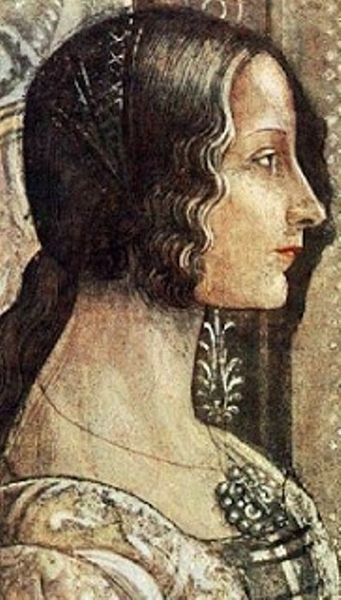 |
| Sancha de Aragon |
4) Sancha de Aragon.
(1478-1506)
Princesa di Squillace
Contessa di Coriata.
a.k.a.
Sancia de Aragon.
Daughter of:
Sancia's other lovers were:
1. Pope Alexander VI
4. Giovanni Borgia
2nd Duque de Gandia
3. Prospero Colonna.
(1478-1506)
Princesa di Squillace
Contessa di Coriata.
a.k.a.
Sancia de Aragon.
Daughter of:
Alfonso II de Napoli
& Trogia Gazzela.
 |
| Jofre Borgia & Sancia de Aragon, 1510 |
1. Pope Alexander VI
4. Giovanni Borgia
2nd Duque de Gandia
3. Prospero Colonna.
"The arrival of Jofre and Sancia from Calabria in May contributed much to the gaiety, and to the scandal, of the papal court. Their entry into the city was organized by Alexander and Cesare with all the showmanship of which they were past masters. . . It was Cesare's first sight of his sister-in-law. The atmosphere of sexuality surrounding Sancia, and indeed the Borgia court, comes our clearly in this description of her arrival by the Mantuan ambassador Gian Carlo Scalona: 'In truth she did not appear as she had been made to be. Indeed the lady of Pesaro [Lucrezia' surpassed her. However that may be, by her gestures and aspect the sheep will put herself easily at the disposal of the wolf. She has also some ladies of hers who are in no way inferior to their mistress, thus they say publicly it will be a fine flock . . . She is more than twenty-two years old, naturally dark, with glancing eyes, an aquiline nose and very well made up, and will in my opinion not give the lie to my predictions. . . .'" (Cesare Borgia: n.p.)

Wife of:
" . . . Setting Lucrezia aside, however, we find at this period at the Vatican, not a sister of Caesar and Gandia, but a sister-in-law, Donna Sancha of Aragon, the wife of Don Gioffre, Prince of Squillace, daughter of the brother of the king of Naples, and sister of Alfonso de Bisceglie, afterwards the second husband of Lucrezia. The shameless conduct of this princess is declared by history. Sancha's behavior shocked Alexander himself, who banished her, and it is difficult to reject the testimony of the ambassador of Ferrara, and that of the master of the ceremonies to Alexander VI, both of whom represent her having shared her favors between her two brothers-in-law at the same time." (The Living Age, Volume 176: 71)
(1481-1500)
son of
Pope Alexander VI.
mar 1494
"Scalona thought little of Jofre, whom he described as 'dark in complexion and otherwise lascivious-looking, with long hair with a reddish tinge . . . and he is fourteen or fifteen years of age'. . . ." (Cesare Borgia: n.p.)
" . . . Sancia, brought up in the sensuous atmosphere of the Neapolitan court, could not have been expected to be content with a boy husband several years young than herself, and she soon found a man more to her taste in his elder brother. As Sanuto reported a year later: 'Jofre, younger than his wife, had not consummated the marriage; he is not a man and, I understand, for many months past the lady Sancia has given herself to the Cardinal of Valencia.' If, as some writers have alleged, Lucrezia's love for Cesare was incestuous, she seems to have displayed no jealousy whatsoever towards his mistress Sancia, and the two girls, whose vivacity and carelessness for outward appearances made them ideal companions, soon became close friends. . . ." (Cesare Borgia: n.p.)
"Sancha of Aragon, princess of Naples and illegitimate daughter to the coldhearted duke of Calabria (briefly king of Naples), is used to establish ties to the feared and influential House of Borgia when her father betroths her to the younger scion, Jofre. War with the French briefly returned her to Naples, but rumors of her beauty reached her lecherous father-in-law, Pope Alexander VI, who recalls her and Gioffre Borgia to opulent Rome. There, she avoids the pope's advances—and her jealous sister-in-law Lucrezia's animosity—but falls into a steamy affair with her brother-in-law, Cesare Borgia. Cesare becomes furious when she refuses to leave Jofre, and he sets out on a warpath that includes her brother Alfonso, who has also married into the Borgia clan—to Lucrezia." (Wikipedia)
"Thereupon public opinion looked about for some other likely person upon whom to fasten its indictment, and lighted upon Guiffredo Borgia, Gandia's youngest brother. Here, again, a motive was not wanting. Already has mention been made of the wanton ways of Guiddredo's Neapolitan wife, Dona Sancia. That she was prodigal of her favours there is no lack of evidence, and it appears that, amongst those she admitted to them, was the dead duke. Jealousy, then, it was alleged, was the spur that had driven Guiffredo to the deed, and that the rumour of this must have been insistent is clear when we find the Pope publicly exonerating his youngest son." (The Life of Cesare Borgia: 124)
" . . . Sancia, brought up in the sensuous atmosphere of the Neapolitan court, could not have been expected to be content with a boy husband several years young than herself, and she soon found a man more to her taste in his elder brother. As Sanuto reported a year later: 'Jofre, younger than his wife, had not consummated the marriage; he is not a man and, I understand, for many months past the lady Sancia has given herself to the Cardinal of Valencia.' If, as some writers have alleged, Lucrezia's love for Cesare was incestuous, she seems to have displayed no jealousy whatsoever towards his mistress Sancia, and the two girls, whose vivacity and carelessness for outward appearances made them ideal companions, soon became close friends. . . ." (Cesare Borgia: n.p.)
"Sancha of Aragon, princess of Naples and illegitimate daughter to the coldhearted duke of Calabria (briefly king of Naples), is used to establish ties to the feared and influential House of Borgia when her father betroths her to the younger scion, Jofre. War with the French briefly returned her to Naples, but rumors of her beauty reached her lecherous father-in-law, Pope Alexander VI, who recalls her and Gioffre Borgia to opulent Rome. There, she avoids the pope's advances—and her jealous sister-in-law Lucrezia's animosity—but falls into a steamy affair with her brother-in-law, Cesare Borgia. Cesare becomes furious when she refuses to leave Jofre, and he sets out on a warpath that includes her brother Alfonso, who has also married into the Borgia clan—to Lucrezia." (Wikipedia)
"Thereupon public opinion looked about for some other likely person upon whom to fasten its indictment, and lighted upon Guiffredo Borgia, Gandia's youngest brother. Here, again, a motive was not wanting. Already has mention been made of the wanton ways of Guiddredo's Neapolitan wife, Dona Sancia. That she was prodigal of her favours there is no lack of evidence, and it appears that, amongst those she admitted to them, was the dead duke. Jealousy, then, it was alleged, was the spur that had driven Guiffredo to the deed, and that the rumour of this must have been insistent is clear when we find the Pope publicly exonerating his youngest son." (The Life of Cesare Borgia: 124)
"Cesare was also widely suspected of having ordered the murder of another of Ferdinand's relatives, Alfonso of Bisceglie, the illegitimate son of the king of Naples. The unfortunate Alfonso had been married to Cesare's sister, the beautiful Lucrezia. To complicate matters further, the murdered young man was the brother of Cesare's mistress Sancha. Another untidy angle." (Isabella: The Warrior Queen: n.p.)
References to Cesare Borgia.
Borgias Never Forgive @Wordpress
The Life of Cesare Borgia @archive.org
The Life of Cesare Borgia @ Google Books.
The Renaissance @archive.org
Cesare Borgia Gallery.
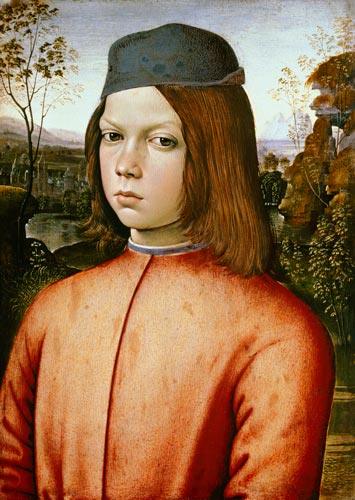 |
| Cesare Borgia as a Child |
 |
Cesare Borgia
by Altobello Melone, 1500-24
@Accademia Carrara
|
 | ||
| Cesare Borgia by Anonymous @ Palazzo Venezia, Rome |
 |
| Cesare Borgia Duc de Valentinois by Anonymous French Painter |
 |
| Cesare Borgia by Dosso Dossi, 1518/20 @ Louvre Museum |
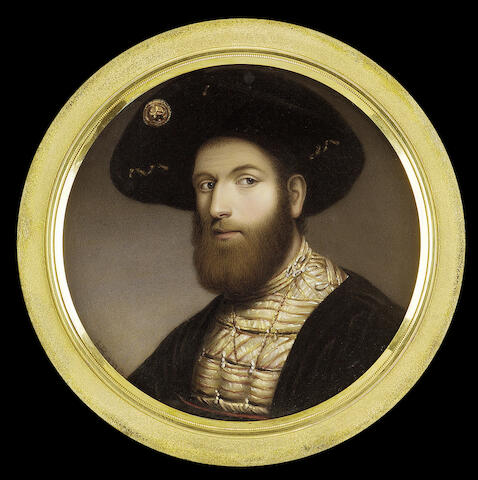 |
| Cesare Borgia by Henry Bone R.A. @Bonhams |
 |
| Cesare Borgia |
 |
| Profile of Cesare Borgia by Bartolomeo Veneto |
 |
| Cesare Borgia by Continental School, 19th c. |
 |
| Cesare Borgia |
 |
| Cesare Boria Duke of Valentinois by Italian School, 15th c. |
 |
| Cesare Bordia as Cardinal, 1498 |
 |
| Cesare Borgia |
 |
| Cesare Borgia |
 |
| Cesare Borgia @ New York Public Library |
 |
| Cesare Borgia |
 |
| Cesare Borgia by Paolo Giovio, 1577 |
 |
| Etching of Cardinal Cesare Borgia by C. Brixius, 1700/99 |
 |
| Study of Cesare Borgia by Leonardo da Vinci, 1503 |
 |
| Cesare Borgia |
 |
| Cesare Borgia |
 |
| Bust of Cesare Borgia Monument in Viana, Navarra |
 |
| Cesare Borgia |
 |
| Statue of Cesare Borgia in the courtyard of the ancient University of Gandia, Spain |
 |
| Cesare Borgia's statue with St. Francis Borgia behind |
 |
| Lucrezia & Cesare Borgia by Alfred W. Elmore, 1863 |
 |
| Detail of Virgin de los Caballeros Cesare Borgia shown stabbing Juan Borgia |
 |
| Cesare Borgia leaving the Vatican by Giuseppe-Lorenzo Gatteri |
 |
| Cesare Borgia, Cardinal Pedro Luis de Borgia, Machiavelli & Micheletto Corella |
Borgias Never Forgive @Wordpress
The Life of Cesare Borgia @archive.org
The Life of Cesare Borgia @ Google Books.
The Renaissance @archive.org


_-_Portret_van_maarschalk_hertog_Richelieu_-_Lissabon_Museu_Calouste_Gulbenkian_21-10-2010_13-34-54.jpg%2F447px-Jean-Marc_Nattier_(1685-1766)_-_Portret_van_maarschalk_hertog_Richelieu_-_Lissabon_Museu_Calouste_Gulbenkian_21-10-2010_13-34-54.jpg&container=blogger&gadget=a&rewriteMime=image%2F*)
_-_Portret_van_maarschalk_hertog_Richelieu_-_Lissabon_Museu_Calouste_Gulbenkian_21-10-2010_13-34-54.jpg/572px-Jean-Marc_Nattier_(1685-1766)_-_Portret_van_maarschalk_hertog_Richelieu_-_Lissabon_Museu_Calouste_Gulbenkian_21-10-2010_13-34-54.jpg)