DANDIES.
" . . . The count's charming manner, brilliant wit, and artistic faculty were accompanied by benevolent moral qualities, which endeared him to all his associates. His skill as a painter and sculptor was shown in numerous portraits and statuettes representing his friends, which were marked by great vigour and truthfulness, if wanting in the finish that can only be reached by persistent discipline." (Wikipedia)
" . . . From his earliest infancy, Alfred D'Orsay gave token of the remarkable physical and mental superiority which distinguished his manhood. As a child and boy, his remarkable comeliness, strength, and adroitness in all exercises, ready wit and intelligence, facility of acquiring knowledge, high spirit, the frankness of his nature, the chivalrous generosity of his disposition, made him a general favourite with young and old." (The Literary Life and Correspondence of the Countess of Blessington, Vol 1: 319)
His lovers were:
"Few men in his position have shown greater accomplishments. His literary compositions were lively and imaginative. His profile portraits of his friends (of which many have been published in lithography) are felicitous and characteristic, and his statuettes are not only graceful but possess greater originality of conception than is evinced by the majority of professional artists. . . ." (The Gentleman's Magazine: 309)

Alfred, Comte d'Orsay Gallery.
SOCIALITES.
POLITICIANS.
 |
| Alfred, Comte d'Orsay |
Alfred d'Orsay
(1801-1852)
(1801-1852)
French amateur artist, dandy,
man of fashion, sculptor, painter & writer.
The ideal of manly dignity and grace.
"'Count D'Orsay,' says Charles James Matthews, the famous comedian, who knew him well, 'was the beau-ideal of manly dignity and grace. He was the model of all that could be conceived of noble demeanour and youthful candour; handsome beyond all question; accomplished to the last degree; highly educated, and of great literary acquirements; with a gaiety of heart and cheerfulness of mind that spread happiness on all around him. His conversation was brilliant and engaging, as well as instructive. He was, moreover, the best fencer, dancer, swimmer, runner, dresser, the best shot, the best horseman, the best draughtsman, of his age.'" (Marguerite Power: The Gorgeous Lady Blessington)
D'Orsay's magnetic appeal: " . . . D'Orsay combined physical beauty, sparkling wit, the magnetic amour-propre of the dandy as well as a dangerous whiff of Napoleonic adventure and a pre-Revolutionary title, both bequeathed by his general father. It was a heady brew and society fell at his exquisitely-shod feet." (D'Orsay the Artist)
A dandy's 'few needs': " . . . My wants are few; a fine house, fine carriages, fine horses, a complete wardrobe, the best opera-box, the first cook, and pocket money -- that is all I require. . . ." (D'Orsay the Artist)
Nineteenth century's first modern man: "Count Alfred D'Orsay (1801-1852) was not only one of the early 19th century's most popular men, he was its first modern man - in attitude, behaviours and sexuality. French, but coming from a very mixed European aristocratic background, the result could easily have been aesthetic mishmash, but in fact contemporary accounts of his appearance and style highlight the opposite. . . ." (Mr. Porter)
A dandy's 'few needs': " . . . My wants are few; a fine house, fine carriages, fine horses, a complete wardrobe, the best opera-box, the first cook, and pocket money -- that is all I require. . . ." (D'Orsay the Artist)
Nineteenth century's first modern man: "Count Alfred D'Orsay (1801-1852) was not only one of the early 19th century's most popular men, he was its first modern man - in attitude, behaviours and sexuality. French, but coming from a very mixed European aristocratic background, the result could easily have been aesthetic mishmash, but in fact contemporary accounts of his appearance and style highlight the opposite. . . ." (Mr. Porter)
Physical appearance and personal character.
" . . . At over 6' tall - in a period when even aristocratic men were short - Count D'Orsay cut an impressive figure, and his face was frequently described as that of a Greek god. Not surprisingly, he was obsessed by his own appearance. After all, his looks and impressive figure were his calling card, the things that made him stand out memorably as a gift to the newly enlarged and emboldened popular press. . . Even the curmudgeonly philosopher Mr. Thomas Carlyle was not immune to Count D'Orsay's looks. He described him as 'a tall fellow of six feet three, built like a tower, with floods of dark auburn hair, with a beauty, with an adornment, unsurpassable on this planet.' . . . ." (Mr. Porter)
" . . . In his general intercourse with society Count D'Orsay was distinguished not merely by true politeness, but by great amiability. His was kind and charitable to his distressed countrymen, and one of the most assiduous supporters of Societe de Bienfaisance." (The Gentleman's Magazine: 309)
"At his first visit to England, he was pre-eminently handsome; and, as he dressed fashionably, was thoroughly accomplished, and gifted with superior intelligence, he became a favourite with both sexes. He had the reputation of being a lady-killer, which, however, every good-looking fellow acquires if his bonnes fortunes became known --- and his pure classic features, his accomplishments, and irreproachable get-up, were sure to make him the centre of attraction, whether in the Park or dining-room. He used to ride pretty well to hounds, and joined the hunting men at Melton; but his style was rather that of the riding-school than of the hunting-field. I do not know of anything remarkable achieved by him in his time." (Alfred D'Orsay, remembered by George C. Berkeley)
" . . . In his general intercourse with society Count D'Orsay was distinguished not merely by true politeness, but by great amiability. His was kind and charitable to his distressed countrymen, and one of the most assiduous supporters of Societe de Bienfaisance." (The Gentleman's Magazine: 309)
"At his first visit to England, he was pre-eminently handsome; and, as he dressed fashionably, was thoroughly accomplished, and gifted with superior intelligence, he became a favourite with both sexes. He had the reputation of being a lady-killer, which, however, every good-looking fellow acquires if his bonnes fortunes became known --- and his pure classic features, his accomplishments, and irreproachable get-up, were sure to make him the centre of attraction, whether in the Park or dining-room. He used to ride pretty well to hounds, and joined the hunting men at Melton; but his style was rather that of the riding-school than of the hunting-field. I do not know of anything remarkable achieved by him in his time." (Alfred D'Orsay, remembered by George C. Berkeley)
" . . . The count's charming manner, brilliant wit, and artistic faculty were accompanied by benevolent moral qualities, which endeared him to all his associates. His skill as a painter and sculptor was shown in numerous portraits and statuettes representing his friends, which were marked by great vigour and truthfulness, if wanting in the finish that can only be reached by persistent discipline." (Wikipedia)
His lovers were:
 |
| Charles John Gardiner Earl of Blessington |
" . . . (T)he touchstone of Blessington's sexuality is the extraordinary relationship which developed between him and Count Alfred d'Orsay (1798-1852), a penniless French adventurer whose birth was less noble than it sounded. They first met in London in August 1821, when d'Orsay was twenty-three. He was handsome, dandified, narcissistic and supremely self-confident, the very embodiment to ton and taste, and just the person to captivate the aimless and impressionable Blessington. D'Orsay's own sexuality remains an enigma. . . ." (The Pursuit of the Heiress: Aristocratic Marriage in Ireland 1740-1840:179)
" . . . It would seem that his friendship with the very rich Earl and Countess of Blessington, which made him an outstanding social figure who was to be taken seriously by London society, even though he was not English, was engineered by Lord Blessington - a man known for his attraction to good-looking young men. Both he and Lady Blessington scandalised and delighted London society by parading the young French aristocrat either together, not just in Britain but on a protracted grand tour of the continent. He was almost like a son - on the surface - but rumour says that Count D'Orsay's family had been very well rewarded financially for the privilege of having him in a Blessington menage a trois.
"A few months before his introduction to Lord Byron Alfred D'Orsay had made the acquaintance of the Blessingtons. He had previously entered the army of France, and was quartered at Valence on the Rhone. The reader of Lady Blessington's Idler in Italy will look in vain for any notice of her first casual rencontre with fascinating Lieutenant D'Orsay at Valence . . . The regimental mess happened to be established in the hotel where Lord Blessington alighted on his way to Italy, on the 15th Nov. 1822. and a chance acquaintanceship having ripened into intimacy, at his Lordship's invitation the Count joined them in their trip southwards. . . ." (The Gentleman's Magazine, Vol 38: 308)
" . . . It would seem that his friendship with the very rich Earl and Countess of Blessington, which made him an outstanding social figure who was to be taken seriously by London society, even though he was not English, was engineered by Lord Blessington - a man known for his attraction to good-looking young men. Both he and Lady Blessington scandalised and delighted London society by parading the young French aristocrat either together, not just in Britain but on a protracted grand tour of the continent. He was almost like a son - on the surface - but rumour says that Count D'Orsay's family had been very well rewarded financially for the privilege of having him in a Blessington menage a trois.
"A few months before his introduction to Lord Byron Alfred D'Orsay had made the acquaintance of the Blessingtons. He had previously entered the army of France, and was quartered at Valence on the Rhone. The reader of Lady Blessington's Idler in Italy will look in vain for any notice of her first casual rencontre with fascinating Lieutenant D'Orsay at Valence . . . The regimental mess happened to be established in the hotel where Lord Blessington alighted on his way to Italy, on the 15th Nov. 1822. and a chance acquaintanceship having ripened into intimacy, at his Lordship's invitation the Count joined them in their trip southwards. . . ." (The Gentleman's Magazine, Vol 38: 308)
 |
| Elizabeth Ann Haryett by Henriette Cappelaere @Musee du Second Empire Chateau de Compiegne |
Also known as:
Harriet Howard
Miss Howard.
"Lord Byron was so struck by Count D'Orsay that there are suggestions that the two might have had a brief affair when they met in Europe. . . ." (Mr. Porter)

Lover in 1822.
Also known as nee Marguerite Gardiner.
"Alfred Guillaume Gabriel, Comte d'Orsay (1801-1852): French-born aristocrat, known as 'the last of the Dandies.' In 1822 d'Orsay associated himself with Marguerite, Countess of Blessington (1789-1849). In 1827 he married the fifteen-year-old Harriet Gardiner, Lady Blessington's daughter by a previous marriage; by the time her husband died in 1829, he had separated and moved next door to the widow, staying with her for twenty years. The Countess ran a salon at Gore House, at which Liszt played." (Liszt & Short: 19)
Unconventional romantic encounters.
" . . . His unconventional romantic -- including a long affair with society maven Lady Blessington, and possibly her husband Lord Blessington who became his father-in-law when he married the Earl's teenage daughter from a previous marriage -- may have shocked (and confused) the city's more sensitive souls. . . ." (D'Orsay the Artist)
 |
| Albert Gaspard Grimod (1772-1843) Comte d'Orsay et general d'Empire by J.M.N. Fremy (gravuer), 1815 |
Comte d'Orsay's personal & family background: Alfred was the second son of Albert-Gaspard Grimaud, a Bonapartist general, and Eleonore de Franquemont, an illegitimate daughter of the Duke of Wurttemberg and Anne Franchi."
"His father was known as Beau D'Orsay, being one of the finest men in the Court of the First Napoleon --- and his mother, a very beautiful woman, was a natural daughter of the King of Wurttemberg. He inherited, therefore, extraordinary natural advanteages, and these he had improved by education until he had become apparently, a French Admiral Crichton." (Dandy's Me)
"Count d'Orsay was born in Paris in the year 1798, and was the son of General D'Orsay, who was considered one of the most handsome men in the armies of the empire. . . ." (The Gentleman's Magazine, Volume 38: 308)
"D'Orsay's ancestors were as much adventurers as aristocrats. He was the son of Albert comte d'Orsay, Napoleon's handsomest general, and Eleonore de Franquemont, the illegitimate daughter of the Duke of Wurttemberg and an Italian dancer. The d'Orsay title itself was scarcely ancient. It had come with the chateau bought some 40 years before by Alfred's great-grandfather, who had made a fortune as a tax-farmer. The loss of this money in the Revolution meant d'Orsay never had any of his own but he proved adept at living off that of others with incomparable grace." (The Dandy Peacock or Enigma?: n.p.)
Spouse & Children: He married, in 1827 (separated 1838), Lady Harriet Gardiner, 15 years old, and daughter of Lord Blessington by his previous wife.
"His father was known as Beau D'Orsay, being one of the finest men in the Court of the First Napoleon --- and his mother, a very beautiful woman, was a natural daughter of the King of Wurttemberg. He inherited, therefore, extraordinary natural advanteages, and these he had improved by education until he had become apparently, a French Admiral Crichton." (Dandy's Me)
"Count d'Orsay was born in Paris in the year 1798, and was the son of General D'Orsay, who was considered one of the most handsome men in the armies of the empire. . . ." (The Gentleman's Magazine, Volume 38: 308)
"D'Orsay's ancestors were as much adventurers as aristocrats. He was the son of Albert comte d'Orsay, Napoleon's handsomest general, and Eleonore de Franquemont, the illegitimate daughter of the Duke of Wurttemberg and an Italian dancer. The d'Orsay title itself was scarcely ancient. It had come with the chateau bought some 40 years before by Alfred's great-grandfather, who had made a fortune as a tax-farmer. The loss of this money in the Revolution meant d'Orsay never had any of his own but he proved adept at living off that of others with incomparable grace." (The Dandy Peacock or Enigma?: n.p.)
Spouse & Children: He married, in 1827 (separated 1838), Lady Harriet Gardiner, 15 years old, and daughter of Lord Blessington by his previous wife.
D'Orsay the Artist: "Alfred Guillaume Gabriel, Count D'Orsay was a French amateur artist, dandy, and man of fashion in the early- to mid-nineteenth century. In 1830, D'Orsay moved to London, where he worked as a sculptor and a painter, specialising in portraiture. In 1845, he painted a portrait of Wellington. His statuettes of Napoleon and Wellington were very popular, as were engravings of many of his portraits, including those of Queen Victoria, Lord Lyndhurst and Dwarkanath Tagore. More than 125 profile sketches of his contemporaries were published by Mitchell of Bond Street, including among them nearly all the artistic, literary and fashionable celebrities of the time" (National Portrait Gallery)
"Few men in his position have shown greater accomplishments. His literary compositions were lively and imaginative. His profile portraits of his friends (of which many have been published in lithography) are felicitous and characteristic, and his statuettes are not only graceful but possess greater originality of conception than is evinced by the majority of professional artists. . . ." (The Gentleman's Magazine: 309)
D'Orsay's Paintings
The D'Orsay Pumps: "Many shoes are described as d'orsay pumps, but what does that expression mean and where did the name come from? It generally refers to a pump style shoe in which the vamp is cut away on the sides, showing the arch and the side of the foot. The heels can be high or low, but usually it has a closed heel-back and toe. Some shoe manufacturers will even include a hidden elastic inside the heel back which will help the shoe stay on the foot, especially for women with narrow heels. It is widely thought that this shoe style is named after the French noble artist, painter and sculptor Count D'orsay (sic) in the 19th century. He was know for his charm and style in both fashion and art. At this time both men and women wore pump style shoes that often didn't fit and gaped on the sides. Being a style-setter and all around fashion dandy, he had the idea to cut out the sides of the shoes so that they would fit better." (What is a D'orsay Shoe?)
References.
 |
| Richard Nash |
(1674-1761).
British dandy & fashion leader
Physical appearance & tersonal qualities.
"In person Nash was large and awkward, with harsh, strong, regular features. Nevertheless, he was popular with women, and not unsuccessful as a gallant; for he dressed showily, had some wit, abundance of small talk, and was by no means encumbered with modesty. He used to say of himself, that he was, 'like Nestor, a man of three generations.' The Beau of his youth, he would observe, was stiff, solemn, and formal to a degree. . . The Beau of his manhood was just the reverse; being a pert, grinning, lively chatterbox. . . ready for any absurd, outre display of sentiment; and deeming it an exalted proof of gallantry to eat 'a pair of his idol's shoes tossed up in a fricassee.' The Beau of his old age was a still more extraordinary character of his whole secret in intrigue consisted in perfect indifference. . . ." (Dickens: 423)
His lovers were:
 |
| Fanny Murray |
1) Fanny Murray (1729-1778)
English courtesan, celebrity & fashion leader.
Lover in 1743-1744.
" . . . According to her memoir, she had become a mistress to Beau Nash by 1743, at the age of just fourteen, and soon moved to London, where she became a 'dress-lodger --- an indentured prostitute who had to work to pay for the expensive clothes that she wore to solicit customers. Once she had paid off her indenture, Fanny continued as a prostitute under her own employ, but remained in poverty." (Wikipedia)
" . . . As a newly debauched girl Fanny could have easily descended into street-walking, one of the lowest forms of prostitution but fortunately for her Richard "Beau" Nash took her to live with him in St John's Court. The year Fanny spent as Nash's mistress was transformative. In no time, Fanny oozed an intoxicating mix of sex and sophistication. She was not only a fitting companion for Nash but also for the legion of elite men who, very soon, would pay handsomely to enjoy her company in their leisured, unbuttoned hours." (Express)
2) Juliana Popjoy (1717-1777)
" . . . Most colourful and mythical of all these women was Juliana Popjoy (variously spelled Papjoy and Pobjoy). She was a dressmaker, and earned the nickname 'Lady Betty Bosom' for her habit of riding out in public carrying a whip with so many thongs it resembled a fly-whisk. Her eccentricities probably contributed to Nash's ending their relationship, and her decision (if her obituary is to be believed) to live in a hollow tress for the next thirty to forty years of her life does not argue for the most stable condition of mental health. She died in 1777 and is purported (by, among others, the owners of a restaurant bearing her name) to haunt Saw Close. Writers as various as Robert Peach and David Gadd claim that Juliana Popjoy returned to Nash to nurse him in his dotage, which he might have thought fortunate for Nash, did we not know from George Scott that for the last twenty years of his life he lived with one Mrs. Hill. . . ." (The Imaginary Autocrat: Beau Nash and the Invention of Bath: 99)
"Juliana Popjoy was baptised in Bishopstrow, near Warminster, Wiltshire, in 1714. Her father Walter appears to have been an innkeeper and Juliana a dressmaker. She caught the attention of Beau Nash, Master of Ceremonies in the increasingly fashionable spa of Bath, perhaps as he came by coach from London, and became his mistress. The contemporary caricature left portrays 'Lady Betty Besom', as she was known, leaping over 'The sacred Boundary of Discretion' on her dapple-grey horse. Juliana helped the Beau receive Princess Mary and Princess Caroline at his magnificent house in St John's Court (now the Garrick's Head) in 1740. But when Nash's finances took a turn for the worse, he had to move to a house in Saw Close, now Popjoy's Restaurant. He and Juliana parted, but she later returned to nurse him in the last years of his life. Nash died in 1761, and in 1777 a notice appeared in the Gentleman's Magazine announcing Juliana's death. She had supposedly taken up residence "in a large hollow tree" near Warminster "on a lock of straw, resolving never more to lie in a bed; and she was as good as her wordä unless when she made her short peregrinations to Bath, Bristol and the gentleman's houses adjacent; and she then lay in some barn or outhouse." (Famous Popjoys)
"Beau Nash never married as he enjoyed the freedom of bachelor life, but when Nash's finances collapsed in 1740, the second of his mistresses, Juliana Popjoy, who had helped him receive Princess Mary and Princess Caroline at his magnificent house in St John's Court (now the Garrick's Head) helped him move to a house in Saw Close, now Popjoy's Restaurant. He and Juliana separated, but she later returned to nurse him in the last years of his life." (BBC)
3) Mrs. Hill.
4) Mrs. Stevens.
POLITICIANS.
Aubrey de Vere Beauclerk (1801-1854).
British politician.
Son of: Charles George Beauclerk & Emily Charlotte Ogilvie.
Husband of:
1) Rose Matilda Robinson
2) Ida Goring, mar 1834
His lover was:
Catherine Walters.
 |
| Sir Edward Walpole |
(1706-1784)
British politician.
Inventor of the Pentachord
Son of:
Inventor of the Pentachord
Son of:
Sir Robert Walpole, Earl of Orford
1st Prime Minister of Great Britain
& Catherine Shorter.
His lover was:
Dorothy Clements.
Natural Offspring:
Natural Offspring:
1) Laura Walpole
2) Maria Walpole
3) Charlotte Walpole.
"...Upon his return to England in 1731, Edward lodged at a house in Pall Mall, the lower part of which was occupied by a dealer in children's clothes. This man employed an extraordinarily handsome seamstress, named Dorothy Clements, of very humble origin. A letter quoted in Thomas' edition of Lady Mary Wortley Montagu's works state, 'She was the most remarkable beauty I ever heard of. Being taken notice of one day by Mrs. Seeker, the Bishop of Oxford's daughter, when she was sitting in a dustcart before the Bishop's door, that lady had the curiosity to call her in merely to see her nearer, and assured me that in all her rags and dirt, she never saw a more lovely creature.'" (Royal Berkshire History)
"As a young man, Edward lodged at a house in Pall Mall, the lower part of which was occupied by a dealer in children's clothes. This man employed an extraordinarily handsome seamstress, named Dorothy Clements, of very humble origin. A letter quoted in Thomas' edition of Lady Mary Wortley Montagu's works states, 'She was the most remarkable beauty I ever heard of. Being taken notice of one day by Mrs. Seeker, the Bishop of Oxford's daughter, when she was sitting on a dustcart before the Bishop's door, that lady had the curiosity to call her in merely to see her nearer, and assured me that in all her rags and dirt, she never saw a more lovely creature.' Walpole became obviously infatuated with the girl and she, exasperated by the sarcastic remarks of her relatives and friends, finally ran off to the house he had taken near by, and asked for his protection. Edward, who was at dinner at the time, ordered his servant to put a chair for her at the foot of the table, made her the mistress of his heart and home, and doted on her for the few years they had together...." (Clan MacFarlane Genealogy)
Natural Children: "...However, his dependence on his father prevented the marriage he so much desired; but she bore him four children, before dying almost immediately after the birth of the youngest in 1738." (Clan MacFarlane Genealogy)

(1705-1774)
British politician.
His lovers were:

Susanna Strangways
Lover in 1733.
Lover in 1733.
 |
| Harry Cust by Leslie Ward, Vanity fair, 15 Feb 1897 |
Henry Cockayne-Cust (1861-1917)
English politician, editor & journalist.
a.k.a. Henry John Cokayne-Cust; Harry Cust; Henry Cust
Son of: Henry Francis Cockayne Cust & Sarah Jane.
 |
| Harry Cust |
 |
| Harry Cust by Diana Manners |
His lovers were:
1) Emmeline Mary Elizabeth Welby-Gregory (1867-1955)
a.k.a. Emmeline Welby-Gregory; Nina Welby-Gregory; Mrs. Henry John Cockayne-Cust
3) Pamela Wyndham
 |
| Violet Manners Duchess of Portland |
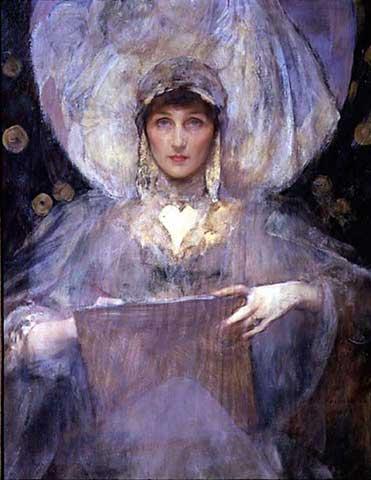
4) Violet Manners, Duchess of Rutland (1856-1937)
British aristocrat & artist
a.k.a. Marion Margaret Violet Lindsay.
Daughter of: Hon. Charles Hugh Lindsay & Emilia Anne Browne.
 |
| Henry, 8th Duke of Rutland |
Wife of: Henry Manners, 8th Duke of Rutland. mar 1882.
Natural Offspring:
Lady Diana Manners.
James Stuart Mackenzie (1719-1800).
Scottish aristocrat, politician & astronomer.
Son of: James Stuart, 2nd Earl of Bute & Lady Anne Campbell, daughter of Archibald Campbell, 1st Duke of Argyll.
Husband of: Lady Elizabeth Campbell, mar 1749.
His lover was:
.jpg%2F475px-Portrait_of_Barbara_Campanini_%27La_Barberina%27_(1721-1799).jpg&container=blogger&gadget=a&rewriteMime=image%2F*) |
| Barbara Campanini |
Barbara Campanini (1721-1799).
ILover in 1740 or 1744.
Italian ballet dancer.
Grafin von Barschau 1787; Contessa Campanini 1787.
a.k.a. Barbarina; La Barberina.
Wife of:
1) Karl Ludwig, Freiherr von Cocceji, mar 1748, sep 1759, div 1788
2) a German baron.
"...After a brilliant success in the Paris theatre, she had made an arrangement to go to Berlin and dance for Frederick II; but falling in love with a young Scotchman named Mackenzie, she eloped with him to Venice instead... La Barbarina wished to break her engagement with the Prussians in order to marry her Scotchman... The unfortunate dancer remained under arrest for several weeks... A week later Montaigu was able to report that La Barbarina had left Venice for Berlin... Her fiance followed her to Prussia, only to be promptly expelled from the country, where La Barbarina herself settled for a handsome pension from Frederick II and eventually married an immensely rich Prussian count." (Cranston, 1991, p. 180)
". . . An impetuous young man, he became infatuated with the dancer Barberoni (sic) and was summoned home from Europe. His family had him safely married to his first cousin, Lady Elizabeth Campbell (1721-1799), fourth daughter of John, second duke of Argyll, on 16 Februaryy 1749. Their two children died in infancy." (ODNB)
". . . The young James Stuart Mackenzie fell for the famous opera-singer Barberini and arranged to marry her in Venice. This was prevented by Archibald, 3rd Duke of Argyll, who used his friend John, 3rd Earl of Hyndford, envoy in Berlin, to have Barberini brought to Berlin and Mackenzie banned from Prussia. She had earlier engaged the attention of Samuel Dashwood." (Unnationalized Englishmen in Mary Shelley's Fiction)
Husband of Barbara Campanini
Karl Ludwig von Cocceji (1724-1808)
His lover was:
"She broke her contract suddenly by accepting a proposal by Carl Ludwig von Cocceji, son of the Prussian chancellor Samuel von Cocceji, onstage in 1749, causing a veritable scandal. Her fiancé went to prison, Campanini herself once again eloped to London, but returned to Berlin and secretly married Cocceji. Her spouse was finally pardoned by the king and appointed district governor at Glogau in Silesia, where the couple lived until they were divorced in 1788." (Wikipedia)
 |
| Joseph Caillaux French politician |
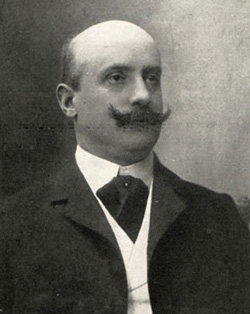
(1863-1944)
French politician.
His lovers were:
1) Henriette Raynouard.
2) Paulette Couyba.
His lovers were:
1) Henriette Raynouard.
2) Paulette Couyba.
"Paulette's first conquest was Joseph Caillaux, a French politician associated with scandals that made an impression, even in Paris. A flamboyant lady's man, he strutted during debates on silk tariffs because he knew so much about ladies' undergarments. He flaunted his many mistresses, and even married some of them. Some fifteen years before he met Paulette in the late 1920s, his first two wives created one of the first great scandals of the mass media. After a newspaper published a love letter from Caillaux to the mistress who had become his first wife, the mistress who had in the meantime become his second wife took her revenge---not on him, but on the newspaper. Caillaux's second wife, Henriette, murdered the editor of Le Figaro with six shots from a Browning automatic." (Snyder, 2010, p. 158)
(1911-1995)
British politician.
His lovers were:
His lovers were:
1) Carmen Appleton.
2) Juliet Wentworth-Fitzwilliam
Marchioness of Bristol.
2) Juliet Wentworth-Fitzwilliam
Marchioness of Bristol.
(1801-1860)
British politician.
His lover was:
His lover was:
"Duvernay's unexpected early retirement in 1837 at the height of her career caused a sensation. It followed her involvement with the extremely wealthy Stephen Lyne-Stephens, owner of the prestigious Grove House at Rochampton and a further large estate at Lynford Hall in Norfolk. At the time he was reckoned to be the wealthiest commoner in England, having inherited a huge fortune which his father Charles had accumulated in trading between Portugal and England. The couple did not marry until 14 July 1845 and she suffered some ostracism, her notoriety doing little to endear her to conventional Victorian society. There were no children of the marriage and in the years following her husband's premature death in 1860 Mrs. Lyne-Stephens devoted much of the fortune she had been left to charitable causes." (Rogers, ed., 2003, pp. 107-108)
Spouses & Children: He married 1) Idina Sackville (wife, in 1913, divorced 1919); 2) Barbara Lutyens (in 1920). [Ref1:Family]
(1892-1941)
British politician.
a.k.a. David Eulan Wallace.
"She (Idina) fell in love with her first husband. . . Euan Wallace, a captain in the Life Guards, when she was still a teenager. He was. . . 'incredibly good-looking and about the wealthiest single man in England. They married in 1813 when Idina was 20. Like many men of his generation, he was wounded in the war and sent home with shrapnel in his leg in November 1914. Once he had recovered, he was besieged by attractive women unable to resist throwing themselves at a handsome war hero who happened to be unbelievably rich. . . " (Daily Mail)Spouses & Children: He married 1) Idina Sackville (wife, in 1913, divorced 1919); 2) Barbara Lutyens (in 1920). [Ref1:Family]
References:


_01.jpg/180px-Busto_de_Vibia_Sabina_(M._Prado)_01.jpg)


