|
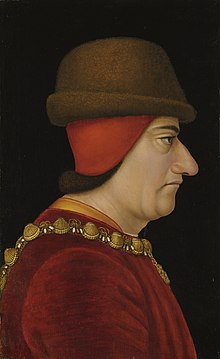
| William Cavendish 1st Duke of Devonshire |
(1640-1707)
1st Duke of Cavendish
1694-1707
English soldier & politician.
Husband of Lady Mary Butler 1646-1710), daughter of James Butler, Duke of Ormonde.
Love life.
"Notorious for his extramarital affairs,Cavendish had several illegitimate children by one Mrs. Heneage. His liaison with the lady was well known. . . According to Baronne D'Aulnoy (Memoirs, p. 243), Cavendish had an affair also with Olive, daughter of George Porter. . . The gossips accused him of liaisons with Mrs. Barbara Berkeley, Lady Betty Felton, and Lady Elizabeth Isham. In his old age the duke took as his mistress a pretty young actress, Anne Campion; when Anne died at nineteen (May 19, 1706), he erected a monument with an epitaph describing her virtues." (Court Satires of the Restoration: 233)
 |
| William Cavendish 1st Duke of Devonshire |
His lovers were:
1) Anne Campion (1687-1706)
Lover in 1705-1706.
British actress.
Lover in 1705-1706.
British actress.
Also known as Mary Ann Campion
" . . . In 1705, at the age of sixty-five, the Duke fathered a child by Mary Campion, the seventeen-year-old daughter of his valet. Thanks as much to patronage as to talent Mary Anne had become an actress. Devonshire set her up in a house in Bolton Street and, in proper Cavendish tradition, proposed to keep her there in comfort. But the birth was difficult and, although the baby survived, the mother died. Equally true to the Cavendish tradition, the child was well provided for -- brought up at Chatsworth and left 10,000 pounds to be paid upon her marriage or majority. No attempt was made to hide either the relationship or its issue. The Duke did not attend Mary Anne's funeral. But he marked a grave with a tablet that was signed 'W-D of D'." (The Devonshires: The Story of a Family and a Nation: 180)
"William Cavendish (1640-1707), 4th Earl of Devonshire and 1st Duke of Devonshire (1694). He was a famous womanizer and his last mistress, Mary Ann Campion, was a 17 year old actress, who bore him a daughter, Mary in 1706. Mary (mom) died on May 16, 1706 of hectic fever." (Odrowaz-Sypniewska)
3) Elizabeth Howard, Lady Felton.
4) Elizabeth Isham.
also known as born Elizabeth Turner.
"Notorious for his extramarital affairs, Cavendish had several illegitimate children by one Mrs. Heneage. His liaison with the lady was well known. . . . " (Court Satires of the Restoration: 233)
6) Olive Porter.
"According to Baronne D'Aulnoy . . ., Cavendish had an affair also with Olive, daughter of George Porter. . . . " (Court Satires of the Restoration:234)
Son of William Cavendish, 3rd Duke of Devonshire, & Catherine Hoskins
Wife of: Sir Justinian Isham, Baronet (1658-1730), mar 1683
"Sir Justinian Isham (1658-1730), succeeded his brother, Sir Thomas, as baronet on July 26, 1681. On July 16, 1683, had married Elizabeth, daughter of Sir Edmund Turner of Stoke Rochfort, Lincs. . . ." (Court Satires of the Restoration: 164)
5) Mrs. Heneage.
6) Olive Porter.
"According to Baronne D'Aulnoy . . ., Cavendish had an affair also with Olive, daughter of George Porter. . . . " (Court Satires of the Restoration:234)
 |
| William Cavendish 4th Duke of Devonshire @Wikipedia |
(1720-1764)
Prime Minister of Great Britain.
Husband of Charlotte Boyle (d.1754), mar 1748.
". . . One of the Fourth Duke's mistresses was the courtesan Nancy Parsons, a mistress of many members of the peerage, including the Third Duke of Dorset, . . . another English aristocratic dynasty with a culture of heavy drinking and infidelities. . . ." (Families, Status and Dynasties: 1600-2000: 125)
". . . One of the Fourth Duke's mistresses was the courtesan Nancy Parsons, a mistress of many members of the peerage, including the Third Duke of Dorset, . . . another English aristocratic dynasty with a culture of heavy drinking and infidelities. . . ." (Families, Status and Dynasties: 1600-2000: 125)
 | |
|
(1748-1811)
1764-1811)
The wealthy Devonshires.
"Georgiana's future husband was only sixteen when he came into an income that was twice Lord Spencer's; by one account it amounted to more than 60,000 pounds. His property included not only the magnificent Chatsworth in Derbyshire and Devonshire House in London, but five other estates of comparable grandeur: Lismore Castle in Ireland, Hardwick House and Bolton Abbey in Yorkshire, and Chiswick House and Burlington House in London. . . ." (Georgiana, Duchess of Devonshire: A Review)
"Georgiana's future husband was only sixteen when he came into an income that was twice Lord Spencer's; by one account it amounted to more than 60,000 pounds. His property included not only the magnificent Chatsworth in Derbyshire and Devonshire House in London, but five other estates of comparable grandeur: Lismore Castle in Ireland, Hardwick House and Bolton Abbey in Yorkshire, and Chiswick House and Burlington House in London. . . ." (Georgiana, Duchess of Devonshire: A Review)
William's physical appearance & personal character.
" . . . He was one of the most apathetic of men. Tall, yet not even stately, calm to a fault, he had inherited from the Cavendish family a stern probity of character, which always has a certain influence in society. Weight he wanted not, for a heavier man never led to the altar a wife full of generous impulses and of sensibility. He was wholly incapable of strong emotion, and could only be roused by whist or faro from a sort of moral lethargy. He was, nevertheless, crammed with a learning that caused him to be a sort of oracle at Brooke's, when disputes arose about passages from Roman poets or historians. With all these qualities, he was capable of being, in a certain sense, in love, though not always with his lovely and engaging first wife." (Queens of Society: 127)
His character.
" . . . He was one of the most sought-after bachelors in London---although Mrs. Delany was mystified as to the reason why. 'The Duke's intimate friends say he has sense, and does not want merit,' she wrote. But in her opinion he was boring and gauche. 'To be sure the jewell has not been well polished: had he fallen under the tuition of the late Lord Chesterfield he might have possessed les graces, but at present only that of his dukedoms belongs to him.' As one newspaper deliocately put it, 'His Grace is an amble and respectable character, but dancing is not his forte.'" (Georgiana, Duchess of Devonshire: A Review)
" . . . He was one of the most apathetic of men. Tall, yet not even stately, calm to a fault, he had inherited from the Cavendish family a stern probity of character, which always has a certain influence in society. Weight he wanted not, for a heavier man never led to the altar a wife full of generous impulses and of sensibility. He was wholly incapable of strong emotion, and could only be roused by whist or faro from a sort of moral lethargy. He was, nevertheless, crammed with a learning that caused him to be a sort of oracle at Brooke's, when disputes arose about passages from Roman poets or historians. With all these qualities, he was capable of being, in a certain sense, in love, though not always with his lovely and engaging first wife." (Queens of Society: 127)
His character.
" . . . He was one of the most sought-after bachelors in London---although Mrs. Delany was mystified as to the reason why. 'The Duke's intimate friends say he has sense, and does not want merit,' she wrote. But in her opinion he was boring and gauche. 'To be sure the jewell has not been well polished: had he fallen under the tuition of the late Lord Chesterfield he might have possessed les graces, but at present only that of his dukedoms belongs to him.' As one newspaper deliocately put it, 'His Grace is an amble and respectable character, but dancing is not his forte.'" (Georgiana, Duchess of Devonshire: A Review)
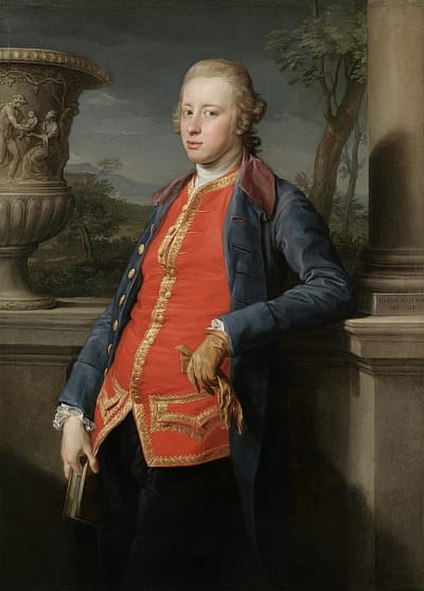 |
William Cavendish 5th Duke of Devonshire |
The duke's love life.
1. Lady Georgiana Spencer (1757-1806) mar 1774
2. Lady Elizabeth Hervey, mar 1809.
" . . . The 4th Duke of Devonshire was succeeded by his eldest son, the 5th Duke of Devonshire (1748-1811), who married Lady Georgiana Spencer, the celebrated beauty and society hostess. The 5th Duke of Devonshire also had two mistresses, lady Elizabeth Foster and Charlotte Spencer by whom he had several issues, but not legitimate. His legitimate children by Lady Georgiana Spencer was a son, who succeeded the father as the 6th Duke of Devonshire, and two daughters. . . . ." (internetstones.com)
Menage-a-trois & uncertain paternity.
". . . Georgiana, Duchess of Devonshire, was not only another gambling addict, running up debts of some 60,000 pounds in a dozen years and turning Devonshire House into a casino, but was one of the notorious menage a trois in which her best friend, Lady Elizabeth Foster, was her husband's mistress. . . (T)he threesome produced seven surviving children, three legitimate and four not: of the illegitimates two were children of the 5th Duke and Lady Elizabeth, one of the Duke and an earlier mistress, and one the child of Georgiana and the future Lord Grey of the Reform bill. . . ." (Gentrification and the Enterprise Cultire: Britain 1780-1980:25)
Husband of:
2. Lady Elizabeth Hervey, mar 1809.
William's lovers were:
1) Charlotte Spencer.
A Mayfair milliner:
Natural Offspring:
Charlotte Williams.
" . . . Charlotte Spencer, a former milliner, and unrelated to the Spencer family, belongs to a later generation of courtesans. She was mistress to William Cavendish, 5th Duke of Devonshire and bore him a daughter named Charlotte Williams about the time of his marriage to Lady Georgiana Spencer in 1774. . . ." (Queen of the Courtesans: Fanny Murray)
Charlotte's story.
"What more could a 17-year-old girl [that is, Georgiana Spencer] want? One thing she certainly did not want was a rival for her new husband's affections. Charlotte Spencer -- and no, she was not related to Georgiana's family -- already had a strong hold on the duke's heart.
"Charlotte had been destined to become a milliner in London. Her father was a clergyman with a poor living who died when she was a teenager. Although she could have made a go of it in the city, her life took an abrupt turn for the worse almost as soon as she stepped off a coach. A common practice in those days was for parasitic men to introduce themselves to young country girls as they alighted in London. They offered to help them find accommodation and work or offered them love and marriage; the results were usually disastrous. Seduced and abandoned Charlotte found refuge with a wealthy old man who took her in and looked after her. On his death, which was not long after they began living together, Charlotte found he had provided for her in his will, leaving her enough money to become the owner of a hat shot, not just an employee on one. Charlotte was back on track with her career -- until the Duke of Devonshire happened to pass by her little boutique and fall in love with her
"There were perhaps worse things that could have happened to her. The duke established Charlotte in a comfortable house with servants to wait on her, and he would come and make love to her. She may have even kept the management of her hat shop.
"One woman's happiness often seems to be linked to another's despair. Charlotte had a baby girl, also named Charlotte, not long before the unsuspecting Lady Georgiana married William, the 5th Duke of Devonshire. It was no wonder that Georgiana found his embraces rather cold, as his heart was elsewhere.
"Charlotte Spencer, the thorn in the new bride's side, only lived another four years, but these many have been four too many for Georgiana who, although she never mentioned any names, must have been aware of the mistresses's existence. Georgiana herself was having trouble conceiving or carrying a child to full term. It would be nine years before she successfully gave birth. Therefore it must have been painful to know that her husband was enjoying fatherhood at another woman's house.
"When Charlotte Spencer died, Georgiana had no objections whatsoever to the arrival at her house of her husband's illegitimate daughter. Little Charlotte became Georgiana's sweetheart, the child she could not have herself. They decided to give the child her father's Christian name, William, as a surname, altering it only slightly by adding an 's' to the end. This was common practice at the time, giving a father's name as a surname, keeping the blood ties linked while not acknowledging the relationship any more than could be avoided. In the case of Charlotte Williams, her story was that she was the orphan child of a distant relation of Georgiana's." (Other Women: The History of the Mistress)
2) Elizabeth Hervey (1759-1824).
Also known as:
born Elizabeth Christiana Hervey
Bess
Lady Elizabeth Foster
Elizabeth Cavendish.
Daughter of Frederick Hervey, 4th Earl of Bristol and Elizabeth Davers.
Wife of:
1. John Thomas Foster, a politician, mar 1776.
Physical appearance & personal qualities.
" . . . Her features were regular and noble, her eyes magnificent, and her attenuated figure was upright and dignified, with the step of an empress. Her complexion of marble paleness completed this portrait. Her beautiful arms and hands were still as white as ivory, though almost like a skeleton's from their thinness. She used in vain to attempt to disguise their emaciation by wearing bracelets and rings. Though surrounded by every object of art in which she delighted, by the society, both of the English, Italian, and French persons of distinction whom she preferred, there was a shade of sadness of this fascinating woman's brow, as it remembrance forbade her usual calm of life's decline." (Queens of Society: 143)
5th Duke of Devonshire's wives' other lovers.
1) Georgiana Spencer (1757-1806)
Duchess of Devonshire.
Also known as:
Georgiana Spencer
Georgiana Cavendish.
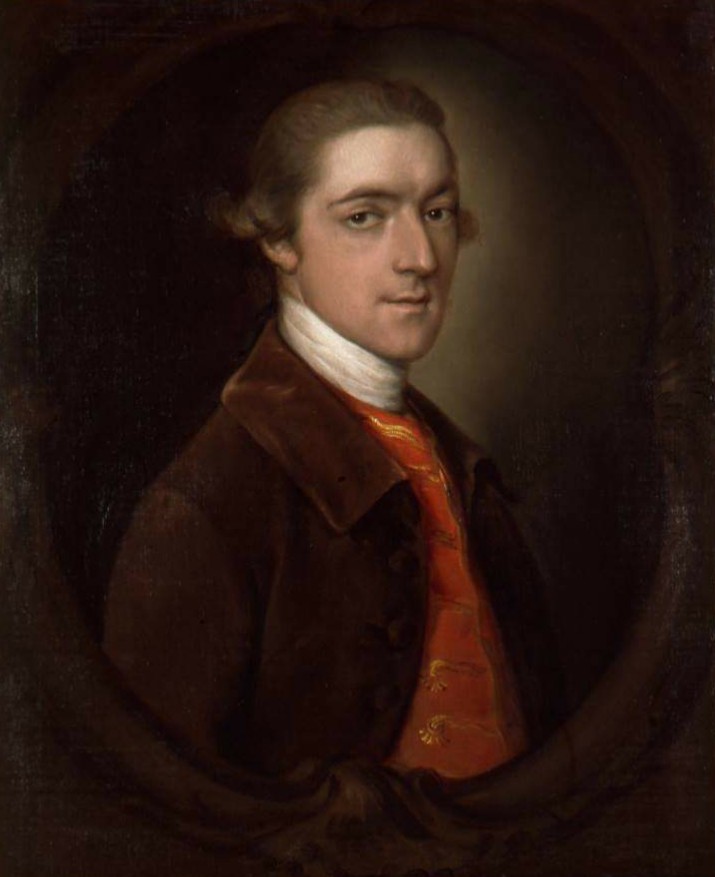 |
| John Spencer 1st Earl Spencer |
Daughter of: John Spencer, 1st Earl Spencer & Margaret Georgiana Poyntz.
Wife of: William Cavendish, 5th Duke of Devonshire mar 1774
Georgiana's personal & family background.
" . . . Descended in the third degree from Sarah, Duchess of Marlborough, Georgiana Spencer is said to have resembled her celebrated ancestress in the style of her beauty. . . Her father, John, created Earl of Spencer in 1765, was the son of the reprobate 'Jack Spencer,' as he was styled, the misery at once and the darling of his grandmother, Sarah, who idolized her Torrismond, as she called him, and left him a considerable portion of her property. While the loveliness of Sarah descended to Georgiana Spencer, she certainly inherited somewhat of the talent, the reckless spirits, and the imprudence of her grandfather, 'Jack:' neither could a careful education eradicate these hereditary characteristics." (Queens of Society: 125)
Georgiana's physical appearance & personal qualities.
" . . . Georgiana was not classically pretty, but she was tall, arresting, sexually attractive, and extremely stylish. Indeed, the newspapers dubbed her the Empress of Fashion. . . [H]er eyes were heavier, her mouth larger. . . Her character was too full of contradictions, the spirit which animated her thoughts too quick to be caught in a single expression." (Foreman: 3)
" . . . [S]he was neither regular in features nor faultless in form... True, her hair inclined to red, her mouth was wide, but her complexion was exquisite; and the lips, ever laughing, were parted over a splendid set of teeth, an attribute rare in those days when the teeth were often decayed in youth..." (Wharton: 126)
Character/Persona:
" . . . As Lady Georgiana grew up, she displayed a warm, impressionable nature, a passion for all that was beautiful in art, strong affections, and an early disposition to coquetry. Her character spoke out in her face, which was the most eloquent of all faces; yet it was by no means beautiful if we look upon beauty critically. There were persons who said that her face would have been ordinary but for its transcendent loveliness of expression... She had, too, a charm of manner natural to her, and a playfulness of conversation, which, springing from a cultivated mind, rendered her society most fascinating. . . ." (Wharton: 126)
"No sooner had the thirty-four-year-old duchess provided a legitimate heir for her husband than she followed the contemporary fashions in finding a lover. She chose Charles Grey, a handsome young orator who had admired her ever since she helped Fox with the famous Westminster campaign of 1784. . . Seven years her junior, Grey helped manage the impeachment of Warren Hastings as a Whig M.P. from Northumberland in 1786. . . As a young man, however, he could be a 'fractious' and exigeant' lover. . ., with a 'violent temper and unbounded ambition'... Lady Melbourne urged Georgiana to avoid compromising her reputation by pursuing a public liaison. . . The duke of Devonshire confronted his wife about her affair in 1791, when she was six months pregnant with Grey's child. . . ." (Byron's "Corbeau Blanc": The Life and Letters of Lady Melbourne: 32)
First encounter with Earl Grey.
" . . . He [Earl Grey] met her in 1788 at Devonshire House - then the epicentre of Whig society. The Duchess, in her early thirties, was beautiful, vivacious and kind, but, being unloved by her husband, was also unhappy. Grey was 24, impetuous, stubborn, skilled in the arts of rhetoric and recently arrived in the Commons. He fell for his hostess like a meteorite, pursued her and wore down her defences. They could meet without scandal or suspicion, because every respectable Whig came to Devonshire House. After three years, she became pregnant with Grey's child. . . ."[Independent]
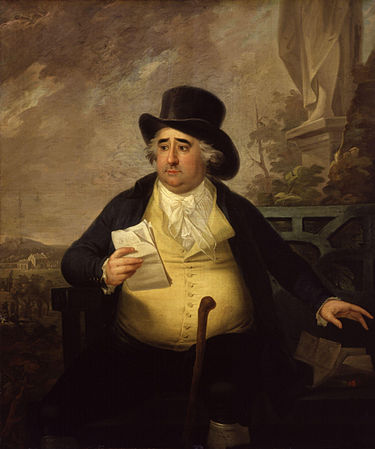 |
| Charles James Fox |
2) Charles James Fox.
First encounter in 1777.
"One of the greatest influences on the young duchesses's life was meeting the politician Charles James Fox. He was 28 when they met in 1777 and not at all good-looking. His short, stout figure was not particularly suitable for the extravagant fashions he chose to wear, but he, like Georgiana, enjoyed attracting attention with his bizarre styles; changing his hair colour from one day to the next was one of his favourite pastimes. Charles was also a gambler and had run up debts that made Georgiana's look petty. x x x Apart from being lively and entertaining Charles Fox gave Georgiana intellectual stimulation and a strong, supportive friendship. Ut was Charles who first got the duchess interested in politics. She became a devout campaigner for his party." (Other Women: The History of the Mistress)
First encounter in 1777.
"One of the greatest influences on the young duchesses's life was meeting the politician Charles James Fox. He was 28 when they met in 1777 and not at all good-looking. His short, stout figure was not particularly suitable for the extravagant fashions he chose to wear, but he, like Georgiana, enjoyed attracting attention with his bizarre styles; changing his hair colour from one day to the next was one of his favourite pastimes. Charles was also a gambler and had run up debts that made Georgiana's look petty. x x x Apart from being lively and entertaining Charles Fox gave Georgiana intellectual stimulation and a strong, supportive friendship. Ut was Charles who first got the duchess interested in politics. She became a devout campaigner for his party." (Other Women: The History of the Mistress)
 |
| George IV of Great Britain |
Lover in 1783-1785
Georgiana, Duchess of Devonshire Gallery.
Georgiana, Duchess of Devonshire Gallery.
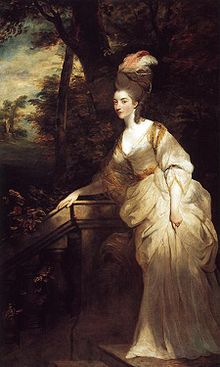 |
| Georgiana, Duchess of Devonshire c1775 |
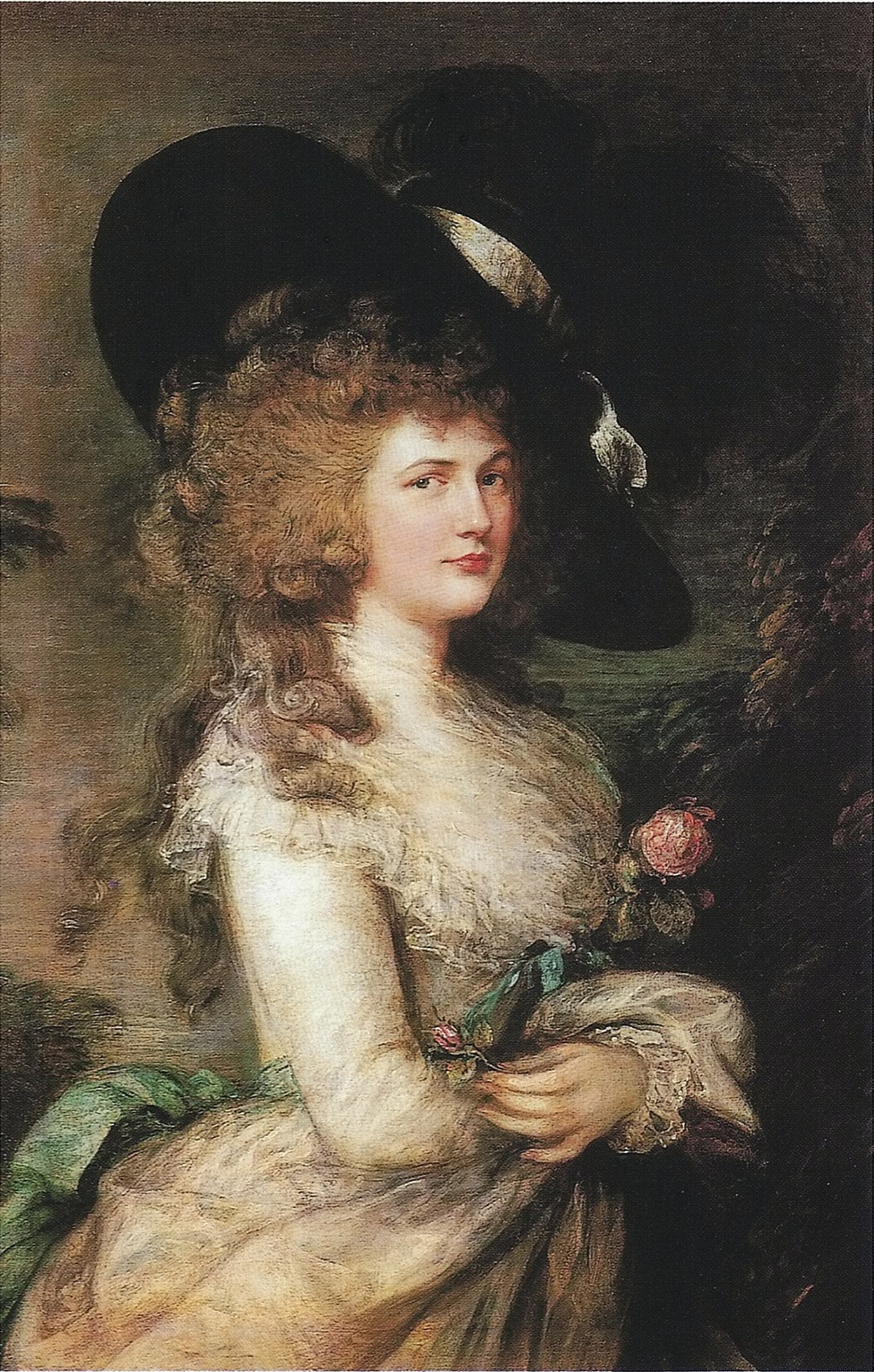 |
| Lady Georgiana Cavendish Duchess of Spencer, 1787 |
 |
| Elizabeth Foster Duchess of Devonshire 1787 |
2) Elizabeth Foster, Duchess of Devonshire (1759-1824)
British society hostess and patron of arts
Also known as:
Elizabeth Christiana Hervey
Elizabeth Christiana Hervey
Elizabeth Hervey
Elizabeth Cavendish
Bess.
Daughter of: Frederick Hervey, 4th Earl of Bristol, Bishop of Derry & Elizabeth Davers.
Wife of:
1) John Thomas Foster (1747-1796), an Irish politician, mar 1776, sepd 1781
2) William Cavendish, 5th Duke of Devonshire (1748-1811).
Daughter of: Frederick Hervey, 4th Earl of Bristol, Bishop of Derry & Elizabeth Davers.
Wife of:
1) John Thomas Foster (1747-1796), an Irish politician, mar 1776, sepd 1781
2) William Cavendish, 5th Duke of Devonshire (1748-1811).
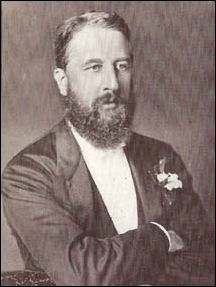 |
| Spencer Cavendish 8th Duke of Devonshire |
(1833-1908)
Also known as:
Spencer Compton Spencer
Lord Hartington
His love life was irregular: " . . . Although for most of his career he held the courtesy title of Lord Hartington, he was known familiarly as Harty-Tarty. Of great political rectitude, his love life was irregular. In his youth he had been madly in love with a not particularly high-class courtesan known as Skittles. Later he had a thirty-year affair with the German-born Duchess of Manchester, whom he eventually married when she became a widow and who became known as 'the Double Duchess'." (Prime Ministers' Wives)
 |
| Catherine Walters |
His lovers were:
1) Catherine Walters (1839-1920)
British trendsetter and courtesan.
Lover in 1858-1862.
Also known as:
Lover in 1858-1862.
Also known as:
Skittles; Skitsie
Daughter of: Edward Walters, a custom employee & Mary Ann Fowler.
"Harty Tarty, incidentally was a longtime bachelor and of course very eligible. In his youth, when he was known as Lord Hartington (or the marquess) he had relationships with two courtesans, the most famous of whom was Catherine Walters, known as “Skittles.” The marquess also conducted two affairs for a long time, the other being with the Duchess of Manchester who was very much married. The duchess, nevertheless was in love with Hartington and wanted to get him away from Skittles. Eventually she succeeded and eventually her husband -- of whom it was said, she never loved – died, leaving her free to marry the man she loved. She did and was forever known among her set (and in the press) as the double duchess. I862 was the year that Hartington came to America, to break off his relationship with Skittles – and commit himself to the Duchess of Manchester. For Skittles, he was said to be the love of her life. Although he was breaking it off, when she was first his mistress he arranged for her to have an annual income of 2000 pounds – comparable to a six figure income today – which continued after the separation and his subsequent marriage. When he died (at 74 in 1908), her income was continued, acknowledged by the family as a “debt of honor” to be paid until her death. She lived another 12 years, dying in 1920." (New York Social Diary)
"She counted among her lovers . . . Spencer Cavendish, Marquess of Hartington) later the eighth Duke of Devonshire), whom she pursued to New York during the American Civil War. . . . " (Riding Aside)
A relationship greatly affectionate on both sides.
"She counted among her lovers . . . Spencer Cavendish, Marquess of Hartington) later the eighth Duke of Devonshire), whom she pursued to New York during the American Civil War. . . . " (Riding Aside)
A relationship greatly affectionate on both sides.
". . . At age 19, she became the mistress of Spencer Compton Cavendish, Lord Hartington nicknamed 'Harty-Tarty.' He was the eldest son of one of the premiere Dukes in the kingdom, the 7th Duke of Devonshire. A shy and immature young man of 26 when they met, he was to become a major figure in the Liberal politics and was considered by many as Gladstone's natural successor. . . Her relationship with Hartington lasted about four years and seems to have been greatly affectionate on both sides. The greatest passion that she and Hartington shared, and the only one they were able to indulge in publicly together, was hunting. While her lover occupied himself with his duties in Parliament, Catherine had lessons with a governess." (Scandalous Woman)
First encounter.
First encounter.
". . . In 1856, at the age of seventeen, Catherine arrived in London to seek her fortune. After five years working in the Hay Market, she met the Marquess of Hartington (later the 8th Duke of Devonshire Spencer Compton Cavendish, Lord Hartington nicknamed 'Harty-Tat), an aspiring Liberal MP, who fell madly in love with her and set her up in a house in Mayfair complete with servants, carriages and an annuity of 2000 l=pounds a year." (City of Sin: London and Its Vices)
Affair's benefits to Skittles.
Affair's benefits to Skittles.
" . . . She became the mistress of the 8th Duke of Devonshire, who set her up in Mayfair and settled on her 2,000 pounds a year for life. . . . " (Dictionary of Real People and Places in Fiction:929)
A debt of honor paid by Harty-Tarty's family.
A debt of honor paid by Harty-Tarty's family.
"In his Commons days the eighth Duke was known as 'Harty Tarty'. He first met 'Skittles' when he was a young man and for a time she was his mistress. As a result he arranged for her to have 2,000 pounds a year from the Devonshire Estate which was acknowledged by the family as a debt of honour, for on 'Harty Tarty's' death they decided the bounty must continue to be paid and it was until the death of 'Skittles' herself." (From Whoredom to Evangelism)
" . . . Skittles was deeply loved by the young Marquis of Hartington, known as Harty Tarty. He was heir to the Duke of Devonshire, one of the richest men in England. He wanted to marry her, but was persuaded by his family that this was not possible, so he paid her an allowance of 2,000 pounds a year for the rest of her life." (Victorian Women:225)
" . . . He liked her so much that he got her a house in Mayfair, some horses of her own, and a further annuity of 500 pounds. He also got her a tutor, presumably to smooth off any further rough edges." (Catherine Walters (1839-1920): Champagne and Skittles)
" . . . The great romance of her life was with Lord Hartingtron, one of the Devonshire family and a leading Whig who with Gladstone fashioned the modern Liberal Party which was in power in England almost continuously from 1846 until 1874 . . . " (From Whoredom to Evangelism)
" . . . Skittles was deeply loved by the young Marquis of Hartington, known as Harty Tarty. He was heir to the Duke of Devonshire, one of the richest men in England. He wanted to marry her, but was persuaded by his family that this was not possible, so he paid her an allowance of 2,000 pounds a year for the rest of her life." (Victorian Women:225)
" . . . He liked her so much that he got her a house in Mayfair, some horses of her own, and a further annuity of 500 pounds. He also got her a tutor, presumably to smooth off any further rough edges." (Catherine Walters (1839-1920): Champagne and Skittles)
 |
| Laura Bell British courtesan |
2) Laura Bell (1829-1894).
British courtesan & evangelist.
Also known as:
Miss Laura Eliza Jane Seymour Bell
Mrs. A.F. Thistlethwayte
Mrs. Laura Thistlewayte.
|

Luise Friederike Auguste, 6th Grafin von Alten (1832-1911)
Duchess of Manchester.
Mistress of the Robes to the Queen
Also known as:
Louisa Montagu, Duchess of Manchester
Louisa Frederica Augusta Cavendish, Duchess of Devonshire
Daughter of: Karl Franz Viktor, Graf von Alten & Hermine de Schminke.
Wife of:
1) William Drogo Montagu, 7th Duke of Manchester (1823-1890), mar 1852-1890, Lord of the Bedchamber to Prince Albert, British Army officer, politician.
2) Spencer Compton Cavendish, 8th Duke of Devonshire (1833-1908), British statesman, mar 1892.
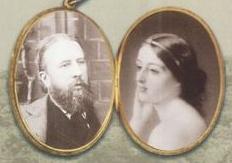 |
| The 8th Duke & Duchess of Devonshire |
". . . The Duchess was German, born Countess Alten of Hanover. Devonshire was, in fact, her second English duke; she had first come to England as the bride of the Duke of Manchester and, while still a young wife, had become the mistress of the future Duke of Devonshire, then titled Lord Hartington. The discreet liaison continued for twenty-four years, until Manchester died, leaving Louise free to marry Devonshire. London promptly dubbed her the 'Double Duchess.' . . . . " (Dreadnaught: 291)
"When the dissolute Duke finally and conveniently died in Naples on March 22 1890, the Dowager Duchess, after a decent interval, married Spencer Compton Cavendish, 8th Duke of Devonshire on August 16, 1892 at Christ Church, Mayfair. Louise had been in love with him for more than thirty years and had discreetly carried on an affair with him during the lifetime of her late husband, the Duke of Manchester. Upon her marriage, she thereby became Duchess of Devonshire; and earned herself the nickname 'The Double Duchess'." (Esoteric Curiosa)
"'Harty-Tarty' had another mistress in the side wings and she watched with astuteness the developing liaison between her lover and 'Skittles'. She had some very potent weapons with which to fight this battle, the first of which was her high place in society. Lottie, Duchess of Manchester, was a formidable opponent in this struggle for the soul and body of a man as famous as Lord Hartington. Against her 'Skittles' had little chance. Lottie snared him away from her and back to herself. He remained faithful to her as his mistress until the fullness of time the Duchess was given relief by the death from her marriage tie with the Duke (whom she is supposed never to have loved) and on 16th August, 1892 she married her lover of many years, now the 8th Duke of Devonshire. It will be recalled that the Manchester family owned the Tandragee estate here in Northern Ireland from which they derived the greater part of their wealth. . . ." (From Whoredom to Evangelism)
"A stunning example of how a mid-Victorian aristocratic woman could 'get away with it' was Louisa, Duchess of Manchester, who, in 1852 married Viscount Mandeville, as he then was. Queen Victoria said disapprovingly of the German-born Louisa that she had 'none more harm to Society from her tone, her love of admiration and her fast style, than almost anyone'. But Louisa continued to do as she liked, entertaining in great style at Kimbolton Castle in Huntingdonshire in the winter (where her lover, the famous Liberal Lord Hartington, who remained unmarried, enjoyed fox-hunting) and in the summer at Manchester House. What the 7th Duke of Manchester did is obscure. He rode to hounds, gambled, dabbled in politics, father Louisa's five children and lived in Hartington's shadow. He must have thought it enough to be a duke and to have most beautiful wife in England; and perhaps he was grateful to have another man divert some of her abundant energy. Louisa was powerful enough to risk the displeasure of the Prince of Wales; when the latter was angry with Lord Randolph Churchill and announced that he would enter no house which received Churchill, Louisa said, ' I hold friendship higher than snobbery' and would not be ruled by the Prince. . . She was certainly clever enough to keep Lord Hartington single and in tow for over 30 years, in a (fairly) secret love affair, before she was widowed and able to marry him, thus becoming 'the double duchess' because he had in the meantime become Duke of Devonshire." (Women and Marriage in Nineteenth Century England: 93)
References for the Devonshire Dukes & Duchesses.
La Bella Libertà: ‘Dearest Bess’ @Woman and Her Sphere
Party Girl: A biography of an 18th-century English duchess with a taste for scandal and politics @NYT
The Last of the Whigs: A Political Biography of Lord Hartington, Later Eighth Duke of Devonshire (1833-1908) @ Google Books





.jpg)