20th Century Playgirl Aristocrats.

Beryl Markham (1902-1986)
British aviatrix, adventurer, racehorse trainer & author.
Daughter of Charles and Clara Clutterbuck.
Wife of:
1. Jock Purves, an ex-soldier turned farmer, mar 1919
2. Mansfield Markham, mar 1927
3. Raoul Schumacher.
Physical appearance.
"A blue-eyed blonde, Markham was nearly 6ft tall. In her excellent biography, Straight on Till Morning: The Life of Beryl Markham (Abacus, £10.99), Mary S Lovell records how one of Markham’s contemporaries described her as ’a magnificent creature very feline. It was like watching a beautiful golden lioness when she walked across the room.’" (The Telegraph)
Legendary conquests.
"Her conquests throughout the 1920s were legendary. There was Tom, the son of Lord Delamere, who lost his virginity to Markham in a stable; there was the big-game hunter Denys Finch Hatton; and there was Prince Henry, Duke of Gloucester, third in line to the throne. (Markham described the latter as a ’mad little gallop’, though Queen Mary viewed it less frivolously.)" (The Telegraph)
1) Bror Blixen.
"When Lovell interviewed Markham she asked her if she had been a lover of Bror Blixen, the husband of Karen Blixen, who wrote Out of Africa. Markham replied, ’Good God, no!’ before adding matter-of-factly, ’Of course, I made love with him Sometimes when we were out there [in the bush] there was nothing else to do but make love.’" (The Telegraph)
2) Edward VIII of Great Britain (1894-1972)
" . . . Some years earlier he'd (Prince Henry) travelled to Kenya with his eldest brother, the Prince of Wales---later Edward VIII--- on a safari which morphed into a babes 'n' booze-fest that would put the present-day Harry's Vegas larks in the shade. The royal brothers shared the bed (thankfully on different evenings) of Mrs. Markham, daughter of a Happy Valley racehorse trainer and unusually a woman who'd made a name for herself as a pilot. Striking rather than beautiful, she had a voracious appetite for men." (Daily Mail)
4) Tom Campbell Black (1899-1936)
British aviator, horse breeder & spokesperson.
Winner 1934 London to Melbourne Centenary Air Race
Son of: Hugh Milner Black & Alice Jean McCullough
"Tom Campbell Black was a veteran of the Royal Air Force. After the war he had come to Kenya to farm, but he soon saw an opportunity to establish the country's first commercial air service. By 1931 Black's company had three pilots and seven aircraft and Markham was keen to join their number. Black became her flight instructor, then her lover, but one who was different from the rest. He stood no nonsense from her." (Telegraph)

Beryl Markham (1902-1986)
British aviatrix, adventurer, racehorse trainer & author.
Wife of:
1. Jock Purves, an ex-soldier turned farmer, mar 1919
2. Mansfield Markham, mar 1927
3. Raoul Schumacher.
Physical appearance.
"A blue-eyed blonde, Markham was nearly 6ft tall. In her excellent biography, Straight on Till Morning: The Life of Beryl Markham (Abacus, £10.99), Mary S Lovell records how one of Markham’s contemporaries described her as ’a magnificent creature very feline. It was like watching a beautiful golden lioness when she walked across the room.’" (The Telegraph)
Legendary conquests.
"Her conquests throughout the 1920s were legendary. There was Tom, the son of Lord Delamere, who lost his virginity to Markham in a stable; there was the big-game hunter Denys Finch Hatton; and there was Prince Henry, Duke of Gloucester, third in line to the throne. (Markham described the latter as a ’mad little gallop’, though Queen Mary viewed it less frivolously.)" (The Telegraph)
Her lovers were:
1) Bror Blixen.
"When Lovell interviewed Markham she asked her if she had been a lover of Bror Blixen, the husband of Karen Blixen, who wrote Out of Africa. Markham replied, ’Good God, no!’ before adding matter-of-factly, ’Of course, I made love with him Sometimes when we were out there [in the bush] there was nothing else to do but make love.’" (The Telegraph)
| Edward, Prince of Wales |
" . . . Some years earlier he'd (Prince Henry) travelled to Kenya with his eldest brother, the Prince of Wales---later Edward VIII--- on a safari which morphed into a babes 'n' booze-fest that would put the present-day Harry's Vegas larks in the shade. The royal brothers shared the bed (thankfully on different evenings) of Mrs. Markham, daughter of a Happy Valley racehorse trainer and unusually a woman who'd made a name for herself as a pilot. Striking rather than beautiful, she had a voracious appetite for men." (Daily Mail)
3) Henry of Great Britain, 1st Duke of Gloucester.
Lover in 1928.
"Markham first met the prince in 1928 when he and his brother, Edward, Prince of Wales, came to Kenya on a safari. It mattered to Markham neither that she was married at the time to Mansfield Markham, nor that she was four months pregnant with his son. In 1929 she gave birth in London to a boy and a few weeks later began visiting the prince at Buckingham Palace. Eventually, the queen found out about the affair and demanded it end. Markham was given an annuity of £15,000 on condition she leave England at once.'. . . ." (The Telegraph)
"Beryl had an affair with "...Prince Henry, Duke of Gloucester, third in line to the throne. (Markham described the latter as a 'mad little gallop', though Queen Mary viewed it less frivolously.) Markham first met the prince in 1928 when he and his brother, Edward, Prince of Wales, came to Kenya on a safari...."
"She had a scandalous affair with Prince Henry, Duke of Gloucester. The son of George V, Beryl met him when he accompanied his brother, the Prince of Wales on safari. Unfortunately they were not very discreet. When Beryl’s husband at the time, Mansfield Markham found out, he threatened to sue for divorce and name the Prince as a correspondent. In order to keep his name name out of the courts, Prince Henry agreed to put £15,000 into at trust for Beryl, which would pay her an annuity for the rest of her life." (Scandalous Woman)
"Beryl had an affair with "...Prince Henry, Duke of Gloucester, third in line to the throne. (Markham described the latter as a 'mad little gallop', though Queen Mary viewed it less frivolously.) Markham first met the prince in 1928 when he and his brother, Edward, Prince of Wales, came to Kenya on a safari...."
"She had a scandalous affair with Prince Henry, Duke of Gloucester. The son of George V, Beryl met him when he accompanied his brother, the Prince of Wales on safari. Unfortunately they were not very discreet. When Beryl’s husband at the time, Mansfield Markham found out, he threatened to sue for divorce and name the Prince as a correspondent. In order to keep his name name out of the courts, Prince Henry agreed to put £15,000 into at trust for Beryl, which would pay her an annuity for the rest of her life." (Scandalous Woman)
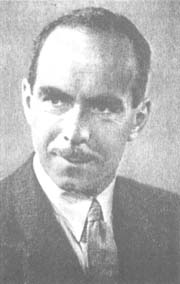 |
| Tom Campbell Black |
British aviator, horse breeder & spokesperson.
Winner 1934 London to Melbourne Centenary Air Race
Son of: Hugh Milner Black & Alice Jean McCullough
"Tom Campbell Black was a veteran of the Royal Air Force. After the war he had come to Kenya to farm, but he soon saw an opportunity to establish the country's first commercial air service. By 1931 Black's company had three pilots and seven aircraft and Markham was keen to join their number. Black became her flight instructor, then her lover, but one who was different from the rest. He stood no nonsense from her." (Telegraph)
Daughter of: Frederick Ponsonby, 3rd Earl of Bessborough & Lady Henrietta Frances Spencer, Prime Minister Lord Melbourne, mar 1805
Physical Traits & Personal Qualities: " . . . Caroline did not resemble his traditional conquests, or his concept of feminine beauty. She was tall and very thin, with short, curly blonde hair and hazel eyes." (englishhistory.net)
Her lovers were:
Godfrey Vassal Webster, 5th Baronet (1789-1836)
British politician
Lover in 1810-1811
"When Caroline met Webster in 1810, he was just twenty, intensely interesting to young women, a hero of the Spanish campaign whose reputation was so bad that even the Whips club, notorious for its low standards, had rejected him. . . . " (Questia)
"Caroline's grandmother correctly feared the influence of the Hollands would prove dangerous, for it was here that Caroline met Lady Holland's eldest son by her previous marriage, Sir Godfrey Vassal Webster. Webster had entered the Army at nineteen and had fought in Spain, like Frederick Ponsonby. He was a war hero who had returned with the skull of a French soldier, which he had reputedly converted into a macabre-looking gold-crusted drinking cup. He had a bad reputation... He was twenty and an object of clandestine interest by many young women. Caroline was twenty-four...." (Douglass. 2004, p. 90)
First Encounter: ". . . Caroline met Sir Godfrey, Lady Holland's eldest son by her previous marriage, at Holland House, where a circle of political liberals regularly gathered. Thereafter Sir Godfrey gave her many gifts and accompanied her in public. . . . " (Questia)
Why Him?: ". . . Sir Godfrey Vassal Webster introduced Caroline to a sexual pleasure she had not experienced in her marriage bed." (Douglass, 2004, p. 91)
Michael Bruce. (1787-1861)
Lover in 1810-1813.
Son of: Patrick Craufurd Bruce, an East India merchant, rich London merchant & M.P.
Wife of:Widow of a Navy captain, married in 1818
Acquaintance of Byron’s who had an affair with Lady Caroline after meeting her in Paris in 1816." (Caroline Lamb Website)
Lover in 1812.
"...Caroline Lamb then found a new source of excitement, in the young burning star that was Lord George Gordon Byron. Inflamed with his literary genius, she aggressively pursued the young poet, and lured him into her bed, which he visited during the day, when her husband William was at work. The love between Caroline and Lord Byron consumed them, and they even had a private, mock wedding ceremony, exchanging rings and vows." (Ley, 2009, p. 134).
"...They became lovers and shocked London with their affair through much of April and May 1812... They read together, discussed poetry -- and argued fiercely...." (englishhistory.net)
Arthur Wellesley, 1st Duke of Wellington. (1769-1852)
Lover in 1815.
Husband of: Kitty Pakenham. (married in 1806)
". . . In Europe she had other lovers, including a one night stand with the Duke of Wellington himself during the fall of 1815." (androom)
 |
Pauline Fairfax-Potter
|
(1908-1976).
Baroness de Rothschild.
Wife of:
1. Charles Carroll Fulton Leser (1900–1949), mar 1930, div 1939.
2. Baron Philippe de Rothschild, mar 1954.
Her lovers were:
Andre Levesque de Vilmorin.French horticultural heir.
Dmitri Pavlovich of Russia.
Elim O'Shaughnessy (1907-1966)
American diplomat.
" . . . A second-generation diplomat, Elim, also known as 'The Turtle,' acted the part of the striped-pants man better than almost anyone, with affected accent, 'protruding fish eyes,' long cigarette holder, elegantly tailored suits, and lank hair. He did it so well, in fact, that he failed in his foreign service oral exam several times until he was told the reason: He did not present a sufficiently American appearance. So he moved to St. Louis and got a job as a gas station attendant. The result was mixed: O'Shaughnessy was admitted to the foreign service but had not changed much. . . . " (The Atlantic Century: Four Generations of Extraordinary Diplomats who Forged America's Vital Alliance with Europe:130)
Jed Harris.
producer-director.
John Huston.
American film director.
Paul-Henri Spaak.
Prime Minister of Belgium.

(1892-1986)
Lady Norwich
British social figure.
Wife of: Alfred Duff Cooper, mar 1919.
Her lovers were:
1) Carl Burckhardt (1891-1974)
Swiss diplomat & historian
League of Nations High Commissioner
" . . . (A)nd on to Danzig. It was there that she got to know Carl Burckhardt, the League of Nations as High Commissioner, Burckhardt had been brought up by Hofmannsthal, and so was almost an elder brother to Raimund. Diana had met him once before at Venetia Montagu's, had dismissed him as a slightly arid highbrow and was at first inclined to stick to her opinion. Then came an after-dinner shooting-party with no shooting but a lot of dancing in the dark. . . Soon it was 'my dear beautiful Carl'. . . . Diana conscious of the fact that she now forty-six years old and as always sceptical about her beauty, was flattered to be wooed so ardently by a man of Burckhardt's brains. good looks and international standing. . . ." (Ziegler)
Swiss diplomat & historian
League of Nations High Commissioner
" . . . (A)nd on to Danzig. It was there that she got to know Carl Burckhardt, the League of Nations as High Commissioner, Burckhardt had been brought up by Hofmannsthal, and so was almost an elder brother to Raimund. Diana had met him once before at Venetia Montagu's, had dismissed him as a slightly arid highbrow and was at first inclined to stick to her opinion. Then came an after-dinner shooting-party with no shooting but a lot of dancing in the dark. . . Soon it was 'my dear beautiful Carl'. . . . Diana conscious of the fact that she now forty-six years old and as always sceptical about her beauty, was flattered to be wooed so ardently by a man of Burckhardt's brains. good looks and international standing. . . ." (Ziegler)
2) Conrad Russell (1878-1947)
English farmer & letter-writer
Physical Traits & Personal Qualities: "Conrad Russell was first cousin to the Duke of Bedford, and as individual as any member of that quirky family and far more amiable than most of them. Six foot four inches tall, stooping under a thatch of white hair, huge feet splayed out in penguin gait, his features were noble and yet humorous, a fair indication of the strange intelligence that lay within. . . ." (Ziegler [
.jpg) |
| Edward VIII of Great Britain |
3) Edward VIII of Great Britain.

4) Edward Horner (1882-1917)
_1893.jpg)
5) Feodor Chaliapin (1873-1938)
Russian opera singer
6) Ivor Guest, 1st Viscount Wimborne.
"She met her physical needs strictly on her own terms. In 1917 she the accepted expensive gifts of the wealthy Ivor Guest, Lord Wimbourne, who was used to buying what he could not otherwise obtain. But despite avoiding most personal confrontations, Diana energetically resisted several of Ivor's onslaughts both verbally and physically." (My Three Fathers: 83)
7) Louise Leveque de Vilmorin.
7) Louise Leveque de Vilmorin.
Personal & Family Background: "...Lady Diana came from a world in which her own discovery that she was not her father's legitimate daughter, at the age of nineteen, had not seriously ruffled any feathers. She was glad to be a duke's daughter in name since it conferred status and privilege, and also quite glad to be the product of an intense amour...."(Carnarvon, 2013, n.p.)
" . . . The Duke of Rutland acknowledged her as his daughter but his Duchess had had a well-known affair with a dashingly handsome Victorian adulterer called Harry Cust and it was generally believed in society circles that he was, in fact, her father." (Theatre's Strangest Acts)
Achievements & Honours: "Lady Diana Cooper was, then, socially noticeable. By the time Waugh met her, she had been a screen actress and also played on the stage. In the late 1950's, she turned to writing, producing three volumes of memoirs; Waugh wrote that he thought them 'a single work of art, one of the great autobiographies of the century.'...." (NYT) [Daily Mail]
19th Century Playgirl Aristocrats.
Her lovers were:

Wife of: Henry Conyngham, 1st Marquess Conyngham (1766-1832), mar 1794
Patronages: "Lady Conyngham's liaison with the King benefited her family. Her husband was raised as a Marquess in the Peerage of the United Kingdom, and sworn to the Privy Council, in the Coronation honours of 1821. He was also given several other offices, including Lord Steward of the Household and the Lieutenantcy of Windsor Castle. Her second son was Master of the Robes and First Groom of the Chamber." (Wikipedia)
Royal favours.
"And he bought her jewelry. In fact, he gave her a great sapphire surrounded by diamonds that had belonged to King Charles the Second. It had first been given to Princess Charlotte as a wedding gift. After her death, Prince Leopold took possession of it. His Majesty informed his son-in-law that the gem was Crown Property and that he in fact wanted it back so he could make it the centerpiece of the crown he had commissioned for his coronation. Hard to argue with that. Leopold forked it over and His Majesty presented it to Lady Conyngham, who turned it into the buckle of a diamond studded belt. To be fair, I should point out that she returned it to the Keeper of the Privy Purse after the Kings death, saying that “she had reason to doubt that His Majesty ought to have given it away.” That said, she kept all the other jewelry he gave her, worth, by one estimate, “over 100,000 pounds” One rope of pearls alone costing 3,150 pounds." (Alice Audrey)

 |
| Lady Angela Forbes by Dorothy Wilding, 1921 @Wikipedia |
Angela Forbes (1876-1950)
Wife of: James Forbes, mar 1896, sep 1904.
" . . . Daughter of the 4th Earl of Rosslyn, she was also the sister of Millicent, the Duchess of Sutherland, and Sybil, Countess of Westmorland; the half-sister of Frances, Lady Warwick, and an aunt of Hamish Erskine. In 1896 she married James Forbes, but they separated, amicably, in 1904; she became the mistress of Lord Ribbesdale and of Lord Wemyss. . . ." (Dictionary of Real People and Places in Fiction: 417)
Personal & family background: "Lady Angela Forbes was born Lady Angela Selina Bianca St Clair-Erskine (1876-1950) to the rakish 4th Earl of Rosslyn and his wife, the former Mrs. Charles Maynard. From her mother's first marriage, she was half-sister with Daisy, Countess of Warwick. At adulthood, she was nearly 6 feet tall and devoted her life to hunting and shooting. She married James Forces in 1896, and they divorced in 1907. By 1912, she was known as the longtime mistress of Lord Elcho, which granted her entree into The Souls. . . ." (Edwardian Promenade)
" . . . Daughter of the 4th Earl of Rosslyn, she was also the sister of Millicent, the Duchess of Sutherland, and Sybil, Countess of Westmorland; the half-sister of Frances, Lady Warwick, and an aunt of Hamish Erskine. In 1896 she married James Forbes, but they separated, amicably, in 1904; she became the mistress of Lord Ribbesdale and of Lord Wemyss. . . ." (Dictionary of Real People and Places in Fiction: 417)
Personal & family background: "Lady Angela Forbes was born Lady Angela Selina Bianca St Clair-Erskine (1876-1950) to the rakish 4th Earl of Rosslyn and his wife, the former Mrs. Charles Maynard. From her mother's first marriage, she was half-sister with Daisy, Countess of Warwick. At adulthood, she was nearly 6 feet tall and devoted her life to hunting and shooting. She married James Forces in 1896, and they divorced in 1907. By 1912, she was known as the longtime mistress of Lord Elcho, which granted her entree into The Souls. . . ." (Edwardian Promenade)
Her lovers were:

1) Hugo Richard Charteris (1857-1937)
Scottish politician
" . . . Lord Elcho had love affairs, too---Hermione, Duchess of Leinster who was in love with him, and after she died he found a suitable soul-mate in a married woman 14 years his junior (Lady Angela Forbes, half-sister of Daisy Warwick) said to be a tough, vibrant personality whose language would make a trooper blush. . . . " (Women and Marriage in Nineteenth-Century England:n.p.)
2) Thomas Lister, 4th Baron Ribblesdale (1854-1925)
2) Thomas Lister, 4th Baron Ribblesdale (1854-1925)
Personality: ". . . Years later Edith Sitwell described Lady Angela as 'an elderly gorilla affected with sex-appeal,' but her husband had to share her both with Lord Elcho and Lord Ribblesdale. . . . " (Women and Marriage in Nineteenth-Century England:n.p.)
 |
| Elizabeth Denison Marchioness of Conyngham |
British aristocrat, courtier & royal mistress.
Daughter of:Joseph Denison, a banker & Elizabeth Butler
 |
| Elizabeth Denison Marchioness of Conyngham |
Spouse & Children: "Married Viscount Henry Conyngham (1766-1832) on 5 July 1794; her husband later rose to Earl in 1797 and Marquis in 1816; mistress of the Prince Regent from 1819 until his death in 1830; other affairs include those with the Honourable John Ponsonby, future Lord Ponsonby, in the 1790s, and with Tsar Nicholas I of Russia during his visit to London in 1816." (The British Museum)
Patronages: "Lady Conyngham's liaison with the King benefited her family. Her husband was raised as a Marquess in the Peerage of the United Kingdom, and sworn to the Privy Council, in the Coronation honours of 1821. He was also given several other offices, including Lord Steward of the Household and the Lieutenantcy of Windsor Castle. Her second son was Master of the Robes and First Groom of the Chamber." (Wikipedia)
Royal favours.
"And he bought her jewelry. In fact, he gave her a great sapphire surrounded by diamonds that had belonged to King Charles the Second. It had first been given to Princess Charlotte as a wedding gift. After her death, Prince Leopold took possession of it. His Majesty informed his son-in-law that the gem was Crown Property and that he in fact wanted it back so he could make it the centerpiece of the crown he had commissioned for his coronation. Hard to argue with that. Leopold forked it over and His Majesty presented it to Lady Conyngham, who turned it into the buckle of a diamond studded belt. To be fair, I should point out that she returned it to the Keeper of the Privy Purse after the Kings death, saying that “she had reason to doubt that His Majesty ought to have given it away.” That said, she kept all the other jewelry he gave her, worth, by one estimate, “over 100,000 pounds” One rope of pearls alone costing 3,150 pounds." (Alice Audrey)
Her lovers were:
Lover in 1819-1830.
" . . . What with his detested wife dead and all, time for something new. Lady Conyngham was the something new. She was a 'fat, kindly, religious, rich and rapacious woman of fifty-two.' She was also married (of course) with four grown children. . . According to one description of Lady Conyngham, 'her beauty was beginning to fade, and she never had been amusing or particularly intelligent, though she was much more shrewd than people supposed. The king adored her.' . . . He was a free man after all. He fussed over her, held her hand (under the table) at State Dinners, kept her at his side during balles and caused one unkind observer to note, 'Quaffing their claret, then mingling their lips, Or tickling the fat about each other's hips.'." (Alice Audrey)
Benefits: "Lady Maria's father was created Marquess of Conyngham in the peerage of Ireland in 1816. This was through the influence of his wife, Elizabeth, who in 1820 became the final mistress of the future King George IV of England. Husband and wife were in constant attendance at court. . . . " (Met Museum)
"Lady Conyngham's liaison with the King benefited her family. Her husband was raised to the rank of a marquess in the Peerage of the United Kingdom, and sworn to the Privy Council, in the Coronation honours of 1821. He was also given several offices, including Lord Steward of the Household and the Lieutenancy of Windsor Castle. Her second son was Master of the Robes and First Groom of the Chamber." (Wikipedia)
" . . . It was said that she received jewels worth 80.000 pounds from the king. . . The Prince provided her with the expensive clothes and jewels she desired, while she was just the tonic he needed to be in a jolly mood." (Mistresses of the Prince)
2) John Ponsonby, 1st Viscount Ponsonby of Imokilly (1770-1855)
Lover in the 1790s
British diplomat & politician
" . . . She had an affair in the 1790's with the Honourable John Ponsonby future Lord Ponsonby. The handsomest man of his time, he was saved from being hanged from a lamppost in Paris during the Revolution for the intervention of women who thought him too attractive to kill. . . . " (Mistresses of the Prince)
 |
| Portrait of Nikolai I of Russia by Franz Kruger, 1852 @ Heritage Museum |
3) Nikolai I of Russia (1796-1855)
Lover in 1816
Lover in 1816
Her lovers were:
1) Archibald Ian Gordon.
2) Evan Charteris.
3) George Wyndham.
4) John Baring, 2nd Baron Revelstoke.
5) Patrick Shaw-Stewart (1888-1917)
2) Evan Charteris.
3) George Wyndham.
4) John Baring, 2nd Baron Revelstoke.
5) Patrick Shaw-Stewart (1888-1917)
British scholar & military officer.
Physical Traits & Personal Qualities: ". . . Beautiful, rich, charming and clever, Ettie soon became the centre of the Souls, arbiters of wit and elegance, and a leading hostess at the two magnificent country houses she had inherited.. . . " (Edwardian Promenade)
Indeterminate Relationships: ". . . Ettie Desborough, to the occasional disapproval of her sons, had 'relationships' of indeterminate depth and detail with a succession of suitors, including their contemporaries Archie Gordon, son of the Earl of Aberdeen, and Patrick Shaw-Stewart. . . . " (Corsan, 2009, p. 315)
Personal & Family Background: ". . . Ethel was . . . the daughter and only surviving child of Julian Fane (1827-1870), diplomatist, and fourth son of John Fane, eleventh earl of Westmorland (1784-1859), and his first wife, Lady Adine (d. 1868), daughter of the sixth Earl Cowper. Both of her parents died before she was three. . . . " (ODNB).
"Born in 1867 and orphaned at three, Ettie Fane was brought up by a beloved grandmother and then two adoring, almost incestuous bachelor uncles. . . . " (Edwardian Promenade)
Spouse & Children: She married William Henry Grenfell (1855-1945) in 1887. ". . . Her eldest son Julian, after a nervous breakdown at Oxford, rejected her world and values. Nemesis and tragedy were not faw away. In 1915 Julian died of war wounds. Six weeks later her second son Billy was killed in action. Her youngest sone Ivo would be killed shortly after the war. . . . " (Edwardian Promenade)
Honours & Achievements: Extra woman of the bedchamber to Queen Mary (1912); author of Pages from a Family Journal (1916).
18th Century Playgirl Aristocrats.
 |
| Elizabeth Foster Duchess of Devonshire by Sir Joshua Reynolds, 1787 |
British society hostess and patron of arts
Daughter of: Frederick Hervey, 4th Earl of Bristol, Bishop of Derry & Elizabeth Davers.
Wife of:
1) John Thomas Foster (1747-1796), an Irish politician, mar 1776, sepd 1781
2) William Cavendish, 5th Duke of Devonshire (1748-1811).
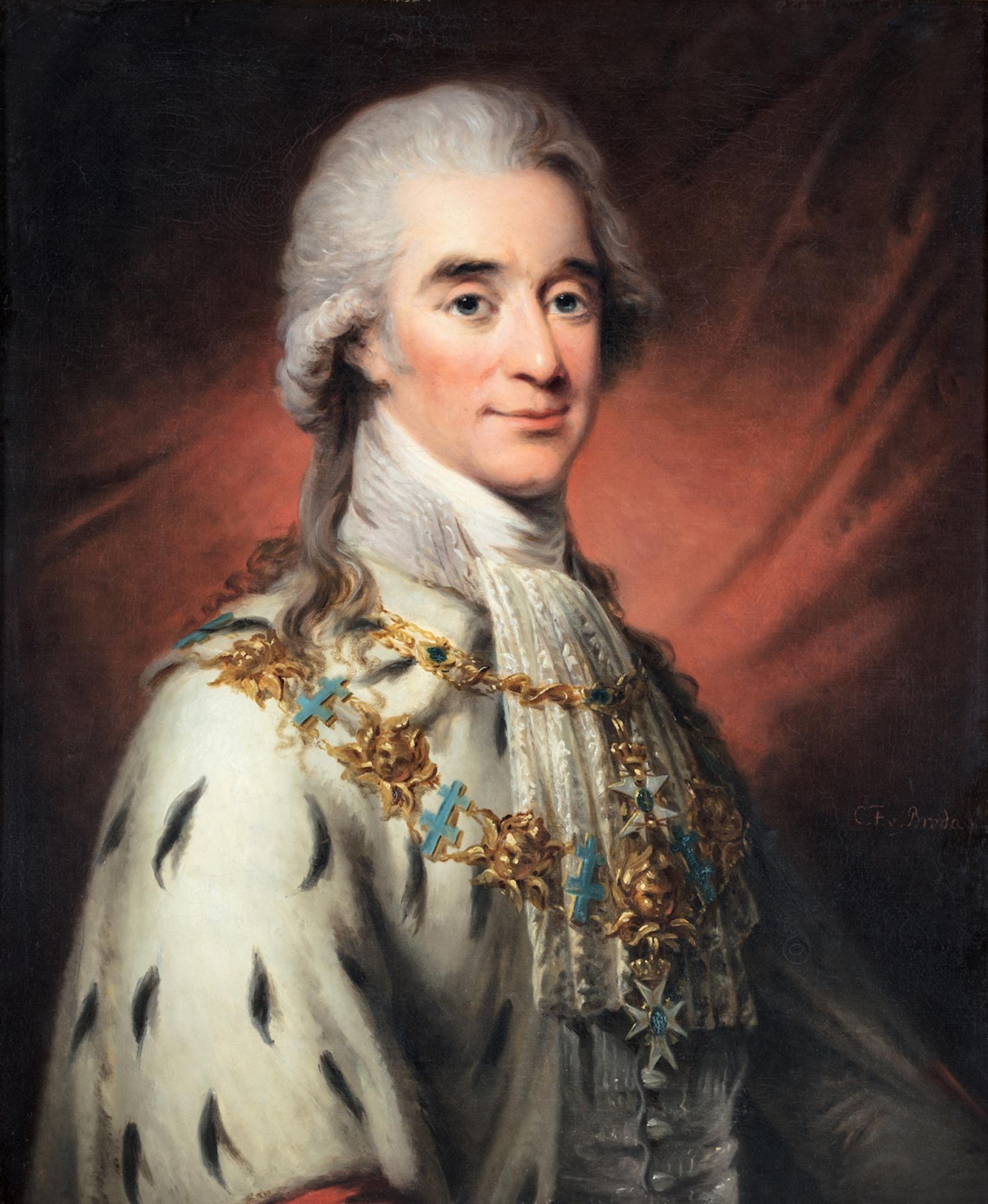
1) Axel von Fersen (1755-1810).
Swedish nobleman& diplomat
French Officer.
" . . . The Fifth Duke's wife, Georgiana, was a notorious gambler and heavy drinker. She fell in love with Lady Elizabeth Foster, who had been deserted by her husband, to henceforth survive as an adventuress. . . Elizabeth soon became the Duke's mistress too, and so they formed a triangular relationship. But they also had other lovers, one of them the said Swedish aristocrat, Count Axel von Fersen. He was Elizabeth Foster's lover in Naples, where he was a diplomat at the time. . . ." (Families, Status and Dynasties: 1600-2000: 125)
" . . . Despite these manifest contradictions, many historians continue to repeat -- wrongly -- that during his Italian voyage in 1783-84 Fersen had two love affairs, with Miss Emily Cowper and Lady Elizabeth Foster; the latter invariably labelled as his mistress. x x x It was certainly true that Lady Elizabeth foster fell for Fersen and that he was drawn to her beauty and sympathized with her predicament; but they were never lovers. Although Lady Elizabeth praised the 'very, very amiable' Fersen in her letters to Georgiana, their physical contact extended to a single kiss on the cheek one evening at a a ball when she was in a melancholy mood. The following day he gently let her down in case she had been expecting a declaration of love. . . It is perhaps because they were not lovers that their friendship lasted all their lives, although they seldom saw each other. Lady Elizabeth bought souvenirs of Marie-Antoinette for Fersen after the Queen's death; he helped her place her son at the British embassy in Stockholm. As her diary and letters reveal she was well aware of his liaison with Marie-Antoinette. . . ." (I Love You Madly: Marie-Antoinette and Count Fersen: The Secret Letters)
" . . . The Fifth Duke's wife, Georgiana, was a notorious gambler and heavy drinker. She fell in love with Lady Elizabeth Foster, who had been deserted by her husband, to henceforth survive as an adventuress. . . Elizabeth soon became the Duke's mistress too, and so they formed a triangular relationship. But they also had other lovers, one of them the said Swedish aristocrat, Count Axel von Fersen. He was Elizabeth Foster's lover in Naples, where he was a diplomat at the time. . . ." (Families, Status and Dynasties: 1600-2000: 125)
" . . . Despite these manifest contradictions, many historians continue to repeat -- wrongly -- that during his Italian voyage in 1783-84 Fersen had two love affairs, with Miss Emily Cowper and Lady Elizabeth Foster; the latter invariably labelled as his mistress. x x x It was certainly true that Lady Elizabeth foster fell for Fersen and that he was drawn to her beauty and sympathized with her predicament; but they were never lovers. Although Lady Elizabeth praised the 'very, very amiable' Fersen in her letters to Georgiana, their physical contact extended to a single kiss on the cheek one evening at a a ball when she was in a melancholy mood. The following day he gently let her down in case she had been expecting a declaration of love. . . It is perhaps because they were not lovers that their friendship lasted all their lives, although they seldom saw each other. Lady Elizabeth bought souvenirs of Marie-Antoinette for Fersen after the Queen's death; he helped her place her son at the British embassy in Stockholm. As her diary and letters reveal she was well aware of his liaison with Marie-Antoinette. . . ." (I Love You Madly: Marie-Antoinette and Count Fersen: The Secret Letters)
 |
| Charles Lennox 3rd Duke of Richmond |
2) Charles Lennox, 3rd Duke of Richmond.
"Rumour has it that Bess was a busy girl and indulged in a affairs with all manner of illustrious gents and she hoped for a proposal from her long term lover, Charles Lennox, Duke of Richmond, but it is for her relationship with William that she is remembered. Indeed, it was this affair that eventually resulted in matrimony, many years after it had begun." (A Covent Garden Gilfurt's Guide to Life)
"Rumour has it that Bess was a busy girl and indulged in a affairs with all manner of illustrious gents and she hoped for a proposal from her long term lover, Charles Lennox, Duke of Richmond, but it is for her relationship with William that she is remembered. Indeed, it was this affair that eventually resulted in matrimony, many years after it had begun." (A Covent Garden Gilfurt's Guide to Life)
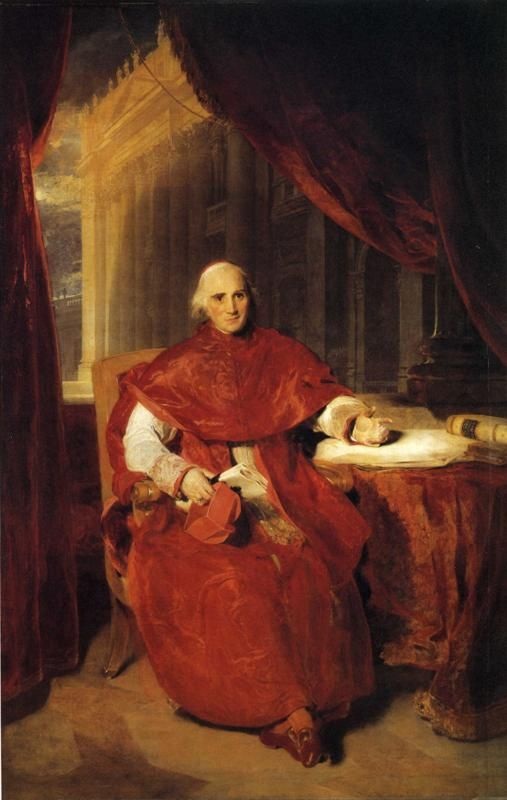 |
| Ercole Cardinal Consalvi |
Lover in 1816
"After the Duke's death, Beth lived alone, in style, in Piccadilly before moving to Rome in 1816. Here, Bess found a new vocation as a devoted patron of the arts, in particular, archaeology. For eleven years, she funded the excavation of the Forum, enabling the recovery of the Column of Phocas and the stones of the Via Sacra. In Rome, she also found the last love of her love - Cardinal Hercule Consalvi, secretary of state to the Vatican." (Regency History)
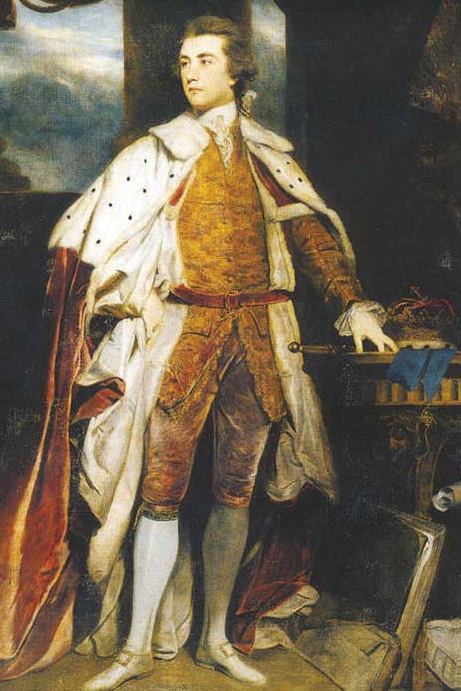 |
| John Sackville, 3rd Duke of Dorset |
4) John Sackville, 3rd Duke of Dorset.
Lover in 1785.
"But the duke generally had several women on the go at any one time. That same year he had begun a short affair, in Paris, with Lady Elizabeth Foster, the mistress of the Duke of Devonshire, with whose child she was pregnant. . . ." (Inheritance: The Story of Knole and the Sackvilles: 137)
"It was while in Paris that Bess realised she was expecting the duke's child. It was not a welcome surprise, nor was the news that Georgiana was also pregnant again. Bess was worried about losing her friend and her reputation, and jealous at having to share the duke's attentions with Georgiana. Bess attached herself to the Duke of Dorset, becoming his mistress in Paris. Even though she had a new protector she realised she couldn't pin the pregnancy on him and that she would have to take herself somewhere quiet and out of society. She went to stay with her brother in Italy." (Other Women: The History of the Mistress)
" . . . Dorset then moved on to another mistress, Elizabeth Foster, who also showered her affections on the earl of Dunraven, the 3rd duke of Richmond and the 5th duke of Devonshire --- with the last of whom she lived for some twenty-five years in a menage a trois alongside the duchess Georgiana. . . ." (Entitled: A Critical History of the British Aristocracy)
5) Valentine Richard Quin, 1st Earl of Dunraven and Mount-Earl (1752-1824)
Lover in 1785.
"But the duke generally had several women on the go at any one time. That same year he had begun a short affair, in Paris, with Lady Elizabeth Foster, the mistress of the Duke of Devonshire, with whose child she was pregnant. . . ." (Inheritance: The Story of Knole and the Sackvilles: 137)
"It was while in Paris that Bess realised she was expecting the duke's child. It was not a welcome surprise, nor was the news that Georgiana was also pregnant again. Bess was worried about losing her friend and her reputation, and jealous at having to share the duke's attentions with Georgiana. Bess attached herself to the Duke of Dorset, becoming his mistress in Paris. Even though she had a new protector she realised she couldn't pin the pregnancy on him and that she would have to take herself somewhere quiet and out of society. She went to stay with her brother in Italy." (Other Women: The History of the Mistress)
" . . . Dorset then moved on to another mistress, Elizabeth Foster, who also showered her affections on the earl of Dunraven, the 3rd duke of Richmond and the 5th duke of Devonshire --- with the last of whom she lived for some twenty-five years in a menage a trois alongside the duchess Georgiana. . . ." (Entitled: A Critical History of the British Aristocracy)
5) Valentine Richard Quin, 1st Earl of Dunraven and Mount-Earl (1752-1824)
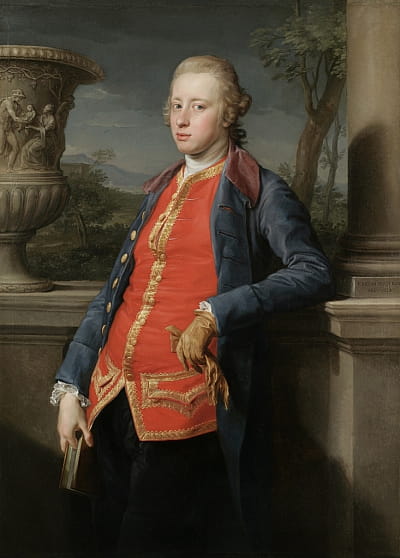 |
| William Cavendish, 5th Duke of Devonshire |
6) William Cavendish, 5th Duke of Devonshire.
Lover in 1784,.
Lover in 1784,.
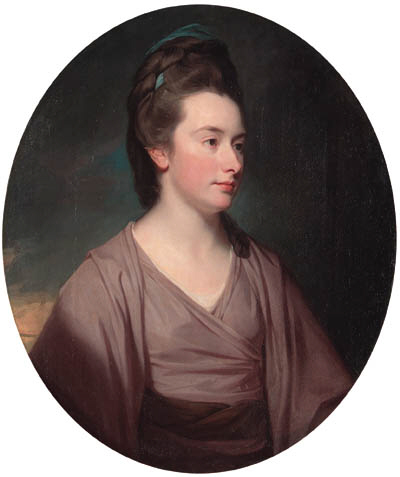 |
| Elizabeth, Viscountess Melbourne @Wikipedia |
(1750-1818).
Viscountess Melbourne
British political hostess.
" . . . Before she was seventeen she had married Lord Melbourne and his fortune, had established herself in his splendid family mansion in Piccadilly---it occupied the site where the Albany stands now---had redecorated it white and gold, and had begun her siege of London. Her chief weapon, naturally enough, was her power over men. She could not, indeed, make much of Lord Melbourne. . . And shopping was about all he was good for. When he had bought her some diamonds and paid for the gold paint, he had done all that a reasonable woman could expect of him. However there were other men in the world, and Lady Melbourne lost no time in making their acquaintance. Characteristically she contrived that those she selected for peculiar favours should be both agreeable and useful. During the course of her career her name was to be coupled with the fashionable Lord Coleraine and the powerful Duke of Bedford. But the most important man in her life was Lord Egremont. He was a worthy counterpart to her. . . ." (The Young Melbourne)
"William Lamb's mother, Elizabeth Milbanke (?1751-1818), had married the MP and baronet Sir Peniston Lamb, a debauchee. Tolerating her husband's affair with an actress, she entertained and electioneered for him, which probably helped him to be created an Irish baron (1770) and then Viscount Melbourne (1781). His paternity of her first son was certain, for her five subsequent children she is thought to have chosen more intelligent fathers. Her affair with the Earl of Egremont (?from 1773) was well known and made a channel for patronage. She also had an affair with the Prince of Wales, for whom her husband became a Gentleman and later Lord of the Bedchamber and by whom he was created a UK Peer in 1815. Another lover was the Duke of Bedford. Her men friends fostered her sons's careers. In her turn, she was patroness of younger men. Discreet, intelligent, interested in improving her husband's estates, she maintained her position in society." (Servilia and her Family: 294)
" . . . Lord Melbourne was an enigma, a silent figure in the drawing room whom visitors to Melbourne House barely noticed. Once Lady Melbourne had presented him with an heir he allowed her the freedom to do and see whom she pleased. He also profited by it. She was not a woman to give her affections indiscriminately. Through her efforts Lord Melbourne was made a viscount in 1781, and later a Gentleman of the Bedchamber in the Prince of Wales's household. Two of her five children were the offspring of Lord Egremont, another, George, the result of her affair with the Prince of Wales. Only the eldest and possibly the youngest were Lord Melbourne's." (Georgiana: Duchess of Devonshire: 47)
Her lovers were:
1) Francis Russell, 5th Duke of Bedford. |
| Frederick of Great Britain, Duke of York @Wikipedia |
Lover in 1781.
 |
| George IV of Great Britain @Wikipedia |
Lover in 1780-1783.
"The prince, however, had moved on. One o fhis next conquests was Elizabeth Lamb, Viscountess Melbourne and wife of Peniston Lamb of Brocket Hall, the great friend of Sir John Eliot's. The Lambs had separated shortly after their marriage and Viscountess Melbourne's son George, born in 1784, was reputed to have the Prince of Wales as his father. Grace's world was a small one! One wonders how bitterly the conversation over the dinner table between Sir John Eliot and his friend Peniston Lamb may have turned to their respective wives, one divorced and one separated but both with a child reputed to have been fathered by the Prince of Wales." (An Infamous Mistress: The Life, Loves and Family of the Celebrated Grace Dalrymple Elliott)
" . . . The Prince of Wales . . . visited her frequently, traveling by horseback from Carlton House, and sometimes stayed until three or four in the morning. In the early 1780s they became lovers. The thin black velvet band that she wore around her neck in numerous portraits was said to be a symbol of this attachment. . . . " (Byron's "Corbeau Blanc": the Life and Letters of Lady Melbourne, p. 2)
" . . . The Prince of Wales . . . visited her frequently, traveling by horseback from Carlton House, and sometimes stayed until three or four in the morning. In the early 1780s they became lovers. The thin black velvet band that she wore around her neck in numerous portraits was said to be a symbol of this attachment. . . . " (Byron's "Corbeau Blanc": the Life and Letters of Lady Melbourne, p. 2)
 |
| Lord Byron @Wikipedia |

5) George Hanger, 4th Baron Coleraine (1751-1824)
British cavalryman, rake, coal merchant, peer of the realm, gambler and strange person.
"Lady Spencer had mixed feelings about the female members of the Circle, but she loathed one woman in particular: Lady Melbourne. Beautiful, clever, and ruthless, Lady Melbourne epitomized the decadence of Georgiana's friends. The incurable gossip Lord Glenbervie recorded in his diary,'it was a very general report and belief that . . . Lord Coleraine sold Lady Melbourne to Lord Egremont for 13,000 pounds, that both Lady and Lord Melbourne were parties to this contract and had each a share of the money.' The story might even have been true . . ." (Georgiana: Duchess of Devonshire: 47)
"Lady Spencer had mixed feelings about the female members of the Circle, but she loathed one woman in particular: Lady Melbourne. Beautiful, clever, and ruthless, Lady Melbourne epitomized the decadence of Georgiana's friends. The incurable gossip Lord Glenbervie recorded in his diary,'it was a very general report and belief that . . . Lord Coleraine sold Lady Melbourne to Lord Egremont for 13,000 pounds, that both Lady and Lord Melbourne were parties to this contract and had each a share of the money.' The story might even have been true . . ." (Georgiana: Duchess of Devonshire: 47)
 |
| George Wyndham 3rd Earl of Egremont |
6) George Wyndham, 3rd Earl of Egremont (1751-1837)
Lover in 1779.
Natural Offspring: George (1784), 4th son of Elizabeth Lamb, Lady Melbourne.
Natural Offspring: George (1784), 4th son of Elizabeth Lamb, Lady Melbourne.
"From 1779, Lady Melbourne's most favoured intimate friend and advisor was George Wyndham, 3rd Earl of Egremont. It was the most serious and long-lasting of her attachments, though not monogamous on either side. . . Egremont was almost certainly William's father and possibly Frederick and Emily's as well." (Regency History)
.jpg)
English beauty.
Daughter of: Henry Lyon, a local blacksmith & Mary Kidd.
Wife of: Sir William Hamilton, the British ambassador at Naples, mar 1791.
Emma's physical appearance & personal qualities: " . . . Emma grew tall, strong, and beautiful, with a thick mane of hair and strong white teeth. She had sparkling eyes, clear skin, voluptuous good health, and bounding energy. . . ."(Williams, 2006, p. 19)
Lady Hamilton's personal & family background: "The father of Emma Lyons died whilst when was an infant, and upon his death her mother removed from Preston to the village of Hawarden in Flintshire. Here at a very early eag she was engaged as a nursery-maid in the family of a Mr. Thomas who resided in that village, and who was brother-in-law to the well-known Alderman Boydell. Her next engagement was in a similar capacity in the family of Dr. Budd, one of the physicians to St. Bartholomew's Hospital, who resided in Chatham Place, Blackfriars. This fact is mentioned by Dr. Pettigrew in his Memoirs of Lord Nelson, and as he was personally acquainted with Dr. Budd, the correctness of this information may, no doubt, be relied upon. She passed from his service into that of a tradesman in St. James's Market; and afterwards seems to have resided some time as a kind of humble companion with a lady of fashion, whose attention had been accidentally attracted by her remarkable beauty. It was during her residence with this lady that she appears to have first had the opportunity of acquiring the rudiments of those accomplishments for which she afterwards became so remarkable." (Famous Women: 85)
Lady Emma's lovers were:
Henry Fetherstonhaugh, 2nd Baronet (1754-1846).
Lover in 1780-1781.
Son of: Sir Matthew Fetherstonhaugh, 1st Baronet
Husband of: Mary Ann Bullock, his head dairy maid, married in 1825.
" . . . Emma Hart--'Nelson's Emma-- was established near Uppark as his mistress in 1780, an early and rather short stage in her chequered career. . . ." (The History of Parliament)
"Inevitably, at the Temple of Health the statues vivantes found ample opportunity for being admired by wealthy bucks seeking feminine diversion. It was in this questionable environment that Emily first encountered Sir Harry Fetherstonhaugh. The young baronet took an immediate fancy to Emily, who could not deny Sir Harry's good looks and charm -- to say nothing of his libido. In 1781, Fetherstonhaugh established his sixteen-year-old mistress in a neat little cottage, easily accessible on foot from Uppark, his large estate in Sussex A typical eighteenth-century country squire, Sir Harry's Life revolved around such bucolic pleasures as hunting, fishing and riding, his social life limited not only by his rural isolation, but also by his unstretched intelligence. Life at Uppark was a revelation to Emily. She had never before seen anything so opulent as this beautiful mansion, furnished with the taste of the careful connoisseur that Sir Harry's father undoubtedly had been. The young baronet made sure that his mistress learned to sit a lively horse; he was proud of her spirit and natural elegance when following the hunt. Emily met other local landowners whose addiction to brandy and porter equalled only by their passion for race meetings, serious gambling parties and libidinous pleasures. Approving of the girl's lack of pretension, they liked her even more when treated to an exuberant near-naked Emily dancing on Sir Harry's dining table. ." (Mistresses: True Stories of Seduction, Power and Ambition: n.p.)
" . . . During this connection, which lasted hardly a year, the fair Emma so gained the esteem of Sir Henry, that their separation at the end of 1781 did not extinguish his regard for her...." (Long, 1891, p. 14)
"...She already had two children when she became the mistress of Sir Henry Fetherstonhaugh in 1780. . . ." (The Northeastern Dictionary of Women's Biography: 245)
 |
| Charles Greville by George Romney @Wikipedia |
Charles Greville (1749-1809)
Lover in 1782-1787.
British antiquarian, collector, mineralogist, horticulturist & politician.
Son of: Francis Greville, 1st Earl of Warwick & Elizabeth Hamilton, daughter of Lord Archibald Hamilton.
"Greville is most commonly remembered for his involvement with Emma Lyon . . . later wife of his uncle William Hamilton . . . and subsequently the mistress of Horatio Nelson. They lived in Paddington Green, Middlesex, where Greville also indulged his passion for collecting minerals, plants, and works of art. Emma was his mistress for four years until, anxious to find a wealthy bride . . . , he sent her in 1786 to stay with his widowed uncle, then ambassador to Naples. . . ." (ODNB)
"Emma became Greville's mistress on 10 January 1782; the attachment would last nearly five years. With the need to economize, Greville moved his 'family' into a house in the less fashionable but more salubrious Edgware Road, Paddington Green. . . In March 1782, Emma gave birth to a girl, always referred to as 'Little Emma'. At Greville's insistence, the child was immediately taken to Hawarden and placed in the care of Emma's grandmother." (Mistresses: True Stories of Seduction, Power and Ambition: n.p.)
"Emma became Greville's mistress on 10 January 1782; the attachment would last nearly five years. With the need to economize, Greville moved his 'family' into a house in the less fashionable but more salubrious Edgware Road, Paddington Green. . . In March 1782, Emma gave birth to a girl, always referred to as 'Little Emma'. At Greville's insistence, the child was immediately taken to Hawarden and placed in the care of Emma's grandmother." (Mistresses: True Stories of Seduction, Power and Ambition: n.p.)
A wife in everything except in legal title to the name: "It has been repeatedly asserted that Emma Harte (for such was the name by which at this time she was known), was the servant, model, and the mistress of Romney. This story will be found, on investigation, just as groundless as the grosser one of her connection with the quack Graham. At the time of her introduction to Romney, Emma Harte was living with the Honourable C. Greville, a young man of high family and position; she resided with him for six or seven years---his wife in everything except in legal title to the name; and his letters show that, long after the termination of that connection, he retained feelings of warm and respectful affection for her. . . ." (Famous Women: 87)
Greville's physical appearance & personal qualities. "Greville was not a particularly good-looking man but attractive in his own way. His portrait by Henry Hoppner Mayer of 1810 shows him with a mournful expression with downward-sloping eyes, but an earlier painting by Sir Joshua Reynolds show (sic) him as a more attractive character, sitting in the company of the Dilettanti Society. . . ." (Emma Hamilton: 14)
One of the occasional guests at Uppark was the Honourable Charles Francis Greville. Fastidious, reserved, parsimonious, scholarly and an aesthete, this second son of the Earl of Warwick, considered himself impecunious with only his father's allowance of 600 pounds a year on which to live (around 30,000 pounds a year in modern terms). It is difficult to imagine what bond of friendship could possibly have between the lusty, easy-going Fetherstonhaugh and the tight-fisted, censorious Greville. One night, while the other guests were playing for high stakes at the faro table, Emily caught Greville unawares. He was staring at her. He thought her common but ravishing with her perfect figure, gleaming copper hair and dancing eyes. A surprising, easy intimacy quickly sprang up between the two. Emily felt a genuine liking, even attraction -- a singular occurrence in Greville's life, for most women found him stodgy and pompous. Within a few weeks, Sir Harry unceremoniously evicted Emily from her cottage and his life, without support, without regret -- and pregnant. He had become aware of the bond between Greville and his mistress, and also of their secret assignations in London: knowledge which gave him cause to question the paternity of her unborn child. Emily made her way back to Hawarden, and her grandmother's stiff, but ultimately kind reception. Since she was now living as Emily Hart rather than Lyon, it is probable that she had invented a husband in order to retain respectability in her birthplace." (Mistresses: True Stories of Seduction, Power and Ambition: n.p.)
From 1782 till 1789 Emma Harte continued to reside under the protection of Mr. Greville. In that year he was compelled to break up his establishment, and to make arrangements with his creditors. Sir William Hamilton prevailed upon Emma Harte to accompany him to Naples, where he had long resided as British Ambassador. There she remained for two years, and in 1791 returned to London with Sir William Hamilton. The accomplishments which she had assiduously cultivated during her residence with Mr. Greville had been brought to perfection during her stay in Italy. . . On the 6th of September, 1791, within a forthnight of the party at Romney's house, Emma Harte became Lady Hamilton, and thus acquired a legal title to the name by which she will be known as long as the history of England lasts. Immediately after the marriage, Sir William and Lady Hamilton started for Naples. . . ." (Famous Women: 89)
William Hamilton (1731-1803)
Lover in 1786.
British diplomat, antiquarian, archaeologist & volcanologist
"...In 1784, she met Charles's uncle, Sir William Hamilton, who agreed to pay his nephew's debts if Emma and her mother would accompany him to Naples, where he was ambassador. they arrived in Naples in 1786 and, after initial reluctance, Emma became Hamilton's mistress before she eventually persuaded him to marry her in 1791...." (Uglow & Hendry, 1999, p. 245)
"Though often presented in biographies as a cuckold, Hamilton essentially bought his mistress from his much younger nephew. He had the reputation of a connoisseur and voluptuary, whose objectification of women, according to recent feminist work, extended from collecting their image to hoarding them like coins in a collection. . . ." (The Life of Anne Damer: Portrait of a Regency Artist:80)
British diplomat, antiquarian, archaeologist & volcanologist
"...In 1784, she met Charles's uncle, Sir William Hamilton, who agreed to pay his nephew's debts if Emma and her mother would accompany him to Naples, where he was ambassador. they arrived in Naples in 1786 and, after initial reluctance, Emma became Hamilton's mistress before she eventually persuaded him to marry her in 1791...." (Uglow & Hendry, 1999, p. 245)
"Though often presented in biographies as a cuckold, Hamilton essentially bought his mistress from his much younger nephew. He had the reputation of a connoisseur and voluptuary, whose objectification of women, according to recent feminist work, extended from collecting their image to hoarding them like coins in a collection. . . ." (The Life of Anne Damer: Portrait of a Regency Artist:80)
From 1782 till 1789 Emma Harte continued to reside under the protection of Mr. Greville. In that year he was compelled to break up his establishment, and to make arrangements with his creditors. Sir William Hamilton prevailed upon Emma Harte to accompany him to Naples, where he had long resided as British Ambassador. There she remained for two years, and in 1791 returned to London with Sir William Hamilton. The accomplishments which she had assiduously cultivated during her residence with Mr. Greville had been brought to perfection during her stay in Italy. . . On the 6th of September, 1791, within a forthnight of the party at Romney's house, Emma Harte became Lady Hamilton, and thus acquired a legal title to the name by which she will be known as long as the history of England lasts. Immediately after the marriage, Sir William and Lady Hamilton started for Naples. . . ." (Famous Women: 89)
Lover in 1799.
"Lady Hamilton and Nelson first met in 1793 and on his second visit to Naples in 1799, after the successful battle of the Nile, they became lovers. She and her husband joined Nelson on his triumphal tour of England in 1800, and her daughter Horatia, always believed to be Nelson's child, was born in 1801. After Sir William Hamilton's death in 1803 she lived with Nelson at Merton, Surrey, until he was killed at the Battle of Trafalgar in 1805. . . ." (Northeastern Dictionary of Women's Biography: 245)
Benefits: "However, Nelson had also willed to his Emma 500 pounds a year to be paid from his estate, plus a straight gift of 2,000 pounds. Emma wa also to inherit Merton Place and its contents, and the interest on the 4,000 pounds which was Horatia's dowry. These monies, together with the substantial bequests from Sir William, should have ensured Emma's comfort and independence for life. But it was not to be." (Mistresses: True Stories of Seduction, Power and Ambition: n.p.)
John Willet-Payne (1752-1803)
British naval officer, royal courtier, politician, rake & scoundrel
Benefits: "However, Nelson had also willed to his Emma 500 pounds a year to be paid from his estate, plus a straight gift of 2,000 pounds. Emma wa also to inherit Merton Place and its contents, and the interest on the 4,000 pounds which was Horatia's dowry. These monies, together with the substantial bequests from Sir William, should have ensured Emma's comfort and independence for life. But it was not to be." (Mistresses: True Stories of Seduction, Power and Ambition: n.p.)
John Willet-Payne (1752-1803)
British naval officer, royal courtier, politician, rake & scoundrel
"Up to this period Emma Lyons maintained a spotless reputation. Accident and her own kindness of heart now, however, occasioned her introduction to Captain, afterwards, Admiral Pane, a distinguished officer. A relation of acquaintance, a native of Wales, had been impressed in the Thames, and to Captain Payne she applied for his release. The Captain became enamoured, pressed his suit, and prevailed. She became his mistress, and retreat in such a path being next to impossible, she subsequently formed a similar connection with Sir Henry Featherstonehaugh of Up Park in Sussex. . . ." (:Famous Women: 85-86)
" . . . While she was working in an inn, she met a Lieutenant named John Willet Payne, and she become (sic) his lover. Willet educated Emma. At 17, Emma gave birth. The baby was raised and educated by her grand-mother Unfortunately Payne fell upon hard times. His friend Featherstonehaugh (sic) paid his debts but he wanted Emma in exchange. Emma went to live in the wonderful castle of Up-Oart, which was the property of Featherstonehauh (sic)...." (Vigee Le Brun)
"By pure chance, Emily discovered that her cousin, Billy Masters, had been press-ganged into the navy. Knowing that he had a wife and family, she sought out the captain of Masters' proposed ship and pleaded for her release. Captain John Willet-Payne listened with amused tolerance. When Emily stopped he continued to stare at her, his eyes twinkling. Yes . . . it might just be possible to release Masters from his predicament -- but there was a price. Emily fully comprehended the captain's meaning. The bargain was struck: Billy Masters was released and the wily captain became Emily's first serious lover. When he returned to sea, he left her pregnant. Desertion and a stillborn child by the captain was a high price to pay for a girl who was still only thirteen." (Mistresses: True Stories of Seducation, Power & Ambition)
17th Century Playgirl Aristocrats.
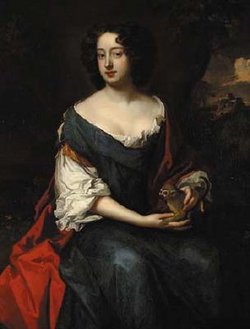 |
| Elizabeth Howard Lady Felton @Find A Grave |
Elizabeth Howard, Lady Felton (1656-1681).
Her lovers were:
2) Francis Newport.
3) James Scott, 1st Duke of Monmouth.
4) John Wilmot, 2nd Earl of Rochester.
5) William Cavendish, 1st Duke of Devonshire.
Physical Traits & Personal Qualities: ". . . Madam D'Aulnoy described her thus: 'Madam Betty had a beauty and youth that were almost dazzling, and won her the love of all who saw her, and being of a very gay disposition she seldom frightened her lovers away by her looks. . . . " (Wilson, 1976, p. 238)
Personal & Family Background: Elizabeth was the only daughter of James Howard, 3rd Earl of Suffolk and his second wife, Barbara Villiers.
Spouse & Children: She married Thomas Felton, a Groom of the King's Bedchamber. "In July 1675 she eloped with Thomas Felton, whom she later married, then just a Groom of the Bedchamber. It does not seem to have done either of their careers any harm, s he rose to become Comptroller of the Queen's Household, and she became free to have a series of affairs with leading courtiers, including the poet-Earl of Rochester, who refers to her in a number of his poems. Her only child, Elizabeth Felton, married John Hervey, later 1st Earl of Bristol (1665-1751), who resided at Ickworth, in 1695). (National Trust Collections)