 |
| Jennie Churchill |
Lady Randolph Churchill
(1854-1921)
Daughter of: Leonard Jerome, the King of Wall Street & Clara Hall. (White: 35)
Wife of:
1. Lord Randolph Churchill, mar 1874.
2. George Cornwallis-West, mar 1900, div 1914)
3. Montagu Phippen Porch (1877-1964), mar 1918.
Jennie's personal and family background.
1. Lord Randolph Churchill, mar 1874.
2. George Cornwallis-West, mar 1900, div 1914)
3. Montagu Phippen Porch (1877-1964), mar 1918.
Jennie's personal and family background.
She was the daughter of Leonard Jerome, " . . . a one-time lawyer and diplomat turned 'King of Wall Street.', and his wife Clara Hall. (White: 35)
Jennie's spouses & offspring.
1) Lord Randolph Churchill, mar 1874
2) George Cornwallis-West, mar 1900, div 1914,
"After John’s death in 1895, Jennie married George Cornwallis-West in 1900, called 'the handsomest man in England’, a Guards officer who was only two weeks older than Winston, then divorced him eleven years later. . . ." (Wikitree)
Married in 1918 Montagu Phippen Porch (1877-1964)
Jennie's spouses.
" . . . She had numerous lovers and admirers including King Edward VII and King Milan of Serbia. She married twice more, her second to a captain in the Scots Guards ended in divorce. A third husband was a British civil servant and they lived in Nigeria with the marriage lasting until her death. . . ." (findagrave.com)
Jennie's spouses & offspring.
1) Lord Randolph Churchill, mar 1874
2) George Cornwallis-West, mar 1900, div 1914,
"After John’s death in 1895, Jennie married George Cornwallis-West in 1900, called 'the handsomest man in England’, a Guards officer who was only two weeks older than Winston, then divorced him eleven years later. . . ." (Wikitree)
Married in 1918 Montagu Phippen Porch (1877-1964)
Jennie's spouses.
" . . . She had numerous lovers and admirers including King Edward VII and King Milan of Serbia. She married twice more, her second to a captain in the Scots Guards ended in divorce. A third husband was a British civil servant and they lived in Nigeria with the marriage lasting until her death. . . ." (findagrave.com)
Jennie's physical appearance and personal qualities.
" . . . Strikingly beautiful, with amber eyes, dark-brown hair, full breasts and an irrepressible lust for life, Jennie was irresistible to men." (Daily Mail, 2008)
How others described Jennie.
" . . . Jennie had an extraordinary beauty. One who saw her described her as 'a dark, lithe figure . . . appearing to be of another texture to those around her---radiant, translucent, intense. A diamond star in her hair, her favorite ornament---its lustre dimmed by the flashing glory of her eye. More of the panther than of the woman in her look.' Margot Asquith, who met Jennie Churchill in Newmarket, also used the feline simile: 'She had a forehead like a panther's and great wild eyes that looked through you.'" (Dreadnaught: Britain, Germany, and the Coming of the Great War: 750)
Jennie's trail of lovers.
"She is said to have had more than 200 lovers, some of them younger than her own son. Strikingly beautiful, with amber eyes, dark-brown hair, full breasts and an irrepressible lust for life, Jennie Jerome was irresistible to men. Earls, lords, counts, even the randy old Prince Of Wales, the future Edward VII, lusted after her. And she willingly complied. When Edward was crowned in 1902, she sat in a special pew in Westminster Abbey, which society wits dubbed 'the loose box' on account of its rather promiscuous occupants. She shared it with half a dozen other royal mistresses, including Alice Keppel and Lillie Langtry." (mailonline.com, 2011, Dec 11)
A squadron of a 100, 200? Men for Lady Churchill.
"The Prince would have been entitled to regard an affair with Jennie as 'safe' because she was known to have a number of lovers, most of them younger than herself. Indeed, during her lifetime she was rumoured to have slept with more than a hundred men, though one must take allowances for gossip and plain jealousy. During the twentieth century this figure seems to have escalated to two hundred, which seems a little excessive , but there was nevertheless a small squadron of men either recognised by her intimates to have been Jennie's lovers, and/or about whom Jennie wrote to Leonie. . . ." (The Churchills: In Love and War: 164)
" . . . Jennie took lovers; one estimate was that she had two hundred. Society did not doubt that one conquest was Albert Edward, Prince of Wales. Jennie did not flaunt her lovers and Randolph---who had no choice---accepted them, although on one occasion he ordered the Prince of Wales out of his house and on another, he attacked one of her companions with his fists. . . ." (Dreadnaught: 751)
Jennie's list of lovers -- the known and the unknown.
" . . . Strikingly beautiful, with amber eyes, dark-brown hair, full breasts and an irrepressible lust for life, Jennie was irresistible to men." (Daily Mail, 2008)
How others described Jennie.
" . . . Jennie had an extraordinary beauty. One who saw her described her as 'a dark, lithe figure . . . appearing to be of another texture to those around her---radiant, translucent, intense. A diamond star in her hair, her favorite ornament---its lustre dimmed by the flashing glory of her eye. More of the panther than of the woman in her look.' Margot Asquith, who met Jennie Churchill in Newmarket, also used the feline simile: 'She had a forehead like a panther's and great wild eyes that looked through you.'" (Dreadnaught: Britain, Germany, and the Coming of the Great War: 750)
Jennie's trail of lovers.
"She is said to have had more than 200 lovers, some of them younger than her own son. Strikingly beautiful, with amber eyes, dark-brown hair, full breasts and an irrepressible lust for life, Jennie Jerome was irresistible to men. Earls, lords, counts, even the randy old Prince Of Wales, the future Edward VII, lusted after her. And she willingly complied. When Edward was crowned in 1902, she sat in a special pew in Westminster Abbey, which society wits dubbed 'the loose box' on account of its rather promiscuous occupants. She shared it with half a dozen other royal mistresses, including Alice Keppel and Lillie Langtry." (mailonline.com, 2011, Dec 11)
A squadron of a 100, 200? Men for Lady Churchill.
"The Prince would have been entitled to regard an affair with Jennie as 'safe' because she was known to have a number of lovers, most of them younger than herself. Indeed, during her lifetime she was rumoured to have slept with more than a hundred men, though one must take allowances for gossip and plain jealousy. During the twentieth century this figure seems to have escalated to two hundred, which seems a little excessive , but there was nevertheless a small squadron of men either recognised by her intimates to have been Jennie's lovers, and/or about whom Jennie wrote to Leonie. . . ." (The Churchills: In Love and War: 164)
" . . . Jennie took lovers; one estimate was that she had two hundred. Society did not doubt that one conquest was Albert Edward, Prince of Wales. Jennie did not flaunt her lovers and Randolph---who had no choice---accepted them, although on one occasion he ordered the Prince of Wales out of his house and on another, he attacked one of her companions with his fists. . . ." (Dreadnaught: 751)
Jennie's list of lovers -- the known and the unknown.
". . . Apart from those already mentioned -- Charles Kinsky, Freddy Wolverton and others -- among the rest were Hugh Warrender, Henry de Breteuil, Baron Hirsch, Kincaid Smith, Paul Bourget, Sir Edgar Vincent, William Waldorf Astor, Lord Dunraven, Thomas Trafford, Norman Forbes-Robertson and Harry Cust. From her correspondence can be gleaned others whose full names are not given -- someone called Simon, and another -- an Italian -- called Casati. Then there was John Delacour, whom Randolph intended to cite as correspondent if they were to divorce, and a number of men in Ireland who were written about but unnamed in her correspondence. And besides her lovers, Jennie seemed to be able to attract and impress men of power and character who never hopped into her bed, and these -- Lord Salisbury, the Duke of Cambridge and Lord Cromer to name three -- were all grist to Winston's mill, contacts to be exploited to achieve his ends." (The Churchills: In Love and War: 165)
How many men and who were they? The 'known' lover.
"How could one possibly quantify such a figure, and who were all these men? The eminently readable William Manchester in The Last Lion gave a list of her lovers -- numbering fewer than twenty -- but no sources. He stated categorically: 'Her lovers are known [italics added] to include Kinsky, Henri Breteuil, Thomas Trafford, Baron Hirsch, Sir Edgar Vincent (later Viscount D'Abernon), Lord Dunraven, Herbert von Bismarck, Henri le Tonnelie (sic), Norman Forbes Robertson, Hugh Warrender of the Grenadier Guards, a cavalry officer named Kincaid Smith, the American Bourke Cockran, [Paul] Bourget, William Waldorf Astor, Harry Cust, a soldier named Taylor, a man called Simon, an Italian named Casati, and Albert Edward of the house of Saxe-Coburg . . . later King Edward VII.'" (American Jennie: The Remarkable Life of Lady Randolph Churchill: 123)
Jennie's 'known' but unmentioned lovers.
"It's an arbitrary list. Breteuil and Le Tonnelier are one and the same man. Major Caryl Ramsden -- a source of amusement for the Prince of Wales -- is not mentioned, nor is the shadowy John Delacour, named by Randolph in a threatened divorce case who flitted in and out of their lives, nor is 'Star Falmouth' believed by the Leslies to the the father of Winston's brother Jack, nor is Marion Crawford, the American author who lived mostly in Italy. Crawford's name has not survived in the gossipy letters between the sisters, but Clare Sheridan knew about her aunt's attraction for him. . . ." (American Jennie: 123)
 Lady Randy's lovers were:
"How could one possibly quantify such a figure, and who were all these men? The eminently readable William Manchester in The Last Lion gave a list of her lovers -- numbering fewer than twenty -- but no sources. He stated categorically: 'Her lovers are known [italics added] to include Kinsky, Henri Breteuil, Thomas Trafford, Baron Hirsch, Sir Edgar Vincent (later Viscount D'Abernon), Lord Dunraven, Herbert von Bismarck, Henri le Tonnelie (sic), Norman Forbes Robertson, Hugh Warrender of the Grenadier Guards, a cavalry officer named Kincaid Smith, the American Bourke Cockran, [Paul] Bourget, William Waldorf Astor, Harry Cust, a soldier named Taylor, a man called Simon, an Italian named Casati, and Albert Edward of the house of Saxe-Coburg . . . later King Edward VII.'" (American Jennie: The Remarkable Life of Lady Randolph Churchill: 123)
Jennie's 'known' but unmentioned lovers.
"It's an arbitrary list. Breteuil and Le Tonnelier are one and the same man. Major Caryl Ramsden -- a source of amusement for the Prince of Wales -- is not mentioned, nor is the shadowy John Delacour, named by Randolph in a threatened divorce case who flitted in and out of their lives, nor is 'Star Falmouth' believed by the Leslies to the the father of Winston's brother Jack, nor is Marion Crawford, the American author who lived mostly in Italy. Crawford's name has not survived in the gossipy letters between the sisters, but Clare Sheridan knew about her aunt's attraction for him. . . ." (American Jennie: 123)
Royal lovers.
"The Churchills' position in London society, and Jennie's ambitions for her husband and sons, brought them into regular contact with Prince Albert Edward, Queen Victoria's heir, known as Bertie. The Prince was renowned for his sexual appetite as a string of mistresses, and reportedly held wife-swapping parties in his London home. Jennie, a dark beauty who has also been characterised as a sexual adventurer, did not escape his attention. . . (A)s early as 1889, Lord Randolph had returned home to find the Prince and his wife together, scandalously unchaperoned, and angrily threw the Prince out. . . ." (Standard)
 |
| Milan I Obrenovic of Serbia |
Lover in 1867.
"Milan I (1854-1901) of Serbia is one of a number of eastern European princelings who can be roughly equated with the King who figures in 'A Scandal in Bohemia'. He was known for his extramarital affairs, including one with Jennie Churchill, although no contraltos are mentioned. . . ." (Lives Beyond Baker Street)
"Jennie met one other large character in those weeks who was destined to play a role in the Jerome sisters' lives: the exiled King Milan of Serbia. When she first met Milan he had just abdicated in favour of his son after a fierce quarrel with and divorce from his wife Natalie. Jennie did not warm to Milan, finding him uncouth and extravagant. She described him in her memoirs as 'one of the most uncivilised beings I have ever encountered. A short, thick set man with inky black hair and moustache and of little or no education save what his natural intelligence helped him to pick up, he was notwithstanding, an agreeable personality.'" (American Jennie: 172)
Aristocratic lovers:
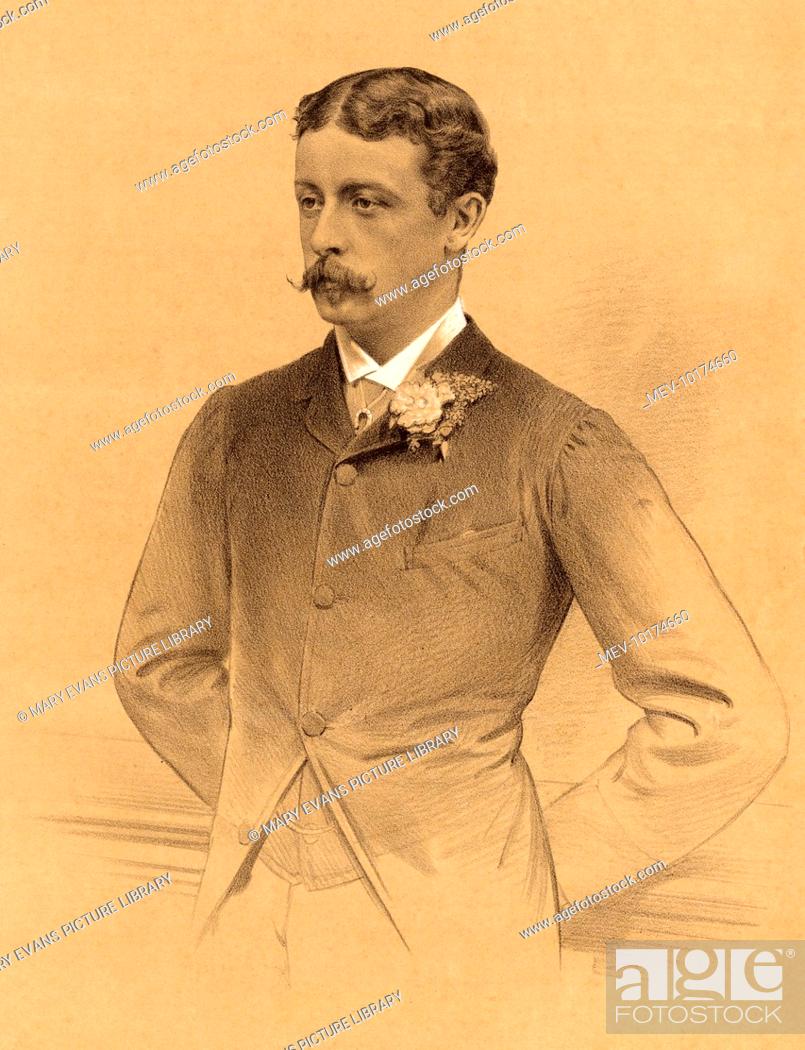 |
| Derrick Westenra 5th Baron Rossmor |
" . . . (T)he [5th] Lord Rossmore (was) known as 'Derry,' being one of the brightest spots of the Prince of Wales's set, and author of some lively memoirs called Things I Can Tell.' . . . Born in 1853 . . . Derrick Warner William Westenra, fifth Baron Rossmore, peers out in his frontispiece photo with a stern, even gaze. He is a portly figure, white-haired and white-ascoted, with a subtly dandyish close-trimmed moustache curled up at the tips and the small, pronounced exclamation mark of a tufted goatee just under his lower lip." (Mapping Norwood: An Irish American Memoir: 121)
Baron Rossmor's other lover was:
1. Mary Cornwallis-West.
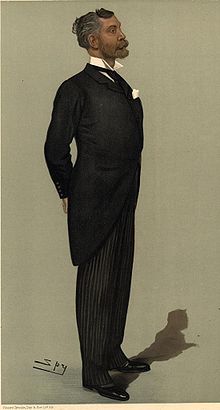 |
| Edgar Vincent 1st Viscount d'Abernon @Wikipedia |
British financier, politician & diplomat.
Son of: Rev. Sir Frederick Vincent, 11th Baronet & Maria Copley Young
Husband of: Lady Helen Venetia Duncombe, daughter of the 1st Earl of Feversham, mar 1890.
Physical appearance & personal qualities.
"There was one who especially admired her at this time: Edgar Vincent, lately commissioned into the Coldstream Guards. Vincent, three years younger than Jennie, was a lowly subaltern, son of a rector, who happened to be stationed in Ireland at the time he first set eyes on her. Later he became well known as Sir Edgar Vincent, Viscount D'Abernon, financier, politician and diplomat, described by Margot Tennant (later Asquith) as among 'the four best looking men I ever saw'. He was not only handsome, but brilliantly intelligent, a linguist, superb horseman, gambler, witty raconteur and on account of his extramarital affairs, nicknamed 'the Piccadilly stallion'. . . ." (American Jennie: 88)
"It was quite remarkable the number of important posts he held while yet a young man. When Financial Adviser to the Egyptian Government he was only twenty-five or twenty-six. He was exceedingly good-looking and knew it, exceedingly clever and knew it; perhaps a trifle spoilt , but that was the fault of the women. They are responsible for making men strut and preen themselves. As is usual with great brains, he was a bit of egotist, which is only natural. . . He began life in the Coldstream Guards. . . ." (Further Indiscretions by a Woman of No Importance: 340)
Achievements & Honours.
Chairman of the Central Control Board (Liquor Traffic) (1915-1920); Member of Parliament (1899-1906); Baron D'Abernon (1914); British Ambassador to Germany (1920); Privy Counsellor (1920); Knight Commander of the Order of St. Michael and St. George, Knight Grand Cross (1917); Order of the Bath (1926); Viscount D'Abernon (1926).
Evelyn Boscawen, 7th Viscount Falmouth.
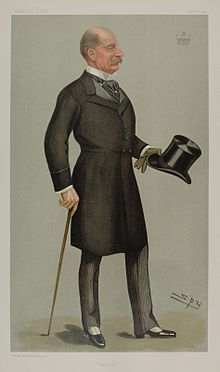 |
| Evelyn Boscawen 7th Viscount Falmouth |
". . . "'His great successes were racing for he won Derbies. . . Jennie put her seduction entirely on him. You can calculate when they first met by when Jack was born.' In fact they had first met at Ascot races, shortly after Jennie was married. Seven years older than Jennie, he was a bachelor at this time and did not marry until he was forty in 1890. Jennie had many visits from the 'Star Man' and his name occurs regularly in the diaries and notes between the Jerome sisters. . . . " (Sebba: 98)
Doubtful paternity.
"And so, if Randolph was not Jack's father, who might have been? The Leslie family believed it was Star Falmouth, a bug and broad military man with a thick moustache -- the sort of Physical characteristics that appealed to Jennie. She told her mother about his amazing moustache when she first described him. . . . " (Sebba: 97)
Physical appearance & personal qualities.
". . . From an early age, hunting and racing seem to have been his passion. 'Handsome and stupid' is a description Anita Leslie uses, but she adds that he was not too stupid to become assistant military secretary to the Duke of Marlborough in Ireland and to keep Jennie Churchill's affection all through her life. . . . " (Sebba: 98)
Personal & family background.
Personal & family background.
". . . Evelyn Boscawen, the seventh Viscount Falmouth, was, like most of his family for generations before him, educated at Eton. They were descended from the Boscawens, an ancient naval family. But, unlike them, he did not pass into sixth form nor did he follow his father to Oxford. He was sent into the army class and then the Coldstream Guards, where he eventually became a colonel. . . . " (Sebba: 97)
 |
| Frederic Glyn, 4th Baron Wolverton |
Baron Wolverton 1888
Lover in 1892.
Lover in 1892.
British banker & Conservative politician.
Vice-Chamberlain of the Household (Balfour Government (1902-1905).
Vice-Chamberlain of the Household (Balfour Government (1902-1905).
" . . . By the summer of 1892 she had formed a new attachment, one of which Randolph did not approve. He admitted the relationship in private conversations with Natty Rothschild: 'I suppose you know she is living with Freddy Wolverton,' he told his friend. Natty immediately shared the news with Loulou Harcourt. Randolph asked Jennie not to go to a party which Wolverton was giving that July, preferring her to see Claude Lowther, an eccentric art collector whom he considered safer." (American Jennie: 186)
" . . . When Jennie became friendly with Freddy he was in his late twenties, titled and an immensely rich landowner. Jennie may never have felt the same profound love for Freddy. . . ." (American Jennie: 186)
" . . . [D]uring one of Kinsky's long absences from England, she embarked upon a new sexual relationship, this time with a young man called Freddy Wolverton who begged her to end her relationship with Kinsky. . . It concerned Freddy Wolverton. She had not written to him since leaving England, and when she and Randolph reached Hong Kong there had been a cable from him, advising in abrupt telegraphic jargon that he considered their relationship at an end. There was little she could do, as she escorted her dying husband around the world." (The Churchills: In Love and War: 111)
Lord Wolverton's personal & family background.
"Frederic, Lord Wolverton, was a nephew of Gladstone's friend and supporter, the late second Lord Wolverton, a man of great wealth and generosity who had been Postmaster General for a brief period in 1886. . . ." (American Jennie: 186)
George Cornwallis-West (1874-1951)
British officer
 |
| George Cornwallis-West |
British officer
"Sometime that year (1898), Jennie met the strikingly handsome, George Cornwallis-West, a lieutenant in the Scots Guards. It is likely that they met at the home of General Sir Ian and Jean, Lady Hamilton... Victorian Society believed George to be the Prince of Wales's illegitimate son because George's mother, Mary (called Patsy in the family), had been his first lover---when she was only sixteen---and the Prince retained a high regard for her...." (Lee & Lee)
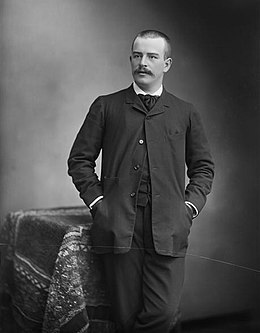 |
| Henri Le Tonnelier 8th Marquis de Breteuil @Wikipedia |
" . . . As to the Marquise de Breteuil above, she was Marcelite Garner married at Pau to Henri Charles Joseph le Tonnelie (sic), Marquis de Breteuil, whose continued devotion to Jennie Jerome, another one-time Holy Trinity parishioner, long after her marriage to Lord Randolph Churchill at Paris in 1874, has been told." (The History of the American Pro-Cathedral of the Holy Trinity, Paris: 515)
Herbert von Bismarck, 2nd Furst von Bismarck (1849-1904)
 |
| Herbert von Bismarck @Wikipedia |
" . . . Count Herbert Bismarck (was) an enormous man with an equally large reputation for womanising. Herbert Bismarck had just emerged from a very public divorce scandal involving a well-known singer. He and Jennie were immediately attracted and their names romantically linked for some years. 'A kindly man' is how Jennie tactfully recalls him in her Reminiscences. 'Although to English ideas he may perhaps have seemed a little rough and uncouth . . . he left many friends to deplore his premature death." (American Jennie: 166]
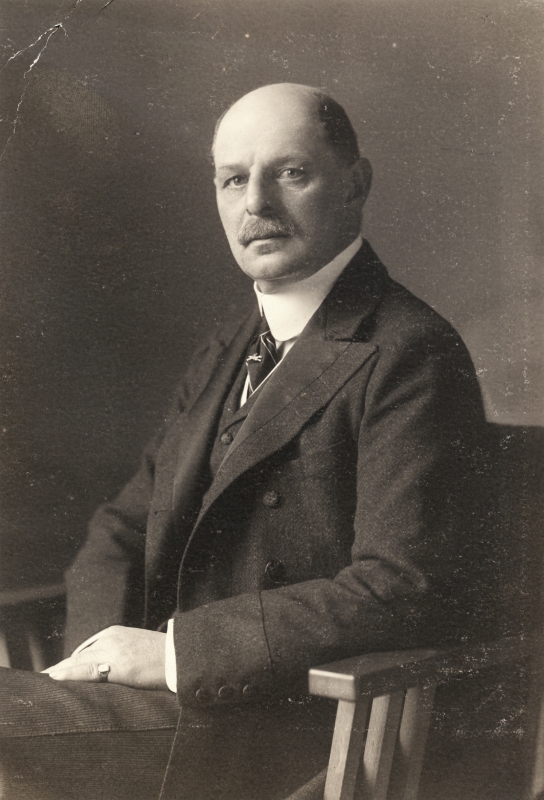 |
| Karl, 8th Prince Kinsky |
Austro-Hungarian ambassador to England
Son of: Ferdinand Bonaventura, 7th Prince Kinsky & Marie von Liechtenstein.
Husband of: Elisabeth, Grafin von Wolf-Metternich zur Gracht (1874-1909)
Kinsky was everything she desired in a lover.
Husband of: Elisabeth, Grafin von Wolf-Metternich zur Gracht (1874-1909)
Kinsky was everything she desired in a lover.
" . . . Charles Andreas Kinsky . . . was the man Jennie loved best all her life. He was everything she desired in a lover: linguist, pianist, brilliant sportsman and champion jockey, devastatingly good-looking heir to the fabulous Palais Kinsky in Vienna as well as to the Kinsky legend." (American Jennie: 120)
The social hero of the hour.
"Jennie crowded her life that year with politics, the Prince of Wales, her husband's illness, her house, the pulsing whirl of an intense social life, and a new lover. During the summer of 1883, Count Charles Kinsky rode his own chestnut mare, 'Zoedone,' in the Grand National and became the first amateur ever to win that race---despite 14-1 odds. They toasted him in all the racing clubs, named drinks after him, made him the social hero of the hour." (Jennie: The Life of Lady Randolph Churchill)
First encounter of lovers emotionally made for each other.
"But Jennie also began an affair that would take her heart. She may have first met the handsome Count Charles Rudolf Ferdinand Andreas Kinsky in London in 1881, but it's more likely that they had met in Ireland earlier, when he was visiting with Empress Elisabeth of Austria. Born in Vienna, Kinsky was four years younger than Jennie---at five foot seven he was slight in figure, but extraordinarily handsome, with compelling blue eyes. He would become the talk of the town as the first amateur to win England's Grand National Steeplechase on his own chestnut mare Zoedone, and eighteen years later he would inherit the title of Prince Carl Kinsky. Since he was a fiery young man, impulsive and romantic, he and Jennie were emotionally made for each other." (Best Little Stories from the Life and Times of Winston Churchill: 380)
Kinsky's physical appearance & personal qualities.
"Jennie saw much of the Prince of Wales during that time, and she saw even more of Count Kinsky. Kinsky was still the hero of the hour in England because of his victory in the Grand National. Every man wanted him at his table and a long waiting list of women wanted him in their boudoirs. He had not only brawn but brain. He was handsome, charming, a rising diplomat with a talent for words, a sparkling pianist, a man with an easy laugh and a firm grip. Jeannie's brother-in-law Moreton Frewen called Kinsky 'the best Austrian that ever was,' and printed his photograph in his memoirs. . . ." (Jennie: The Life of Lady Randolph Churchill)
The man she had loved most was like 'an opium' to her.
But nothing had shattered Jennie's illusions and darkened her future more than the sudden marriage of the man she had loved most, Count Charles Rudolf Andreas Kinsky. Jennie had once written that Kinsky was 'like opium' for her. A young Austrian diplomat of noble lineage, he was extraordinarily handsome, with the kind of good looks that won a woman without his making any effort. A brilliant young man, he wrote books about international diplomacy; musically talented, he played the piano excellently. He was charming, with old-world manners but a modern wit. Above all, he was a spectacular horseman and a national hero in Great Britain, the first foreigner to have won the Grand National on his own horse. And he was in love with Jennie, desperately so." (Jennie: The Life of Lady Randolph Churchill)
A love couched in the most guarded references.
"By coincidence, Jennie had also just begun the most romantic of her various liaisons, this with another great Victorian equestrian, Lord Randolph's friend, the handsome and elegant Hungarian Count Charles Rudolph Ferdinand Andreas Kinsky. Unlike Lord Randolph, Kinsky was a man of great physical strength and easy charm, and he became the hero of London society by winning the Grand National in 1886. The combination of horsemanship, European title, and great high spirits made the Count irresistible to Jennie, and their love affair became the great obsession of their lives. But as always, Jennie had her family and her position in society to consider. Her diary gives only the most guarded references to Count Kinsky." (The Private Lives of Winston Churchill)
Kinsky's personal & family background.
"The handsome, dashing Charles Rudolf Ferdinand Andreas Kinsky was twenty-five---four years younger than Jennie---had served as honorary attached at the Austro-Hungarian Embassy in London since 1881, and had been made Imperial Chamberlain early in 1883. His father was Ferdinand, seventh Prince Kinsky, whom Jennie probably met when he toured Ireland with the Empress of Austria in 1879. Count Kinsky's mother was a Liechtenstein Princess, and the whole family was branched deep into the heritage of European history." (Jennie: The Life of Lady Randolph Churchill)
Affair's end & aftermath.
"From San Francisco, Jennie and Randolph, Dr. Keith, and the remaining manservant set off next for Japan. Randolph only became visibly more ill, more difficult to deal with. More angry scenes . . . and the second servant was sent home. After Japan, Randolph insisted that they visit Burma, which he had been so instrumental in annexing for the British Empire years before. And to top off all of Jennie's other miseries, she received a telegram from Count Kinsky announcing his engagement to Countess Elizabeth Wolff Metternich zur e Gacht. Jenny was devastated, and her subsequent letters to Clara shows it: 'I HATE IT. I shall return without a friend in the world & too old to make any more now.' And then to Leonie, while steaming to Egypt from India: 'I suppose Charles [Count Kinsky] has written you about his engagement he wire it to me---and from his last letter I wasn't expecting it . . . Oh, Leonie darling, do you think it is too late to stop it? Nothing is impossible.'" (Best Little Stories from the Life and Times of Winston Churchill: 393)
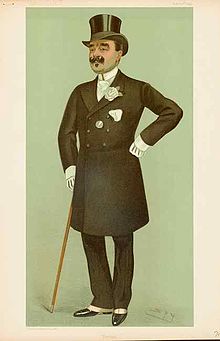 |
| Luis Pinto de Soveral 1st Marquess of Soveral the Adonis of Diplomacy @Wikipedia |
Luis Pinto de Soveral, 1st Marques do Soveral (1851-1922)
Portuguese aristocrat & diplomat.
Minister of Foreign Affairs 1895
Son of:
Eduardo Pinto de Soveral, Visconde de Sao Luis & Maria da Piedade Paes de Sande e Castro.
William Waldorf Astor, 1st Baron Astor (1848-1919)
Portuguese aristocrat & diplomat.
Minister of Foreign Affairs 1895
Son of:
Eduardo Pinto de Soveral, Visconde de Sao Luis & Maria da Piedade Paes de Sande e Castro.
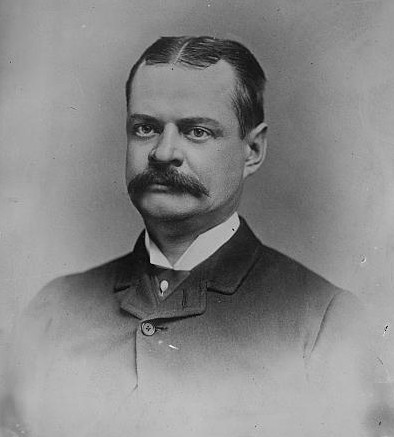 |
| William Waldorf Astor 1st Baron Astor @Wikipedia |
"While being the Prince's current favorite mistress, Jennie also continued an affair with the recently widowed William Waldorf Astor, whose wife, Mary, had also died in 1894. Astor was a severe if distinguished-looking man with an excellent intellect and a keen interest in history... Astor wanted to marry Jennie, but she would not have him, despite his millions, as she found him to staid a character. . . ." (The Churchills: A Family Portrait: 87)
Windham Thomas Wyndham-Quin, 4th Earl of Dunraven (1841-1926)
Irish journalist, landowner, entrepreneur, sportsman & politician
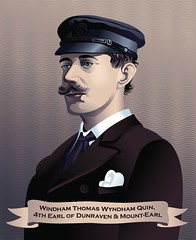 |
| Windham Thomas Wyndham-Quin 4th Earl of Dunraven |
Irish journalist, landowner, entrepreneur, sportsman & politician

" . . . (W)ithin weeks of Randolph's death Jenny was already involved in a passionate fling in Paris. The man was Bourke Cockran, a brilliant silver-tongues orator, lawyer and American Congressman. Both had recently been widowed, and they spent all their time together. Leonie, also staying at Avenue Kleber that summer, was attracted to Cockran too, but she had generously 'stepped back' because 'poor Jennie' who had been so unhappy was in desperate need of a romance. Jennie's family were fully aware that she had an affair with Cockran that summer, and in any other newly widowed woman this would have been regarded as more than shocking. But in Jennie's case she had lived with Randolph platonically for so many years that her undeniable sadness at his death was not linked in any way to her sexual needs; and she was on the rebound from Kinsky. This latest affair between two tempestuous individuals was passionate but not necessarily very comfortable -- a niece described it as 'the clash of two cymbals'. But by the time Cockran returned to the USA in late summer the liaison had run its course; the couple parted fondly but without any deep regret, and would remain friends." [The Churchills: In Love and War: 117-]
Caryl Ramsden (1868-1941)
British military officer
"In the meantime, Jennie had attracted another young lover, Major Caryl Ramsden, an officer in the Seaforth Highlanders. His name crops up in letters between Jennie and her sons from 1897. 'Beauty Ramsden,' as he was nicknamed, had been posted to Cairo, where an expedition was being assembled under Horatio Herbert Kitchener . . . Jennie thought she might visit Ramsden in Egypt. . . Jennie stayed with Ramsden at the Continental Hotel, Cairo. . . At the end of her stay, she left for Port Said, only to find out that her homeward ship had been delayed. Returning to the hotel, she hoped to spend another night with Ramsden, she entered his room without knocking and found him embracing Lady Maxwell, the wife of General John Maxwell. The row she kicked up was heard throughout the hotel. . . ." (The Churchills: A Family Portrait)
British military officer
"In the meantime, Jennie had attracted another young lover, Major Caryl Ramsden, an officer in the Seaforth Highlanders. His name crops up in letters between Jennie and her sons from 1897. 'Beauty Ramsden,' as he was nicknamed, had been posted to Cairo, where an expedition was being assembled under Horatio Herbert Kitchener . . . Jennie thought she might visit Ramsden in Egypt. . . Jennie stayed with Ramsden at the Continental Hotel, Cairo. . . At the end of her stay, she left for Port Said, only to find out that her homeward ship had been delayed. Returning to the hotel, she hoped to spend another night with Ramsden, she entered his room without knocking and found him embracing Lady Maxwell, the wife of General John Maxwell. The row she kicked up was heard throughout the hotel. . . ." (The Churchills: A Family Portrait)
Caryl Ramsden's other lover was:
1. Louisa, Lady Maxwell.
"Jennie's love affair that winter came to an unexpected end. . . When, on reaching Port Said, she was advised that her ship would be delayed for several days, she impulsively rushed back to Cairo hoping to spend a final few hours with Ramsden. On entering his hotel room unannounced, in order to surprise him, it was she who was surprised, for she discovered her lover in a compromising situation with Louisa, Lady Maxwell, wife of his commanding officer. . . . " (The Churchills: In Love and War: 162)
Casati
an Italian.
an Italian.

Hugh Warrender
Grenadier Guards.
" . . . In the summer, Jennie was seen out with a handsome, boyish, young officer of the Grenadier Guards, the twenty-seven-year-old Hugh Warrender. She arrived with him at Cowes Week on the Isle of Wight in August. . . Warrender was genuinely in love with her and would have married her. There is a group of photograph of Jennie, Leonie, Winston, Jack, and Hugh, taken that week. Warrender looks impossibly young." (Lovell: 86)
John Delacour (1841-?)
He did not allow his King to choose 'his' friends for him:
"For Jerome and Randolph, as well as for the principal protagonists, the affair had permanent consequences. The Prince of Wales declared them personae non grata; not only would he not meet the Churchills at any house in London but he let it be known that he would not go to any establishment were they were received. One stalwart who loudly resisted the royal pressure was the Irish adventurer and former lieutenant in the 11th Hussars, John Delacour. Delacour, a debonair friend of Randolph's, who was to play another key role in Jennie's life a decade later, told the Prince: 'Sir, I allow no man to choose my friends.' It was a brave pose but perhaps not surprising for one who was no stranger to the divorce courts himself, having been named as co-respondent, but found not guilty of adultery, in May 1876." (American Jennie: 80)
"For Jerome and Randolph, as well as for the principal protagonists, the affair had permanent consequences. The Prince of Wales declared them personae non grata; not only would he not meet the Churchills at any house in London but he let it be known that he would not go to any establishment were they were received. One stalwart who loudly resisted the royal pressure was the Irish adventurer and former lieutenant in the 11th Hussars, John Delacour. Delacour, a debonair friend of Randolph's, who was to play another key role in Jennie's life a decade later, told the Prince: 'Sir, I allow no man to choose my friends.' It was a brave pose but perhaps not surprising for one who was no stranger to the divorce courts himself, having been named as co-respondent, but found not guilty of adultery, in May 1876." (American Jennie: 80)
Personal & family background.
"John Delacour was a man surrounded by scandal since his birth in 1841. His mother, a Galway beauty called Josephine Handcock, was mistress of Ulick John de Burgh, fourteenth Earl and first Marquis of Clanricarde, a former ambassador to Russia and a notoriously cruel absentee Irish landlord. Their illegitimate son was passed around among relatives, his name changing from John de Burgh to John Delacour, until, aged eleven, his natural mother died and he inherited a fortune from her estates. But he gambled on cards and horses and by the time he was twenty-one had lost most of it having been forced to relinquish his inheritance for a mere 4,500 pounds. By the time he rallied to Randolph's support in 1876 he had sold his commission in the army and devoted himself to London society and clubs." (American Jennie: 80)
"Passionless she was not. And John Delacour's involvement in this story is not necessarily what it appears, that he was another of Jennie's lovers, although they were undoubtedly close. It is possible that, by allowing himself to be cited as co-respondent, he was doing Randolph a favour. Delacour was a loyal if occasional friend who strikes an increasingly pathetic figure, short of funds, mentioned, if at all, in the correspondence for his poor health and financial difficulties. In 1890 Delacour eventually married a north-country heiress, Theresa Mary Towneley. Since his address was listed as 76 Eaton Place he cannot have been as poor as all that. Earl Dunraven describes him as 'a type of the idle rich (though he was not rich) that does not, I think, any longer exist'. . . ." (American Jennie: 149)
John Strange Jocelyn.
" . . . When Winston was seven, his mother spent time on the Irish estate of Colonel John Strange Jocelyn, a famous horseman. Jennie became pregnant, and when the child was born named it John Strange Churchill . . . Winston's only brother." (Massey: 751)
Marion Crawford (1854-1909).
American playwright & novelist.
"Crawford, playwright and novelist, was a ladies' man of legendary and irresistible charm, a romantic in his life and writing who personified the American dream of escape. There were frequent rumours of a rift in his marriage. He was a friend and admirer of Vittoria Sermoneta, who may have introduced him to . . . . " (American Jennie: 323)
Maurice de Hirsch (1831-1896)
German philanthropist
"Hard-pressed Clara was now persuaded to host dinner parties for potential investors, one of whom was Baron Moritz de Hirsch, the Paris-based Jewish philanthropist who was also close to the Prince of Wales. Jennie had known the Baron and his wife Clara for some time, but it was not until the 190-s that his name appears regularly in the correspondence. De Hirsch is one of those 'known' to have been one of Jennie's lovers, accordting to William Manchester in The Last Lion. The evidence is flimsy but the idea is not impossible. . . ." (American Jennie: 176)
Norman Forbes-Robertson.
Paul Bourget.
French novelist
Ronald Kincaid Smith
British cavalry officer.
" . . . Another of Churchill's companions on the voyage was Captain Ronald Kincaid-Smith, who was rumoured to have been romantically attached to Winston's mother. . . . " (Churchill's First War: Young Winston at War with the Afghans: 103)
"Jennie remembered to send Winston the photos he requested of her 'as the wicked 'Theodora,'' and she also asked him to give one to Kincaid-Smith, a handsome Captain in Winston's outfit with whom she had been corresponding. Winston knew about this correspondence and perhaps was demonstrating a pang of jealousy when he deprecated Kincaid-Smith's polo plaing, which, he said, 'has not got the dash of younger men.'" (Jennie: The Life of the American Beauty: n.p.)
Marion Crawford (1854-1909).
American playwright & novelist.
"Crawford, playwright and novelist, was a ladies' man of legendary and irresistible charm, a romantic in his life and writing who personified the American dream of escape. There were frequent rumours of a rift in his marriage. He was a friend and admirer of Vittoria Sermoneta, who may have introduced him to . . . . " (American Jennie: 323)
Maurice de Hirsch (1831-1896)
German philanthropist
"Hard-pressed Clara was now persuaded to host dinner parties for potential investors, one of whom was Baron Moritz de Hirsch, the Paris-based Jewish philanthropist who was also close to the Prince of Wales. Jennie had known the Baron and his wife Clara for some time, but it was not until the 190-s that his name appears regularly in the correspondence. De Hirsch is one of those 'known' to have been one of Jennie's lovers, accordting to William Manchester in The Last Lion. The evidence is flimsy but the idea is not impossible. . . ." (American Jennie: 176)
Norman Forbes-Robertson.
Paul Bourget.
French novelist
Ronald Kincaid Smith
British cavalry officer.
" . . . Another of Churchill's companions on the voyage was Captain Ronald Kincaid-Smith, who was rumoured to have been romantically attached to Winston's mother. . . . " (Churchill's First War: Young Winston at War with the Afghans: 103)
"Jennie remembered to send Winston the photos he requested of her 'as the wicked 'Theodora,'' and she also asked him to give one to Kincaid-Smith, a handsome Captain in Winston's outfit with whom she had been corresponding. Winston knew about this correspondence and perhaps was demonstrating a pang of jealousy when he deprecated Kincaid-Smith's polo plaing, which, he said, 'has not got the dash of younger men.'" (Jennie: The Life of the American Beauty: n.p.)
Simon.
Taylor
a soldier.
a soldier.
Thomas Trafford.
"Miss Leslie seems at least in part motivated in her writing by a wish to correct certain inferences made in Mr. Martin's earlier book about Jen nie, not listed in her bibliography. Yet she does not convincingly contradict any of Mr. Martin's fascinating innuendoes such as that John Strange got more than his name from Lord Jocelyn, or that when Lord Randolph took his favorite traveling companion, Thomas Trafford, to India, Jennie was “bitter about being left behind.” The whisper, Mr. Martin adds, “was that Randolph Churchill was homosexual.” Miss Leslie indeed tries hard to set the record straight, but succeeds only in applying a not very convincing coat of white wash to the ebullient Jennie who might, or might not, have been grateful to her great niece such a service." (NYT)


