(1095-1148)
7th Count of Savoy
1103-1147
Other titles: Count of Maurienne 1103; Marquess of Savoy, Count of Geneva.
Husband of:
1. Adelaide
2. Mathilde d'Albon (1100-1145) mar c1123
(1278-1334)
Principe d'Achaia
1301-1307
Signore del Piemonte
1282-1334
Husband of:
1. Isabelle de Villehardouin, Heiress of Achaea. mar 1301
2. Catherine de Vienne, mar 1312.
His lover was:
Serena della Perrosa.

Husband of: Yolande Palaeologina of Montferrat.
His lover was.
Unnamed mistress.
"Chroniclers are better romancers than historians, and their accounts are often more entertaining than accurate. Aymon had already demonstrated that his aversion for temporal affairs was not insuperable. He had commanded the war engines at the siege of Corbieres in 1321, and he had ruled in person his appanage of Bresse ever since the death of his father, Amadeus V, in 1323. His acknowledged paternity of half a dozen illegitimate children, while in no way rendering him a 'bad man' by medieval standards, does permit some doubt as to the intensity of his spiritual vocation. Thus it was probably not with overwhelming reluctance that Aymon left the precincts of sanctity in 1329 to become the sixteenth count of Savoy. The following year he married the daughter of Marquis Teodoro I of Montferrat, whose dominions bordered those of the house of Savoy in the Piedmont; and with energy, if not enthusiasm, he took on the 'hardships and vanities' of the temporal estate. For four years the newly married couple remained childless, however, and their anxiety increased with each year that passed. Aymon had sired strong sons before his marriage, but his youthful bride, Violante de Montferrat, seemed unable to bear children. Both the count and his wife made every effort to placate an apparently angry deity with prayers, pilgrimages, and pious works. The countess made a special journey across the mountains of Bugey to visit the shrine of the Virgin Mary in the parish church of Bourg-en-Bresse, who enjoyed a great reputation in the region for her power to make fruitful marriages. At last the countess had conceived, and the answer to the family prayers came at about midnight on 4 January, when 'Madame la Comtesse fist ung biau fils.'" (The Green Count of Savoy: 12)
Aimone's natural offspring--how many of them?: "The household of the count now took on a new character, for the children were provided with servants, nurses, guardians, and masters almost at once. It was customary for the rulers of Savoy to take their illegitimate children into their households and to bring them up along with their legitimate offspring until they were old enough for independent establishments. Just how many such brothers and sisters young Amadeus grew up with is difficult to determine. The dates of their births are usually unknown, and their whereabouts are often indicated only by rare and scattered references. Two of them, Humbert and Ogier, make frequent appearances, for both served Amadeus VI in important administrative and military posts throughout their lives. Of the other illegitimati far less is known, but some of them were clearly alive and present during the years of Amadeus' childhood. There was an illegitimate Amadeus who lived with the family and was reared with his brothers and sisters until his death in 1346. In 1330-1340 there is mention of one Benoit, 'batard of the late lord count,' and another, Jean la Mitre, 'knight and bastard of Savoy,' was castellan of Tarentaise and Entremont in 1343-1345. Another was Jean, bastard of Savoy, was a canon in the cathedral chapter of Lausanne in 1349, and cantor in that of Geneva. A daughter, Marie, was affianced in 1335 to Master Andre Noncristiani of Pisa, knight, treasury officer and castellan of Rossillon in 1331-1336. Two other girls, Donata and Huguette, were made nuns at Bons-en-Bugey, and there may have been a third daughter, name unknown, who married a noble of the Chablais, Louis de Lucinge." (The Green Count of Savoy: 14)
Attitude towards the illegitimati - bastard of Savoy - with the blood of the mountain dynasty in his veins: "The illegitimate children were thus considered part of the family, and the family was a very important entity. Anyone with the blood of the mountain dynasty in his veins was a God-given member, regardless of the irregularities surrounding his birth. No resentment seems to have been felt by the countess toward the children, for she gave them presents and looked after their needs exactly as she did for her own offspring. Indeed, the title of 'bastard of Savoy' was a source of pride, not shame, and that epithet, testifying to such illustrious paternity, was commonly employed in official documents. The counts married their bastard sons to noble heiresses and sought posts for them in the state or in the Church, as their status and opportunities allowed. When Bastard Humbert de Savoie began to have illegitimate sons of his own, they too were received as part of the family by the count and countess and were destined for military and political institutions.
 |
| Amedeo VI of Savoy |
(1334-1383)
Count of Savoy
1343-1383.
Son of: Aimone di Savoia, Count of Savoy & Violante di Monferrato.
Husband of: Bonne de France (1341-1402), daughter of Jean de France, Duc de Berri & Isabelle de Valois.
His lover was:
1) Antoinette Chalvet.
"Antoinette Chalvet, whose parents are not known, was the mistress of Amédée VI, count of Savoy, and earlier of his son the future Amédée VII. She was the mother of Jeannette, one of Amédée VI's natural daughters[1]. However Guichenon does not mention her name, and the primary source which confirms her origin and her relationships with Comte Amedée VI and Comte Amédée VII has not yet been identified." (Wikitree)
Natural offspring:
a. Giovanna di Savoia
b. Antonia di Savoia.
1) Antoinette Chalvet.
"Antoinette Chalvet, whose parents are not known, was the mistress of Amédée VI, count of Savoy, and earlier of his son the future Amédée VII. She was the mother of Jeannette, one of Amédée VI's natural daughters[1]. However Guichenon does not mention her name, and the primary source which confirms her origin and her relationships with Comte Amedée VI and Comte Amédée VII has not yet been identified." (Wikitree)
Natural offspring:
a. Giovanna di Savoia
b. Antonia di Savoia.
 |
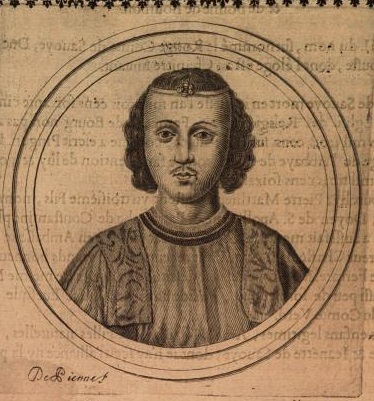
| Amedeo VII of Savoy |
(1360-1391)
19th Count of Savoy
1383-1391
Other titles: Count of Aosta; Count of Maurienne; Count of Nice
Son of: Amedeo VI di Savoia & Bonne de Bourbon.
Husband of: Bonne de Berry (1360-1435) mar 1377, daughter of Jean de Valois, Duc de Berry & Jeanne d'Armagnac.
His lover was:
1) Francoise Arnaud.
Natural offspring:
Husband of: Bonne de Berry (1360-1435) mar 1377, daughter of Jean de Valois, Duc de Berry & Jeanne d'Armagnac.
 |
| Amedeo VII di Savoia |
 |
| Amedeo VII of Savoy |
1) Francoise Arnaud.
Natural offspring:
a. Umberto di Savoia, Conte di Romont (d.1443)
b. Giannette di Savoia (1377-?), husband of b-1. Andrea di Glareins & b-2. Pierre L'Anglois.
 |
| Filippo II of Savoy |
(1438-1497)
7th Duke of Savoy
1496-1497
Other titles:
Count of Bresse 1461-1497
Count of Bugey
Prince of Piedmont.
Son of: Ludovico I di Savoia, Principe di Piemonte & Anne de Lusignan, Princess of Cyprus.
Husband of:
Husband of:
1. Marguerite de Bourbon (1438-1483) mar 1472
2. Claudine de Brosse (1450-1513) mar 1485.
His lovers were:
1) Bona di Romagnano.
Natural offspring:
His lovers were:
1) Bona di Romagnano.
Natural offspring:
a. Claudine di Savoie.
2) Libera Portoneria.
Natural offspring:
a. Rene de Savoie. (1468/73-1525), Count of Villars 1497, Count of Tende 1501
2) Libera Portoneria.
Natural offspring:
a. Rene de Savoie. (1468/73-1525), Count of Villars 1497, Count of Tende 1501
 |
| Emmanuel Philibert I Duke of Savoy @Wikipedia |
(1528-1580)
Duca di Savoia
1553-1580
 |
| Marguerite of France Duchess of Savoy @Wikipedia |
Husband of Marguerite de France (1523-1574), Duchesse de Berry 1550-1574, mar , daughter of Francois I de France & Claude de Bretagne
His lovers were:
Marchesa di Pianezza
Daughter of the Giantomaso Langosco (d.1575), Conte di Stoppiana, Emmanuele Filiberto's grand chancellor, & Antonia di Montafia.
Natural offspring:
a. Ottone di Savoia (d.1580)
b. Beatrice di Savoia (d.1580)
c. Matilda di Savoia, 2nd Marchesa di Pianezza (d.1639), mar/1607 Charles de Simiane, Seigneur d'Albigny
" . . . Although the identities of a few of the mothers remain shadowy, it is clear that the mothers of the legitimized offspring were scarcely girls of the Street. Some came from extremely distinguished families and formed durable relationships with their ducal lovers. Beatrice di Langosco was the daughter of Emanuele Filiberto's gran canceliere, the conte di Stoppiana, and she bore the duke three children, Ottone (another Saxon evocation), Beatrice and Matilda di Savoia. As Beatrice was a young widow at the commencement of her liaison with Emanuele Filiberto, it was clear that the duke was free from the stigma of having deflowered a well-born virgin. . . ." (Bastards as Clients: the House of Savoy and its illegitimate children @openedition.org)
2) Laura Crevola
Natural offspring:
a. Rosa Maria di Savoia (1556-c158), mar Filippo d'Este, Marchese di San Martino
3) Lucrezia Proba
Natural offspring:
a. Amedeo (d. 1610), Marchese di San Ramberto
[in Bugey], mar 1603 Ersilia, dau. Gianfrancesco Asinari, Conte di Camerano
b. Maurizio di Savoia (d.1610)
c. Margherita di Savoia mar Jérôme de Rossillon, Marchese di Bernezzo
4) Susanne di Francesco di Beaumont
Natural offspring:
Piero Luigi Roero
5) A Daughter of Martino Doria
Natural offspring:
a. Filippo (d. 1599), killed in a duel with the duc de Créqui
6) Unnamed Mother
Natural offspring:
a. Giacomo, Abbot of Santa Maria di Pinerolo
 |
| Carlo Emanuele I Duke of Savoy |
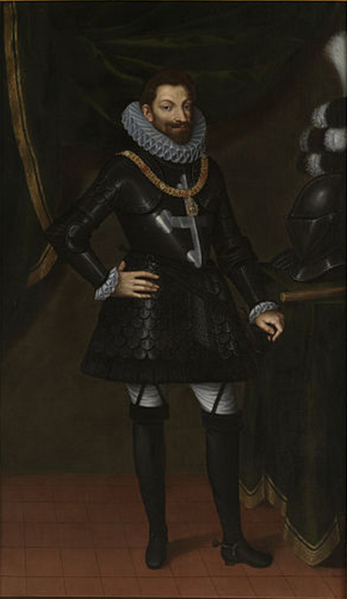
(1562-1630)
Duke of Savoy
1580-1630
Other titles:
Duke of Chablais, Duke of Aosta 1580, Duke of Genevois, Prince of Piedmont, Prince of Achaea Prince of the Morea, Prince of Oneille, Count of Geneva, Count of Maurienne 1580, Count of Nice, Count of Asti, Count of Bresse, Count of Tende, Count of Romont, Baron of Vaud, Baron of Gex, Lord of Bugey, Lord of Verceil, Lord of Fribourg, Lord of Marro, Lord of Prella, Lord of Marquisate of Ceve, Lord of County of Coconas, Marquess of Suza, Marquess of Saluzzo 1588, Marquess of Italy, Prince & Perpetual Vicar General of the Holy Roman Empire, King of Cyprus, Marquis of Saluzzo 1588.
 |
| Catalina Micaela de Espana @ Pollok House |
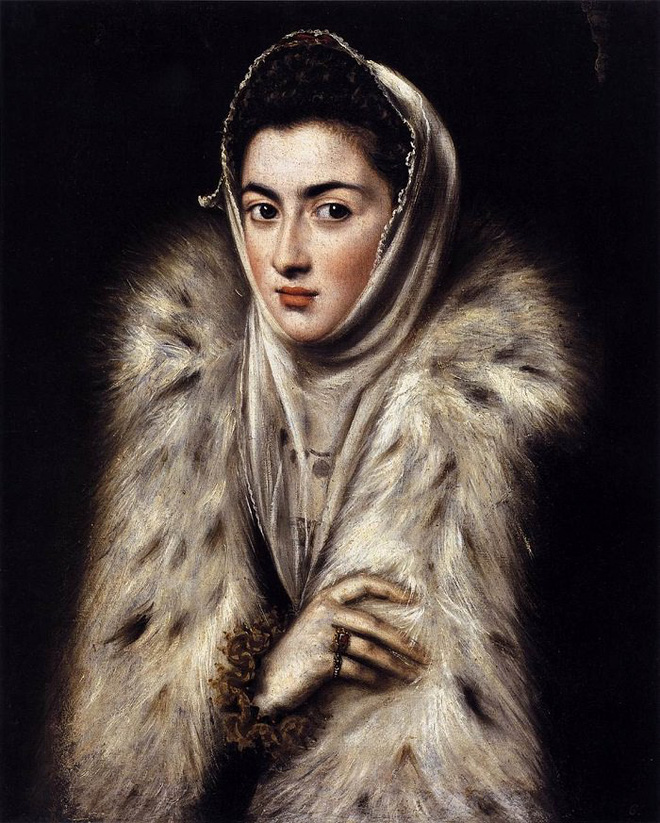
1. Catalina Micaela de Espana (1567-1597) mar 1585, daughter of Felipe II de Espana & Isabelle de France;
2. Marguerite du Roussillon, Marchesa di Riva di Chieri (1599-1640), daughter of Gabriel di Roussillon, Sire de Chatelard & Laura di Saluzzo dei Signori di Monterosso.
 |
| Carlo Emanuele I of Savoy @Wikipedia |
1) Anna Caterina Meraviglia.
2) Anna Felizita Cusani.
Natural offspring:
a. Ludovico Cusani (d.1684), Knight of Order of Saint Maurice & Lazarus
3) Argentina di Provana.
Natural offspring:
3) Argentina di Provana.
Natural offspring:
a. Felice di Savoia (1602-1643)
4) Catherine de Rousillon (1599-1640)
Marchesa di Rive.
Daughter of Gabriel de Rousillon, Seigneur de Châtellard & Laura di Saluzzo.
5) Luisa de Duing Marechal.
Natural offspring:
a. Emanuele di Savoia (1600-1652), Marchese di Andorno
6) Marguerite de Rossillon (1599-1640)
Marchesa di Riva di Chieri .
Natural offspring:
Natural offspring:
a. Gabriele di Savoia (d.1695), Marchese di Riva, Lieutenant-General
b. Margherita di Savoia (d.1659), Signora di Dronero, Roccabruna e San Giuliano, mar/1645 Filippo Francesco d'Este, Marchese di Lanze e San Martino
c. Antonio di Savoia (d.1688), Abbot of San Michele della Chiusa
d. Maurizio di Savoia (d.1645), Marchese di Poirino
7) Virginia Pallavicino.
Natural offspring:
a. Carlo Umberto di Savoia (1601-1663), Marchese di Mulazzano con Gonzole, mar/1645 Claudia, dau. Francesco Filiberto di Ferrero-Fieschi, Prince of Masserano
b. Silvio di Savoia, Abbot Commander of Santa Maria d'Entremont d.1645)
c. Vitichindo di Savoia (d.1668) Priest
8) Unnamed mistress.
Natural offspring:
8) Unnamed mistress.
Natural offspring:
a. Anna Caterina Meraviglia (d.1660)
Natural Offspring:
Don Antonio di Savoia (1620-1699): ". . . The then Governor of Nice, Don Antonio di Savoia (1620-88), one of Duke Carlo Emanuele I's illegitimate sons, was given the task of ordering a house-to-house search but was eventually forced to give his tacit consent to the undisturbed continuation of the valuable economic activities in the area around the port. In October 1685 Don Antonio wrote to Vittorio Amedeo that every day fugitives arrived from France who were heading for Piedmont, many of whom were determined to reach Germany. . . . " (Glozier & Onnekink: 215)
Natural Offspring:
Don Antonio di Savoia (1620-1699): ". . . The then Governor of Nice, Don Antonio di Savoia (1620-88), one of Duke Carlo Emanuele I's illegitimate sons, was given the task of ordering a house-to-house search but was eventually forced to give his tacit consent to the undisturbed continuation of the valuable economic activities in the area around the port. In October 1685 Don Antonio wrote to Vittorio Amedeo that every day fugitives arrived from France who were heading for Piedmont, many of whom were determined to reach Germany. . . . " (Glozier & Onnekink: 215)

King of Cyprus.
Son of: Vittorio Amedeo I di Savoia amp; Christine-Marie de France.
Husband of:
Husband of:
1. Francoise-Madeleine d'Orleans (1648-1664), mar 1663
2. Maria Giovanna di Savoia (1644-1724) mar 1665
3. Maria Giovanna di Trecesson.
His lovers were:
1) Gabrielle-Catherine de Mesmes de Marolles
His lovers were:
1) Gabrielle-Catherine de Mesmes de Marolles
Contessa delle Lanze.
Natural offspring
a. Carlo Francesco Agostino di Savoia (1749), Conte delle Lanze, mar/1691) Barbara, dau. Giuseppe, conte Piossasco
2) Maria Giovanna di Trecesson (1634-?)
Marchesa Benso di Cavorre
Lover in 1658-1668.
Lover in 1658-1668.
Daughter of: Paul de Carne, Comte de Trecesson & Jeanne de Bruc de la Rabaliere.
Wife of: Pompilio Benso di Cavour.
Natural offspring:
a. Cristina Ippolita di Savoia (d.1730), mar/1686 Carlo Bessi di Ferrero-Fiesdii, Prince of Masserano
b. Luisa Adelaide di Savoia (1662-1701), Nun
c. Giuseppe di Savoia (1664-1736), Abbot of Santa Maria in Lucedio
3) Unnamed Piatta.
Natural offspring:
3) Unnamed Piatta.
Natural offspring:
a. Carlo di Savoia.

3rd Prince of Carignano
1709-1741.
Son of: Emanuele Filiberto di Savoia-Carignano & Angela d'Este.
Husband of: Vittoria Francesca di Savoia, Marchesa di Susa (1690-1766).
His lovers were:
1) Felicita Para di Marignano.
Natural offspring:
Husband of: Vittoria Francesca di Savoia, Marchesa di Susa (1690-1766).
His lovers were:
1) Felicita Para di Marignano.
Natural offspring:
a. Giovannino di Savoia-Carignano. (1712-1742)
b. Maria Luisa di Savoia-Carignano. (1714-1769)
2) Jeanne-Elisabeth de Lyon.
French mistress of Vittorio Amadeo I of Savoy, the reigning prince of Carignano (1709–1741) with whom she had a daughter, Amadea Anna di Savoia (1730–1813) and a son Vittorio Amadeo (born 1728). Amadea Anna was officially recognized by her royal father, and was styled Madamigella di Villafranca (Mademoiselle de Villafranque). She was later married to Conte Giuseppe Bigeard di Saint-Maurice. (Russell)
3) Maria Vonzart.
2) Jeanne-Elisabeth de Lyon.
French mistress of Vittorio Amadeo I of Savoy, the reigning prince of Carignano (1709–1741) with whom she had a daughter, Amadea Anna di Savoia (1730–1813) and a son Vittorio Amadeo (born 1728). Amadea Anna was officially recognized by her royal father, and was styled Madamigella di Villafranca (Mademoiselle de Villafranque). She was later married to Conte Giuseppe Bigeard di Saint-Maurice. (Russell)
3) Maria Vonzart.
 |
| Vittorio Amedeo II of Savoy |
Husband of:
1.
2. Daughter of Francesco Maurizio Canalis, Conte di Cumania & Monica Francesca San Martino d'Aglie.
A proud & ambitious woman.
" . . . When he was sixty years old he married his mistress, on whom he conferred the title of Marchesa de Spino, and abdicated the throne in favor of his son Charles Emmanuel I. The marchioness, a proud, ambitious woman, however, soon persuaded the ex-king, who was shattered in health, to adopt violent measures for the recovery of the kingly power. But Charles Emmanuel, warned in time, succeeded in thwarting her designs, and his father's intended coup de main failed. The old king died in captivity at the Castle of Moncalieri in 1732, and thus perished the first and greatest King of Sardinia, whom Sismondi has termed 'the ables, most warlike, and most ambitious monarch of his age.'" (The Illustrated American, Vol 10: 508)
 |
| Jeanne-Baptiste d'Albert de Luynes |
Jeanne-Baptiste de Verrue, Dame de Volupte.
"Verua, Jeanne Genevieve Baptiste d’Albert, Comtesse de – (1670 – 1736). French adventuress, royal mistress and espionage agent. Jeanne Genevieve d’Albert was born (Jan 18, 1670), the daughter of Louis Charles Honore d’Albert, second Duc de Luynes, and his second wife Anne, the daughter of Hercule de Rohan, Duc de Montbazon. Raised at the court of Versailles, Jeanne was married (1683) to the Italian patrician, Augusto Manfredi Scaglia, Comte de Verua (1667 – 1704), who was killed in battle at Hochstadt (Aug 13, 1704). The comtesse became the mistress of Vittorio Emanuele of Savoy, the king of Sardinia (1718 – 1732), the husband of Louis’s niece, Anne Marie d’Orleans, to whom she bore several illegitimate children. Their son, Vittorio Francisco Philippo (1694 – 1762) was created Marchese di Susa by his father (1701). Their daughter, Vittoria Francesca of Savoy, Mademoiselle de Susa (1690 – 1766) was married to the Savoyard prince, Vittorio Amedeo I, Prince di Carignano, and left issue. Madame de Verua served King Louis as a double agent at the court of Turin in Piedmont. For which task, her incredible beauty and seductive talents made her a highly accomplished performer. After her retirement from this line of work, the comtesse received a pension from the crown, in discreet recognition, and reward, for her much valued services."
 |
| Amedeo III of Savoy-Aosta Duke of Aosta |
Duca di Aosta
(1943-Present)
Husband of:
1. Claude d'Orleans (1043-?) mar 1964, div 1982
2. Silvia Paterno di Spedalotto (1967-?) mar 1987.
His lovers were:
1) Kyara van Ellinkhuizen.
Natural offspring:
His lovers were:
1) Kyara van Ellinkhuizen.
Natural offspring:
a. Ginevra van Ellinkhuizen.
2) Nerina Corsini (1942-2014)
Nobili Corsini.
Daughter of: Pio Tomasso Corsini, 8th Principe di Sismano, Duca di Casigliano di Civitella & Elena Avegrado di Valdengo e Collobiano.
Wife of: Enrico Incisa della Rochetta.
Natural offspring:
2) Nerina Corsini (1942-2014)
Nobili Corsini.
Daughter of: Pio Tomasso Corsini, 8th Principe di Sismano, Duca di Casigliano di Civitella & Elena Avegrado di Valdengo e Collobiano.
Wife of: Enrico Incisa della Rochetta.
Natural offspring:
a. Pietro Incisa della Rochetta (1967-Present)
 |
| Jacques of Savoy 2nd Duke of Nemours @Wikipedia |
(1531-1585)
Duc de Nemours
1533
Comte de Geneva
Son of: Philippe de Savoie, Duc de Nemours & Charlotte d'Orleans-Longueville.
"Jacques de Savoie, the head of the younger branch of the House of savoy, on whose ancestor Francois I bestowed the Duchy of Nemours." (The Last of the Valois: 62)
The flower of chivalry.
"The defendant, Jacques de Nemours, was Margaret's cousin, being the nephew of her grandmother, Louise de Savoie. He was also the cousin of Margaret's future husband, Emmanuel Philibert, Duke of Savoy. The most dashing of all the gay gallants at the court of King Henry II, Nemours was as graceful a courtier and as accomplished a gentleman as 'le beau Brissace' had been at the court of King Francis. Not in France only but throughout Europe was Jacques de Nemours known as the flower of chivalry, 'a verray parfit, gentil knyght.'. . . ." (Margaret of France, duchess of Savoy, 1523-74: 92)
Almost, but not quite, future 'King Consort of England'.
" . . . As such his fame was to cross the Channel and to reach the court of Queen Elizabeth. That 'Great Ladie of the greatest Isle,' the Gloriana of all true knights, expressed a wish to see this champion of chivalry and even hinted that he might not be unworthy to share her throne. Elaborate preparations were made for Nemours' visit to the Virgin Queen. But before they were complete that fickle sovereign had changed her mind. Possibly she had heard rumours of some of the events to be narrated in this chapter. At any rate, the Duke was given to understand that he would no longer be welcome at the English court." (Margaret of France, duchess of Savoy, 1523-74: 92)
Physical appearance & personal qualities.
" . . . Brantome described him as 'a very handsome Prince, courageous, pleasant, lovable and approachable, well spoken and a good writer in both poetry and prose; he dressed impeccably and the younger people at court imitated his style and gestures . . . he loved all forms of exercise and excelled at all physical activities, as well as horsemanship . . . all who knew him in his prime considered him to be the flower of chivalry and for these qualities he was loved by all, but especially by the Ladies'." (Caesarean Birth: 122)
A ladies' man, but a betrayer of women, too.
"The historian Brantome praises Nemours' charm and wit and credits him with great success with the ladies. However, history shows him to be an unscrupulous betrayer of women. He pledged his word to Francoise de Rohan, seduced her and abandoned her in her shame. Mme de Lafayette has idealised his character, but in her book he is still the typical Dom Juan of
the court." (The Character of Nemours)
" . . . Jacques de Savoie remained Duc de Nemours, by the good grace of his wife and mother-in-law. His acceptance of this arrangement reflected his deteriorating physical condition: from the age of 39 until his death at 54, he was incapacitated by gout and sciatica; he gradually withdrew from military and political activities and devoted most of his later years to cultural and intellectual pursuits. This was quite a comedown for this man of action, who became a military hero at age 15 by leading a cavalry charge during the siege of Lens. . . ." (Caesarean Birth: 122)
"Eposses became a ducal residence, but in 1189 Hugues III exchanged it for Montbard. From the counts of Montbard it passed through various hands to Jacques de Savoie, duc de Nemours, a fervent Catholic and as successful in love as he was in war; a century later Mme de Lafayette took him as the hero of La Princesse de Cleves. His extravagance was such that in 1561 he was obliged to sell the castle to the Marechal de Bourdillon, and this was the only time when Epoisses has been bought and sold.Bourdillon gave his name to one of the towers, and the chateau was left to his niece Francoise, the wife of Louis d'Anssienville, baron de Revillon." (The Companion Guide to Burgundy: 121)
 |
| Anna d'Este of Ferrara @Wikipedia |
Lady-in-waiting to Queen Marie de' Medici
Daughter of Ercole II d'Este, Duca di Ferrara & Renee de France.
"Anne d'Este, Duchesse de Nemours, was the mother of the Duc de Mayenne, and grandmother of the young Duc de Guise who aspired to the throne. She was first married to Francois de Lorraine, Duc de Guise, and subsequently to Jacques de Savoie, Duc de Nemours, whose son, after his decease, also pretended to the throne." (The Life of Marie de Medicis: 104)
"Upon the fifth of May the obscene, withered,
Putrid, worn-out harlot again seeks men for her marriage bed.
Likewise he who marries her is wicked, treacherous, lawless,
Bankrupt, adulterous, accursed, disloyal and worthy of torture."
These charming lines were written in 1566 to commemorate the wedding of Anne d'Este, duchess de Guise, grand-daughter of Louis XII of France and lady-in-waiting to the queen mother Catherine de Medici, and her new husband, Jacques de Savoie, duke of Nemours, the hero of the French campaign in Italy. Once again, a woman of Catherine's household found herself the target of verse libels that attacked her secual honour. That such vitriolic terms could be used to describe a granddaughter of France and the kingdon's arguably most successful warrior is an indication of the public resentment felt at the circumstances surrounding their wedding. . . ." (Scandal and Reputation at the Court of Catherine de Medici)
"After Philippe's death in 1534, similar terms were extended to his son Jacques, then an infant under his mother's tutelage. In 1566, Jacques married Anne d'Este (1531-1607), daughter of Renee de France and widow of Francois de Lorraine (1519-1563), the 2nd Duc de Guise. . . ." (Caesarean Birth: 121)
Numerous affairs of the heart.
"This paragon of French nobility was involved in numerous affaires de coeur but his most notable conquest was Francoise de Rohan, daughter of the King of Navarre [?], with whom he fathered a son; when refused to marry her, despite a written pledge to do so, she launched a legal action against him that occupied the Courts and entertained High Society for decades. Such was his reputation that, almost a century after his death, he was featured in the 1678 historical novel Princesse-de-Cleves by Madame de la Fayette.. . . ." (Caesarean Birth: 122)
1) Francoise de Rohan (1540-1591)
Daughter of Ercole II d'Este, Duca di Ferrara & Renee de France.
"Anne d'Este, Duchesse de Nemours, was the mother of the Duc de Mayenne, and grandmother of the young Duc de Guise who aspired to the throne. She was first married to Francois de Lorraine, Duc de Guise, and subsequently to Jacques de Savoie, Duc de Nemours, whose son, after his decease, also pretended to the throne." (The Life of Marie de Medicis: 104)
"Upon the fifth of May the obscene, withered,
Putrid, worn-out harlot again seeks men for her marriage bed.
Likewise he who marries her is wicked, treacherous, lawless,
Bankrupt, adulterous, accursed, disloyal and worthy of torture."
These charming lines were written in 1566 to commemorate the wedding of Anne d'Este, duchess de Guise, grand-daughter of Louis XII of France and lady-in-waiting to the queen mother Catherine de Medici, and her new husband, Jacques de Savoie, duke of Nemours, the hero of the French campaign in Italy. Once again, a woman of Catherine's household found herself the target of verse libels that attacked her secual honour. That such vitriolic terms could be used to describe a granddaughter of France and the kingdon's arguably most successful warrior is an indication of the public resentment felt at the circumstances surrounding their wedding. . . ." (Scandal and Reputation at the Court of Catherine de Medici)
"After Philippe's death in 1534, similar terms were extended to his son Jacques, then an infant under his mother's tutelage. In 1566, Jacques married Anne d'Este (1531-1607), daughter of Renee de France and widow of Francois de Lorraine (1519-1563), the 2nd Duc de Guise. . . ." (Caesarean Birth: 121)
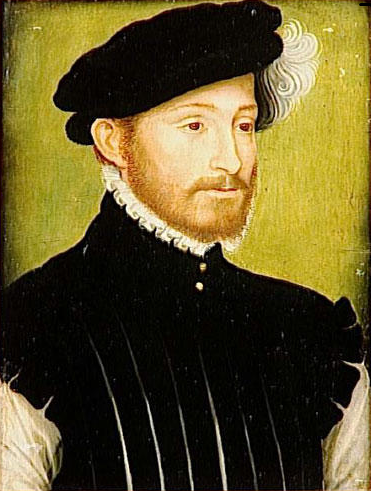
"This paragon of French nobility was involved in numerous affaires de coeur but his most notable conquest was Francoise de Rohan, daughter of the King of Navarre [?], with whom he fathered a son; when refused to marry her, despite a written pledge to do so, she launched a legal action against him that occupied the Courts and entertained High Society for decades. Such was his reputation that, almost a century after his death, he was featured in the 1678 historical novel Princesse-de-Cleves by Madame de la Fayette.. . . ." (Caesarean Birth: 122)
1) Francoise de Rohan (1540-1591)
Lover in 1553.
Duchesse de Ludonois, & Dame de La Garnache
Lady-in-waiting to Catherine de' Medici
Daughter of Rene I de Rohan & Isabelle d'Albret.
Francoise's personal & family background.
"Francoise de Rohan, the plaintiff in this cause celebre, was a princess of the blood royal; on the side of her father, Rene de Rohan, she was descended from old Breton kings; through her mother, Isabeau d'Albret, she was niece to Henry d'Albret, King of Navarre, who had married the first Margaret. And Francoise, like many another, owed much to the kindness of the Queen of Navarre. When Rene de Rohan and his wife were on the brink of ruin, the first Margaret rescued them from their creditors and carried off their daughter Francoise to be educated with her own daughter, Jeanne. Unhappily for Francoise, Jeanne at that time had none of her mother's kindness; the future mother of Henry Quartre domineered over and even beat her poor relation. And Francoise must have been glad when Jeanne's marriage, in 1548, set her free from so tyrannical a playmate." (Margaret of France, duchess of Savoy, 1523-74: 93)
First encounter and affair's development.
"On the death of the Queen of Navarre, in 1549, Mademoiselle de Rohan was taken to court. There she became one of Queen Catherine's ladies with servants of her own and a suite of apartments, which she shared with Jeanne de Savoie, sister of the Duke of Nemours. The two girls had a governess, a mature widow, one Gabrielle de Binel, Dame de Coue, of whom we shall hear again. This duenna, who was considered something of a pride, had for that reason been appointed to guard the charms of Francoise de Rohan, who was growing very beautiful. But nothing less than the eye of the basilisk and the wisdom of the serpent could effectually protect young loveliness in that licentious court, and with neither of those famous safeguards was Madame de Coue endowed. Prude she may have been, but she was likewise very human and very susceptible to the cajoleries of the handsome Duke of Nemours when he came ostensibly to visit his sister. So gallant a squire of dames was not slow to appreciate the charm of his sister's companion, Soon he was giving Francoise presents and soliciting permission to wear her colours, white and violet, when he tilted in the lists, and writing her letters, which she dutifully showed to her governess." (Margaret of France, duchess of Savoy, 1523-74: 93)
A protracted legal case of aristocratic amours.
"Similarly, Catherine's interest in overseeing the details of aristocratic marriages and preventing unauthorised ones was explained by the ramifications of unsuitable clandestine marriages, such as the scandal caused by the alleged secret marriage agreement between her demoiselle Françoise de Rohan and the Duc de Nemours, Jacques de Savoie. Nemours's décision, in 1566, to marry Catherine's lady-in-waiting and close friend Anne d'Este, compelled his former lover Rohan to instigate what would become a protracted legal case, claiming that she and Nemours had already exchanged marital vows and that he had fathered her child. While a contemporary verse libel criticised Nemours and Este for seeking to marry under such scandalous circumstances, the libel also attacked Catherine's involvement in securing the legal verdict needed for the wedding to go ahead. . . ." (The Politics of Female Households: 198)
A broken promise to marry followed by a spurned woman's suit.
"Around 1553, the duke, a partisan of the pro-Catholic Guise faction, began an amorous relationship with Francoise de Rohan, first cousin to Jeanne d'Albret, the Huguenot queen of Navarre. While in Italy in 1555, however, he was involved in negotiations to marry Lucrezia d'Este, sister of the duke of Ferrara and the aforementioned Anne d'Este, but when rumours of the negotiations reached Rohan, Nemours vehemently denied the, In early 1556, Nemours allegedly agreed to a secret, oral marriage contract with Rohan and they soon thereafter began a sexual relationship. By June she was pregnant, but did not inform Nemours until after he had left on military campaigns in Italy in November. When the duke refused to honour the oral agreement by solemnizing their marriage in church, Rohan sued him for breach of promise. . . ." (Scandal and Reputation at the Court of Catherine de Medici)
Duchesse de Ludonois, & Dame de La Garnache
Lady-in-waiting to Catherine de' Medici
Daughter of Rene I de Rohan & Isabelle d'Albret.
Francoise's personal & family background.
"Francoise de Rohan, the plaintiff in this cause celebre, was a princess of the blood royal; on the side of her father, Rene de Rohan, she was descended from old Breton kings; through her mother, Isabeau d'Albret, she was niece to Henry d'Albret, King of Navarre, who had married the first Margaret. And Francoise, like many another, owed much to the kindness of the Queen of Navarre. When Rene de Rohan and his wife were on the brink of ruin, the first Margaret rescued them from their creditors and carried off their daughter Francoise to be educated with her own daughter, Jeanne. Unhappily for Francoise, Jeanne at that time had none of her mother's kindness; the future mother of Henry Quartre domineered over and even beat her poor relation. And Francoise must have been glad when Jeanne's marriage, in 1548, set her free from so tyrannical a playmate." (Margaret of France, duchess of Savoy, 1523-74: 93)
First encounter and affair's development.
"On the death of the Queen of Navarre, in 1549, Mademoiselle de Rohan was taken to court. There she became one of Queen Catherine's ladies with servants of her own and a suite of apartments, which she shared with Jeanne de Savoie, sister of the Duke of Nemours. The two girls had a governess, a mature widow, one Gabrielle de Binel, Dame de Coue, of whom we shall hear again. This duenna, who was considered something of a pride, had for that reason been appointed to guard the charms of Francoise de Rohan, who was growing very beautiful. But nothing less than the eye of the basilisk and the wisdom of the serpent could effectually protect young loveliness in that licentious court, and with neither of those famous safeguards was Madame de Coue endowed. Prude she may have been, but she was likewise very human and very susceptible to the cajoleries of the handsome Duke of Nemours when he came ostensibly to visit his sister. So gallant a squire of dames was not slow to appreciate the charm of his sister's companion, Soon he was giving Francoise presents and soliciting permission to wear her colours, white and violet, when he tilted in the lists, and writing her letters, which she dutifully showed to her governess." (Margaret of France, duchess of Savoy, 1523-74: 93)
A protracted legal case of aristocratic amours.
"Similarly, Catherine's interest in overseeing the details of aristocratic marriages and preventing unauthorised ones was explained by the ramifications of unsuitable clandestine marriages, such as the scandal caused by the alleged secret marriage agreement between her demoiselle Françoise de Rohan and the Duc de Nemours, Jacques de Savoie. Nemours's décision, in 1566, to marry Catherine's lady-in-waiting and close friend Anne d'Este, compelled his former lover Rohan to instigate what would become a protracted legal case, claiming that she and Nemours had already exchanged marital vows and that he had fathered her child. While a contemporary verse libel criticised Nemours and Este for seeking to marry under such scandalous circumstances, the libel also attacked Catherine's involvement in securing the legal verdict needed for the wedding to go ahead. . . ." (The Politics of Female Households: 198)
A broken promise to marry followed by a spurned woman's suit.
"Around 1553, the duke, a partisan of the pro-Catholic Guise faction, began an amorous relationship with Francoise de Rohan, first cousin to Jeanne d'Albret, the Huguenot queen of Navarre. While in Italy in 1555, however, he was involved in negotiations to marry Lucrezia d'Este, sister of the duke of Ferrara and the aforementioned Anne d'Este, but when rumours of the negotiations reached Rohan, Nemours vehemently denied the, In early 1556, Nemours allegedly agreed to a secret, oral marriage contract with Rohan and they soon thereafter began a sexual relationship. By June she was pregnant, but did not inform Nemours until after he had left on military campaigns in Italy in November. When the duke refused to honour the oral agreement by solemnizing their marriage in church, Rohan sued him for breach of promise. . . ." (Scandal and Reputation at the Court of Catherine de Medici)
" . . . For 10 years Nemours had been engaged in a bitter dispute with is former lover, Francoise de Rohan, also a lady-in-waiting to Catherine de Medici. the duke's refusal to honour either an earlier secret, oral agreement of marriage with Rohan, or the child that was produced from their relationship, would become the matter of legal debate for over 20 years, causing a four-way jurisdictional battle between the Parlement of Paris, the King's private council, the Gallican church and the Vatican Rota, and the familial feuds the case inflamed threatened to ignit further civil war. . . ." (Scandal and Reputation at the Court of Catherine de Medici)
2) Henriette du Breuil (1523-2583)
Lover in 1576.
Lover in 1576.
Carlo Umberto di Savoia
(1601-1663)
Son of: Carlo Emanuele I di Savoia & Virginia Pallavicino.
Husband of: Claudia Ferrero-Fieschi (1621-1677), daughter of Francesco Filiberto Ferrero Fieschi, 1st Principe di Masserano & Francoise de Grillet.
His lover was:
Caterina Mignata.


_from_the_Chronikon_of_Ioannis_Skylitzes.jpg/330px-Basil_I_(867-886)_from_the_Chronikon_of_Ioannis_Skylitzes.jpg)