Thursday, October 31, 2019

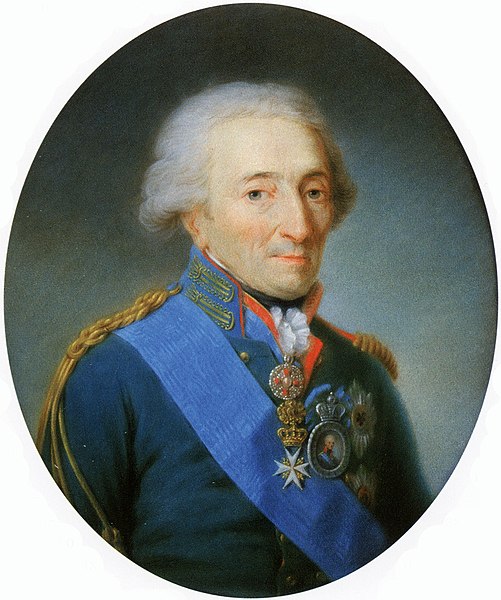
Lord Edward Fitzgerald----

Lord Edward FitzGerald
@Wikipedia

(1763-1798)
Irish aristocrat, nationalist
army officer and revolutionary.

Son of: James FitzGerald, 1st Duke of Leinster & Lady Emily Lennox, daughter of Charles Lennox, 2nd Duke of Richmond.
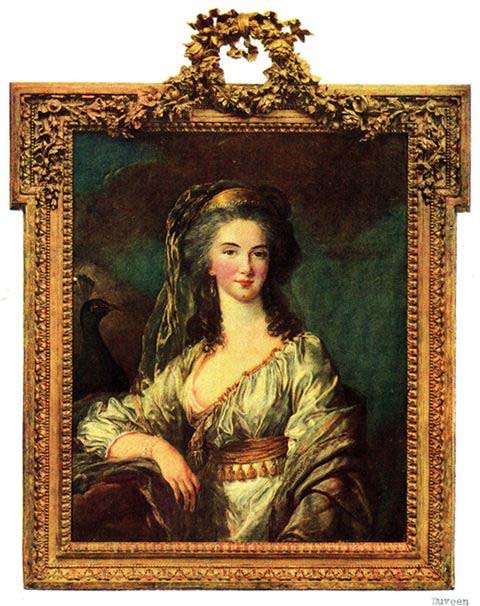
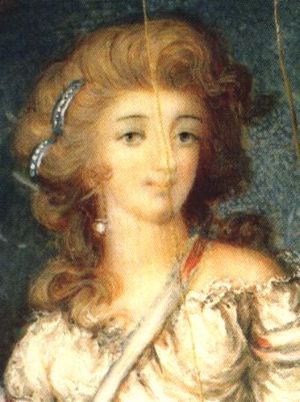
Pamela Sims
@Vigee Le Brun
Husband of: Pamela Sims, mar 1792
Former mistress

Lord Edward's personal & family background.
"Lord Edward Fitzgerald was the fifth son of the twentieth Earl of Kildare and first Duke of Leinster. He was a direct lineal descendant of Garret Og Fitzgerald, the last native ruler of Ireland, and, as commander-in-chief of the United Irishmen, in 1798, became an early victim of the treachery of his friends. . . ." (A Grave in Kilmurry)

Born to the Premier Peers of Ireland.
"Lord Edward was born to a great dynastic heritage. The Kildares were the 'premier peers' of Ireland -- the family who had been, by a combination of opportunism and canny marriages, the first recognised members of an aristocracy formed and given legitimacy by the English monarch. Originally banditti from Florence, they were said to have served successively Norman, English and Irish kings, before fighting for Edward III and being given, as a reward, the earldom of Kildare. Settling in Ireland, the Fitzgeralds acquired huge tracts of the country's fertile central flatlands and, over the next four centuries, successfully oscillated between pragmatic gestures of loyalty to the English Crown and spectacular acts of defiance that allowed them to claim a distinct Irish identity. They became Protestants at the Reformation and supported William of Orange against Stuart claims to the English Crown. But despite their accumulating land and wealth, they maintained their links with Ireland's other old families and never deserted Dublin and the Irish parliament for more lucrative and heady pursuits in London and Westminster." (Citizen Lord: The Life of Edward Fitzgerald, Irish Revolutionary)

Royal connections of Lord FitzGerald's parents.
"When he married Lady Emily Lennox in 1747, Kildare had had ambitions to shine in Westminster as well as Dublin. Besides being a beauty and a minor heiress, Emily was a means to the ear of the monarch George II and to the gates of Westminster. Her parents, the second Duke and Duchess of Richmond, were prominent courtiers: the Duchess was Lady of the Bedchamber to Queen Caroline, the Duke Master of the Horse and a member of the cabinet. Equally important, her elder sister Caroline was married to one of the fastest-rising stars of the House of Commons, Henry Fox. To underline Kildare's political ambitions, his new father-in-law procured for him a British peerage which carried a seat in the House of Lords. A few days before his marriage, Kildare was created Viscount Leinster of Taplow and given the promise of a dukedom which was fulfilled in 1766 when he became Duke of Leinster." (Citizen Lord: The Life of Edward Fitzgerald, Irish Revolutionary)

Physical appearance & personal qualities.
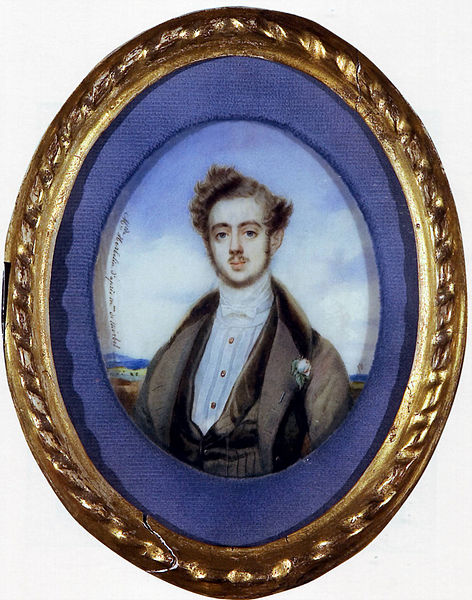
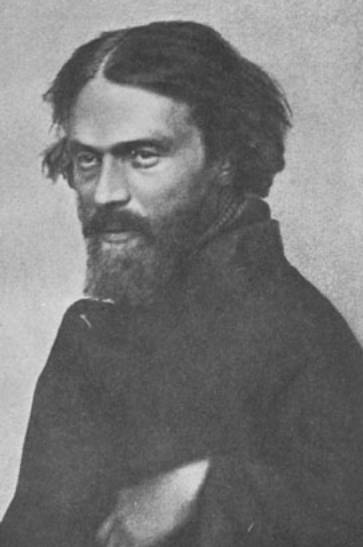
"Lord Edward was a famously charismatic figure. Thomas Moore in breathless prose recalled the effect of seeing him once striding down Grafton Street: 'Though I saw him but once, his peculiar dress, the elastic lightness of his step, his fresh, healthful complexion and the soft expression given to his face by their long dark eyelashes are as present and familiar to my memory as if I had intimately known him.'" (History Ireland)

Character or persona.
". . . He had a terrific sense of humour. . . He was chatty, witty, charming, a chess player, a fine dancer, handsome, sensual, endlessly fond of women and relaxed in their company at balls and operas. He was also active and energetic---hunting, fishing, fond of the outdoor life. He took to the Canadian winter---skating, snow-shoeing, tobogganing, canoeing. He was also an accomplished linguist. . . . " (History Ireland)

Lord Edward at 29 years old.
" . . . Lord Edward was now twenty-nine, and is described as being 'five feet seven inches in height, a very fine, elegantly formed man, with an interesting countenance, beautiful arched eyebrows, fine grey eyes, handsome nose and high forehead, thick dark-colored hair, brown or inclining to black; as playful and humble as a child, as mild and timid as a lady, and, when necessary, as brave as a lion. . . ." (Temple Bar: 192)

"Lord Edward was a famously charismatic figure. Thomas Moore in breathless prose recalled the effect of seeing him once striding down Grafton Street: 'Though I saw him but this once, his peculiar dress, the elastic lightness of his step, his fresh, healthful complexion and the soft expression given to his face by their long dark eyelashes are as present and familiar to my memory as if I had intimately known him.'" (History Ireland)

Lord Edward the serial lover.
". . . Edward was a serial lover and his life oscillated constantly between profoundly felt attachments and bitter separations---Catherine Meade in 1786, his cousin Georgiana in 1788, Elizabeth Linley, wife of Richard Brinsley Sheridan, in 1791, with whom he had a love-child, and eventually his future wife Pamela in 1792---married after a whirlwind romance. The recoil from these entanglements often sent him on distant adventures---to Canada after Georgiana, to Paris after Elizabeth. And Edward also maintained a long running and affectionate relationship with his French mistress Madame de Levis---an adventuresome grass widow." (History Ireland)

". . . Back in Europe, he had several love affairs, a few mistresses and some casual conquests, gambled and visited the great houses of friends." (NYT)

A dangerous facility for falling in love.
Among his many peculiarities was  dangerous facility for falling in love. He had already had two grades passions: first for Lady Catherine Meade (whom he always called 'pretty Kate'), second daughter of Lord Clanwilliam, and afterwards for a certain G___. . . But G____ proved faithless and married some one else just as he was returning from the silver mines of America, full of joy aqt the thought of seeing her again. . . ." (Temple Bar: 193)

Intense male friendships.
"He was equally quick to form intense male friendships. The African-American Tony Small rescued him from the muddy battle site at Eutaw Springs in 1782. Edward never parted from him for the rest of his life. He struck up intense friendships with the celebrated Indian leader Joseph Brant when he met him in 1789, the equally famous Thomas Paine in Paris in 1792, and his ‘twin-soul’, Arthur O’Connor in Dublin in 1796." (History Ireland)

His lovers were:
Lover in 1786.

Daughter of: John Meade, 1st Earl of Clanwilliam and Theodosia Hawkins Magill


"The tedium of existence at home had left but one thing to be done. It was an expedient for which Lord Edward's nature fortunately offered special facilities. He had accordingly resorted to it without loss of time. He fell in love. The heroine of this preliminary romance was Lady Catherine Meade, daughter of Lord Clanwilliam, and afterwards married to Lord Powerscourt. Of Lady Catherine herself little is known, and that little chiefly from the letters of her lover, written at a time . . . in the beginning of the year 1786. . . ." (Taylor: 53)

"Dublin at this period was a gay capital (not a dowdy dowager among cities), and Lord Edward, while mixing in society there, met, and fell in love with, Lady Catherine Meade, a daughter of Lord Clanwilliam. Before this affair of the heart had advanced too far, his cautious stepfather, to get him out of temptation's way, hurried him off to England, and persuaded him, as Parliament was then up, to go through a course of gunnery instructions at Woolwich. Lord Edward consented to the plan; yet that, in the midst of his studies, his heart remained in Ireland, is pretty clear from the tone of his letters to the Duchess. 'I am as busy as ever,' he writes in midsummer 1786: 'it is the only resource I have, for I have no pleasure in anything. I need not say I hope you are kind to pretty dear Kate; I am sure you are. I want you to like her almost as much as I do;--- it is a feeling I always have with people I love excessively." (Temple Bar: A London Magazine for Town and Country Readers, Volume 61: 20)

" . . . Of Lady Catherine herself little is known, and that little chiefly from the letters of her lover, written at a time when, in the beginning of the year 1786, three years after his return to Ireland, he was parted from his mother, having placed himself at Woolwich with a determination there to pursue a regular course of study. A military career was that to which he still looked forward, and it is plain that he regarded his Parliamentary duties in the light of a more or less irrelevant interlude. . . ." (The Life of Lord Edward Fitzgerald, 1763-1798: 53)

2) Elizabeth Linley (1754-1792)
Lover in 1791.

Daughter of: Thomas Linley, a composer & Mary Johnson.

Wife of: Richard Brinsley Sheridan, a playwright, manager, patentee, poet, & politician, mar 1772.

Marriage to Richard Sheridan.
"In March 1772 Sheridan eloped with the beautiful young singer Elizabeth Linley. They went first to London, then to France. By arrangement of her father, Elizabeth had been betrothed in 1770 to the elderly and wealthy Walter Long. That betrothal was broken off, and Thomas Linley received a large financial settlement. But the affair provoked considerable controversy in the press and resulted in Foote's farcical and transparent treatment of the events, The Maid of Bath, which had its first performance at the Haymarket Theatre in London on 26 June 1771. . . Elizabeth and Richard were married by a priest in a village near Calais at the end of March 1772. . . On 6 April 1773 he entered the Middle Temple, and on the thirteenth of that month he married Elizabeth Linley at Marylebone Church. . . ." (A Biographical Dictionary of Actors, Actresses, Musicians ..., Vol 13: 307)

Affair's effect on her husband.
"Elizabeth became pregnant and was delivered of a daughter, the child of Lord Edward. The difficult pregnancy and labour were to rob her of her final vestiges of health and she was to succumb shortly afterwards to the tuberculosis that had plagued her since her marriage. It is to the credit of Sheridan that, in full knowledge of the pregnancy’s circumstances, he cared for his wife tenderly and showered her with love and attention in her final months, refusing to reproach her in any way and in fact, seeming only to blame himself." (Madame Guillotine)

Child with Lord Edward Fitzgerald.
"Elizabeth Linley Sheridan was several times pregnant by our subject, Richard Brinsley Sheridan. On 6 May 1777 she delivered a stillborn child. At the age of 37 she had a daughter, Mary Sheridan, born on 30 March 1792 at Cromwell House, Brompton, probably the child of Lord Edward Fitzgerald. Elizabeth seems to have engaged in an affair with Fitzgerald in retaliation for Sheridan's years of philandering. Mary's birth sapped Elizabeth's strength and contributed to her death in 1792. Sheridan suffered genuine grief at the loss of his wife, and then was doubly stricken by the death of the infant Mary in October of her first year. Soon afterward Sheridan fell in love with Pamela, the nineteen-year-old daughter of Mme de Sillery by Philippe Egalite, but in December 1792 Pamela married Lord Edward Fitzgerald, Elizabeth Linley's former lover." (A Biographical Dictionary of Actors, Actresses, Musicians ..., Vol 13: 317)

The most beautiful flower that ever grew in Nature's garden. 
" . . . Elizabeth's talent and beauty, praised by many, made her one of the most desirable young women in Bath. John Wilkes described her as 'the most beautiful flower that ever grew in Nature's garden'. She became a magnet to the high-spirited gentlemen of the town, who were attracted by her wit and charm as well as her beauty. Thomas More wrote that she spread 'her gentle conquests, to an extent almost unparalleled in the annals of beauty. Her personal charm, the exquisiteness of her musical talents, and the full light of publicity which her profession threw upon both, naturally attracted round her a crowd of admirers, in whom the sympathy of a common pursuit soon kindled into rivalry, till she came at length the object of vanity as well as of love. Her extreme youth, too, must be removed, even from minds the most fastidious and delicate, that repugnance they might justly have felt for her profession.'" (A Biographical Dictionary of Actors, Actresses, Musicians ..., Vol 13: 328)

3) Lady Georgina Lennox (1765-1846).
Lover in 1788.

"That the possibility of infidelity had begun to make itself felt was apparent, not only in his protestations of changelessness, but also in the credit he took to himself for the fact that, though he had been staying at Stoke, the house of his uncle Lord George Lennox, and had there enjoyed opportunities of intercourse with Lord George's three daughters, he still remained faithful. 'Though I have been there since the Duke went,' he writes, not without some pride, 'I am as constant as ever, and go on doting upon her; this is, I think, the greatest proof I have given yet. Being here has put me in much better spirits, they are so delightful.' And most delightful of all was Georgina Lennox, the youngest of the sisters, then about twenty-one. Giving a description of this niece some six years earlier, Lady Sarah Napier had mentioned that she was considered to be very like herself, which would seem to imply that she was gifted with her full share of the family beauty; and with the wit, the power of satire, and the good-nature with which she was said, even at fifteen, to be endowed, she must have been a dangerous rival to the absent Lady Catherine. A fortnight later than the last letter quoted another was written, which contained a clear foreshadowing of the end, though still accompanied by the protestation of unalterable attachment." (The Life of Lord Edward Fitzgerald, 1763-1798: 62)

4) Madame de Levis.

5) Pamela Sims
Lover in 1792.
Future wife.

Daughter of: Guillaume de Brixey & Mary Sims
a native of Fogo Island, Newfoundland

Pamela's personal & family background.
"Shortly after, he made a marriage at once ducal and revolutionary. Pamela Sims, as her parents wished her to be called, was the child of the duc d'Orleans, a cousin to Louis XVI and in the line of royal succession, and Mme. de Genlis, his mistress and a memoirist beneath whose pen truth became as malleable as clay. At the revolution, the duke flung aside his rank, became Philippe Egalite and earned the detestation of respectable Europe by voting in the Convention for the death of the King. A year later, he was himself guillotined." (Citizen Lord: The Life of Edward Fitzgerald, Irish Revolutionary)

" . . . To that resemblance is also attributed her conquest of Lord Edward Fitzgerald, who, objecting to 'blue stockings,' had refused to meet the Genlis party in England, but saw Pamela at a Paris theatre, was immediately introduced to her, was invited to dinner the next day, joined the party on the road, on their expulsion from Paris as emigres, accompanied them to Tournai, and there married her, 27 Dec. 1792. . . " (Wikisource)

First encounter.
" . . . At one of the Paris theatres, Moore tells us, he saw a face, though a loge grillee near him, which struck him at once, not only from its own peculiar beauty, but also from its strange likeness to a lady some months dead. We have no difficulty in guessing this lady to have been Mrs. Sheridan. Lord Edward found that she was no other than that very Pamela of whom he had heard so much, and whom he had resolutely refused to meet. Away went all his prejudices against learned ladies; he was introduced by an Englishman, Mr. Stone, and was never absent from Pamela's side. . . ." (Temple Bar: 193)

Lord Edward & Pamela's wedding.
" . . . His courtship now was very short; the first meeting took place the end of November, and during the first days of December the party migrated to Tournay. Three weeks afterwards Lord Edward's marriage with Pamela too place, the contract being witnessed, among others, by Philippe Egalite. Pamela appears as 'Citoyenne Anne Caroline Stephanie Sims, Connie en France sous la nomme de Pamela, native de Fogo dans l'ile de Terreneuve, fille de Guillaume de Brixey et de Mary Sims.' Here is a new paternity due to Madame la gouvernante's inventive faculty, but in the Irish papers of that date, among the marriage announcements, we find, 'The Right Hon. Lord Edward Fitzgerald to Madame Pamela Capet, daughter of his Royal Highness the ci-devant  Duke of Orleans.'. . . ." (Temple Bar: 194)

"Pamela Sims was the young ward of renowned educationalist and dramatist Madame de Genlis - probably her daughter by the Duke of Orleans (Philippe Egalité, who voted for the execution of his kinsman Louis XVI and was himself executed under the Terror). Pamela had previously, when on a visit to England, been briefly engaged to the widowed Brinsley Sheridan. (His wife Elizabeth had died shortly after giving birth to Lord Edward's daughter, Mary.) In Paris in December 1792, she married Lord Edward Fitzgerald who was to become the United Irish Army's Commander-in-Chief before the Rising. She shared her husband's radical views and took an active part in the revolutionary work of the United Irish Movement." (Remembering the Past: The women of `98)

Sunday, October 27, 2019

Julie de Saint-Laurent----

Julie de Montgenêt de St. Laurent.jpg
Julie de Saint-Laurent
@Wikipedia
Comtesse de Montgenet
(1760-1830)

Lover in 1790-1818
of
Edward, Duke of Kent
(1787-1820)

Daughter of Jean-Claude Mongenêt, an engineer, & Jeanne-Claude Pussot.

Wife of:
1. Jean Charles de Mestre, Baron de Fortisson, a colonel in the French Army.
2. Prince Edward, Duke of Kent
3. Prince Prospero Colonna

Julie's physical appearance & personal qualities.
Everyone said she was beautiful. She was talented, gentle, and well-bred. In May 1794, Governor John Wentworth wrote from Halifax, Nova Scotia, in a private letter to his friend John King, Under-Secretary of State in London, 'She is an elegant, well bred, pleasing, sensible woman, far beyond most . . . I never yet saw a woman of such intrepid fortitude yet possessing the finest temper and refined manners.' In 1806, a young protege wrote from London to his sister in Quebec, 'She is certainly the most kind, the best natured and the most amiable of all women; the beauties of her mind can only be equalled by those of her lovely person.'" (The Prince and His Lady: The Love Story of the Duke of Kent and Madame de St. Laurent in Georgian Halifax: 2)

First encounter.
" . . . In Canada he also renewed his acquaintance with a French-Canadian prostitute, Madame Julie de St. Laurent. She had originally been procured to provide sexual services for him in Gibraltar in 1790. The Duke's relationship with his 'French Lady,' as she became known to the family, developed into something deeper than a business relationship as they stayed together for the best part of thirty years." (Royal Babylon: 224)

"When the French Revolution began on July 14, 1789, the Fortissons fled France for Geneva, Switzerland. They found shelter in the home of Auguste Vasserot, Baron de Vincy. One night Vincy introduced them to Edward, who was then a twenty-one-year-old officer cadet under training in Geneva." (Julie portrait of a royal mistress @Maclean's)

Affair with Madame de Sa. Laurent.
"In November 1790 Therese-Bernardine Mongenêt, as Mlle de Saint-Laurent, agreed to join Prince Edward Augustus, the fourth son of George III, then serving in Gibraltar. He had sent an intermediary to France to find "a young lady to be my companion and mistress of my house." She left her current lover, a countryman of her own who calls himself the Marquis de Permangle,  and became Mme de Saint-Laurent, with an hundred names and titles, among them Baronne de Fortisson, a title adopted, it seems, from an earlier lover. She charmed the prince, spurned a bribe to leave him, and accompanied him in the summer of 1791 to his military command in Quebec, beginning a 27-year liaison of great mutual happiness." (Dictionary of Canadian Biography) 

" . . . She was a French woman of dubious provenance, several years Edward's senior, known as Mme de St Laurent, which was not her real name. The Duke had, however, lived with her, it seems happily, since about 1790, but she had borne him no children. Latterly they had for financial reasons lived an almost bourgeois existence in Brussels. . . ." (Albert and Victoria: The Rise and Fall of the House of Saxe-Coburg-Gotha: 4)
File:Castle Hill Lodge, Ealing.jpg
Castle Lodge Hill, Ealing, 1814
"From Mrs. Fitzherbert, Edward and Julie bought a house at Ealing — Castle Hill Lodge — which later became their favorite home. In London society Edward and Julie appeared openly together. Julie's demeanor was so prudent that her association with Edward never provoked in the press the bitter ribaldry that other unofficial royal liaisons aroused. To discourage questions Julie placed Melanie with some of her own French refugee relatives who were living in London." (Julie portrait of a royal mistress @Maclean's)

The Duke's love nest with Julie.
"While serving in Canada, the duke took as his mistress a French widow, Madame Julie de St. Laurent (in fact, Therese Bernardine Mongenêt, an actress from Besançon who kept from him the fact she was seven years his senior). . . After his return, the duke lived briefly and extravagantly with Madame de St. Laurent, at his home near Ealing, where he continued to observe a strictly regimented routine involving close daily checks on the domestic bills, and the conduct of his servants. . . ." (Queen Victoria: A Biographical Companion: 222)

"Julie became Edward’s chatelaine at 25 Rue St. Louis, a fifteen-room granite house of spare Georgian design. It still stands in the shadow of the Château Frontenac, overlooking the crooked streets of the Lower Town." (Julie portrait of a royal mistress @Maclean's)

"In the spring of 1792 Edward and Julie rented as a summer home Montmorency House, a graceful wooden mansion by the Falls of Montmorency, six miles east of Quebec City. Today the place is a Dominican retreat and tourist attraction." (Julie portrait of a royal mistress @Maclean's)

Life near the Halifax Citadel.
"From 1794 to 1800, Prince Edward, his French mistress Julie St. Laurent and Julie's young daughter loved in a fine house on the southwest side of the hill. . . With Governor Wentworth's blessing, the Prince and Julie took over his private lodge in Bedford, and Edward grew so fond of the place that he ordered a major renovation that included a round music room and a heart-shaped pond, named for Julie. They spent most of the summer months at the lodge, and in winter, snow covered roads were no obstacle. Edward would simply order soldiers to shovel a carriage-wide path along the more than eight miles between the Citadel and Bedford." (Harbour Hopper's Best Halifax Stories: 16)

Julie's life with Prince Edward.
"She made her sixth and last transatlantic crossing in August 1800 when the duke left the climatic rigours of North America forever. Over the next 16 years, including some ten months when the duke was governor and commander at Gibraltar, Madame created the “quiet & peaceable home” he valued. At his Ealing (London) estate, Castle Hill Lodge, or in his Kensington Palace suite, the duke’s “beloved companion” arranged intimate dinners, welcomed friends, read in his extensive library, sewed (“she makes the whole of her clothes herself”), or scribbled in her commonplace-book. Frequent visitors were the four Salaberry sons, delighted by her kindness and charm. She and the duke shepherded the youngest, Édouard-Alphonse* (their godson), through his studies and grieved over his death in April 1812 at Badajoz, Spain; he was the third of the brothers to die. Madame also followed with close interest the education at Ealing of Charles-Jean Mongenet, elder son of her brother Jean-Claude; the duke was godfather to Édouard, the younger son." (Dictionary of National Biography)

". . . For three decades he had lived with his mistress, Therese-Bernardine 
Mongenêt of Besancon, a woman seven years older than he, who went by the name of Julie de St. Laurent. On learning of Princess Charlotte's death, the Duke of Kent reluctantly abandoned his mistress and sought out a suitable wife who would provide him with a legitimate heir. At forty-nine years of age, corpulent and balding, the duke was no longer a prize catch, and his opportunities were thus considerably reduced. . . ."  (Twilight of Splendor. . . : 27)

Madame de St. Laurent's personal & family background.
"Julie, born around 1764 as Therese-Bernardine de Montgenet, was raised in Besancon, France, near the Swiss border in Franche-Comte.The middle child of five born to Claudine Pussot and Montgenet, an engineer in France's department of highways, she had a quiet childhood, although her early childhood would be dominated by the violence of the French Revolution." (Prince Edward, Duke of Kent: Father of the Canadian Crown: 61)

"Her name was Alphonsine Thérèse Bernadine Julie de Montgenet, Baronne de Fortisson. She was born in the late 1760s into the titled Montgenet family at St. Laurent-sur-Mcr in Calvados, France. As a girl she was taken to Martinique in the French West Indies, where her parents owned sugar plantations. At Trois Ilets. Martinique, she attended a convent school. One of her fellow pupils was Josephine Tascher de la Pagerie, daughter of a French officer and later the wife of Napoleon. Both girls were reserved by their ambitious mothers for men of rank in France. In their late teens they were shipped home as brides, Josephine for the Marquis de Beauharnais and Julie for her own cousin Jean Charles de Mestre, Baron de Fortisson. Fortisson was a colonel in the French artillery. By him Julie had one child, a daughter named Melanie." (Julie portrait of a royal mistress @Maclean's)

Julie & husband's child.
" . . . Back in France, she married her cousin Jean-Charles-Andre de Mestro, baron de Fortisson, and in 1789, to escape the Revolution, fled with him and their baby daughter Melanie to the safety of Geneva."  (The Prince and His Lady: 2)

Edward & Julie's 1st son.
"In 1793 Julie gave birth in Quebec to a son by Edward. Though both parents were pleased and proud, the child presented problems. They felt compelled to keep its existence a secret from all but their closest friends. Edward feared that news of an addition to the collection of royal bastards already sired by his brothers in England would intensify the King's hostility toward him. So he decided to put the child out to foster parents. He selected for the foster father a man named Robert Wood, who had served in the Royal Navy as a chief petty officer. Edward secured for Wood the job of doorkeeper at the Legislative Assembly. Thus, while Prince William’s ten illegitimate children by Mrs. Jordan were raised openly in England and married off into the nobility, the first son of Edward and Julie was brought up covertly in a middle-class colonial home. The son was christened Robert Wood, after his foster father." (Julie portrait of a royal mistress @Maclean's)

Edward & Julie's 2nd son.
"Julie sailed from Quebec City to Halifax in the spring of 1794. During the voyage she gave birth to a second son. Edward, who had sailed from the West Indies, met Julie in Halifax. Taking the child with them, they sailed together for Martinique. In Martinique the child was christened Jean de Mestre, the surname being one of the family names of the Baron de Fortisson. Julie’s mother, the Comtesse de Montgenet, agreed to bring up the baby in Martinique." (Julie portrait of a royal mistress @Maclean's)

A remarkably successful partnership and its aftermath.
At birth Victoria was only fifth in line to the throne. But in the years before, her father, Edward, Duke of Kent---the fourth son of King George III---had dramatically revised his life when he realized his siblings were not producing heirs and that the throne could someday pass to him and his offspring. He already had a partner, a gentle Frenchwoman named Julie de Saint-Laurent. Edward had ostensibly hired her to sing at a party with his band in 1790, during his first stint as governor in Gibraltar, but she was really brought into his house to share his bed. Despite these unromantic beginnings, and the fact that even if they had married, the king would never have recognized their union, they formed a remarkable partnership, which lasted through postings in Canada and Gibraltar as well as a scandalous mutiny by Edward's troops. But despite the three decades he had spent with the devoted Julie de Saint-Laurent, Edward had come to decide he needed a legitimate wife, one who would enable him to pay off his substantial debts, as princes were given additional allowances when they wed. When his niece, Charlotte, the presumptive heir to the throne, died in childbirth, it also became clear that if he found a younger wife, she might be able to bear a child who could reign over England." (The Prince and His Lady: 2)

Affair's effect of their spouses, families & society.
"In Edward, however, the Fortissons divined a protector. Was he not a prince of the most powerful nation on earth? Determined to develop a friendship with Edward, Julie relied heavily on her beauty. It is not known exactly when Julie, in trying to capture a benefactor, found herself confronted with a lover. But it was certainly very soon after that first meeting in Geneva. To Fortisson. brooding over the cataclysm in France, Julie’s infidelity was but a raindrop in a sea of trouble. Cynically, he shrugged his shoulders and became a mart complaisant." (Julie portrait of a royal mistress @Maclean's)

Affair's end & aftermath.
". . . Retired from the British Army because of a taste for harsh for hard discipline which had provoked a mutiny at Gibraltar, permanently in debt, a bachelor at forty-eight, he lived mostly abroad with his mistress of twenty-eight years, a French-Canadian woman named Madame de St. Laurent. Inspired in 1818 by an offer of an increased parliamentary subsidy if he would marry and produce a child, he ushered Madame de St. Laurent to the door and proposed to a thirty-year-old widow, Princess Victoria of Saxe-Coburg. They married and within ten months, on May 24, 1818, a daughter was born. Eight months later, the Duke of Kent, having made his contribution to history, died of pneumonia." (Dreadnought: 4)

Madame de St. Laurent's previous lover was:
"Philippe-Claude-Auguste de Chouly, Marquis de Permangle.

"By 1786, the twenty-two-year-old Therese-Bernardine de Montgenet had become the mistress of French aristocrat Philippe Claude Auguste de Chouly, Marquis de Permangle. Bankrupted after having all of his assets seized during the Revolution, the Marquis and his mistress travelled around Europe looking for work.  However, by 1790 there was no more money left to support Therese-Bernardine, and the Marquis had to part ways with her in Malaga, Spain. . . . " (
Prince Edward, Duke of Kent: Father of the Canadian Crown: 61)

Monday, October 21, 2019

Poland Royals and Aristocrats----

Kazimierz III of Poland

(1310-1370)
His lovers were:
1) Cudka.
Esterka
2) Esterka.
"The fifteenth-century Polish historian Jan Dlugosz (Johannes Longinues, 1415-80), author of the monumental, patriotic, and tendentious twelve-book Historiae Polonicae, attributed to Kazimierz Wielki's pro-Jewish stance to a Jewish mistress named Esterka (Little Esther), who bore him four illegitimate children and lived in a royal palace near Krakow.  Most modern Polish and Jewish historians dismiss this account as myth.  It bears a striking resemblance to the biblical story of Queen Esther and King Ahasuerus of Persia...."  (Falk: 548)

"In 1356 Casimir became infatuated with a beautiful Jewess, named Esther (Esterka), a tailor's daughter of Opoczno. She bore him two sons (Niemerz and Pelka) and one daughter (not two, as stated by Grätz). The sons were brought up in the Christian religion; the daughter, in the Jewish. Many Polish noble families, as the Lubienski, Niemir, Niemiryez, Niemirowski, claim to be their descendants. Polish historians ascribe the special favors and privileges bestowed on the Jews by Casimir to his love for Esther; but they are not correct in this ascription, since the privileges in question were confirmed by Casimir in 1334, twenty-two years, before his relations with Esther. Czacki sees the origin of these favors in the king's sense of righteousness and justice. Czacki writes: '"It is not known that the king granted to the Jews other privileges and rights owing, as Jan Dlugosz thinks, to his affection for Esterka. Envy and hatred surnamed this benefactor of the people 'Ahasuerus.'"  (Jewish Encyclopedia)

"A Jewish, mistress of Casimir III, king of Poland in the fourteenth century, from whom she obtained great privileges for her nation."  (Hale: 100)

"Casimir demonstrated his liberalism by an open romantic affair with a Jewish mistress, Esther, the daughter of a poor tailor.  She bore him two sons and a daughter.  The sons were raised as Christians, though mother and daughter remained Jewish." (Bloch:  311)

"The other story, also with no historical basis, tells of Esterke of Opoczno, Poland, who had a long relationship with King Casimir the Great (1310-1370). The king built two palaces for Esterke and presumably visited her regularly.  She bore him several children; their sons, Pelka and Niemera, were given grants by the king and became Christians.  The daughter (or daughters) were raised as Jews."  (Taitz: 84)

3) Krystyna Rokicana.
"In 1339 Casimir was only 29 and had fathered two daughters with Aldona.  His prospects of a male heir were ruined by his disastrous second marraige to Adelheid of Hesse, who, after a brief period of spectacular conjugal disharmony, was despatched to a remote castle where she stubbornly refused an annulment, only leaving Poland in 1357.  Byt 1355 Casimir was ready to sign away his daughters' rights, putting flesh to the bones of the 1339 treaty by agreeing a succession pact with his nephew Louis, Charles Robert's only surviving son, who was to succeed him should he die without male heris.  Casimir did not help Poland's prospects of avoiding an Angevin succession by bigamously marrying his mistress, the widowed Krystyna Rokicana, daughter of a Prague burgher, in 1357 and then, in 1364 or 1365, after declaring himself divorced from her, Hedwig, daughter of the Piast duke Henry I of Sagan, on the basis of a falsified papal dispensation purporting to deal with the issue of consanguinity, but not the more awkward one of bigamy.  Hedwig bore him three daughters, all of them eventually legitimized by Urban V, and Casimir confirmed his arrangement with Louis in a treaty signed in Buda in February 1369." (On Emotions: Philosophical Essays: 7)


Daughter of: Jan Stanislaw, Count Jablonowski & Jeanne-Marie de Bethune.

Wife of: Anne-Charles-Frederique de La Trémouille, Prince de Talmond, Comte de Taillebourg, mar 1730.

Her lovers were:
1) Charles Edward Stuart, Earl of Albany.
Lover in 1748.
" . . . In the summer of 1748, aged forty-seven, she became the mistress of her twenty-years younger cousin, Charles Edward Stuart, 'the Young Pretender'. Theirs was a torrid love affair that caused a great scandal and was of great annoyance to the King of France and the exiled King of Poland. The Young Pretender physically assaulted her and yet she remained in love with him. To her dying days she wore a locket containing a portrait of Our Lord Jesus Christ and the Young Pretender. When a person once enquired as to the reason for the two portraits, a quick wit replied: "Because neither of their kingdoms are of this world." The famous portrait of the Young Pretender that today hangs in the National Portrait Gallery in Edinburgh was a gift to Jablonowska from Charles III." (rafalhm, 2004, December 17)

"Marie-Louise Jablonowska, Princess de Talmont. First public mistress of her second cousin once removed, Charles III, The Young Pretender. As a niece of King Sobieski's wife, a cousin of the wife of King Louis XV, a cousin of the wife of the Old Pretender and a cousin to the Young Pretender she was extremely well placed. Voltaire sang her praises (though Horace Walpole found her a bore)...." (Bongie: 219)
Alexis Simon Belle: Charles-François-Marie de Custine, Chevalier de Wiltz
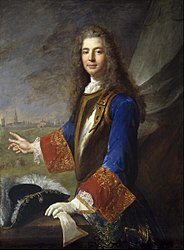
Charles-Francois-Marie de Custine
by Alexis Simon Belle, c1714
Houston Museum of Art
@Wikipedia
2) Charles-Francois-Marie de Custine, Chevalier de Wiltz (d.1738)
Lover in 1732.

Grand Ecuyer de Lorraine; Mestre de-Camp (colonel) of the French regiment; the Royal-Pologne Regiment

"...She was a woman of legendary beauty and wit, equally fluent in Polish and French... Playing mistress to Stanislas had actually been one of Marie-Louise's own roles when, as Princesse Palatine de Russie, she had gone to live at Chambord in 1727 where the exiled father-in-law of Louis XV had taken up his official residence two years before. There, she became as well the public mistress of a handsome and dashing officer, Charles-Francois-Marie de Custine, the celebrated Chevalier de Wiltz...." (The Love of a Prince: 219)

3) Stanislaw I Leszczynski of Poland.
Lover in 1732.

She " . . . soon became, with the richly subsidized blessing of her aging husband, the mistress of Stanislas himself. Playing mistress to Stanislas had actually been one of Marie-Louise's own roles when, as Princesse Palatine de Russie, she had gone to live at Chambord in 1727 where the exiled father-in-law of Louis XV had taken up his official residence two years before...." (Bongie,: 219)

Personal & Family Background: "...Her father, Jean-Stanislas Jablonowski (1669-1731) was Palatin de Russie (Ruthenia) and an uncle of King Stanislas Leszczynski. Her mother, whom we have already met in Lvov (Leopold), died there in 1744...." (Bongie: 219)

(1677-1766)
Duke of Lorraine
Count of the Holy Roman Empire.

Son of: Rafal Leszczynski, Voivode of Poznan and Anna Katarzyna Jablonowska.

Husband of: Katarzyna Opalińska. [Bio2]

His lovers were:
1) Katarzyna Dorothea Jablonowska, Comtesse de Tenczyn Ossolinski (1696-1759)

"Katarzyna Jablonowska 1696 - 1759. Mistress to her cousin, King Stanislas I. Wife of Prince Franciszek Ossolinski." (rafalhm, 2004, December 17)

" . . . Young Marie-Louise Jablonowska had a younger, less attractive sister, Catherine-Dorothee, who married the exiled Polish King's grand maitre, Francois-Maximilien, Comte de Tenczyn Ossolinski in 1732, but soon became, with the richly subsidized blessing of her aging husband, the mistress of Stanislas himself. . . ." (Bongie,: 219)

2) Marie-Francoise-Catherine de Beauvau (1711-1786)
Marquise de Beauvau-Craon
Lover in 1745-1746.

Daughter of: Marc de Beauvau, Prince de Beauvau-Craon & Anne Marguerite de Lignéville.

Wife of: Louis Francois de Boufflers, Marquis a'Amestranges (1714-1752), Captain of King Stanislaw of Poland, Duke of Lorraine. [Bio1]

Personal & Family Background:.
" . . . Her father had been an intimate of Louis XIV, his master of protocol, and one of the privileged courtiers allowed to view the king's last days in August 1714. Her mother, Anne de Froullay, came from an even more distinguished family, who also had served the royal household. In the late 1730s and 1740s when Du Chatelet sought favors at Louis XV's Versailles and Fontainbleau, she could appeal to cousins who had risen to royal cabinet posts or other court appointments, and to relatives by marriage, such as Louis Francois Armand Du Plessis, Duke de Richelieu, a commanding general of the royal army and one of the four gentlemen of the bedchamber who served at the king's side from the moment he woke in the morning until he retired at night." (Du Chatelet: 4)

Adept at Playing the Game of Love. 
"The key figure at this flirtatious court was Marie-Francoise-Catherine de Beauvau, marquise de Boufflers, a fascinating and charming woman in her mid-thirties, whose talents included painting and playing the harp. She was also adept at playing the game of love, and she had several lovers at the court, some of them simultaneously. She was not in love with any of them; for her, the point of the game was not love but pleasure, flirtation and power. One of her first lovers was said to be Francois-Etienne Devaux... Another was Antoine-Marie de Chaumont, marquis de La Galaiziere, the Chancellor at the court of Lorraine, and virtually the prime minister of the duchy. But she also became the mistress of duke Stanislas himself. In 1747 she also took on a young salon-soldier and minor poet, Jean-Francois, marquis de Saint-Lambert. And finally, or at least in addition, in 1748 she took on another handsome young lover, the vicomte Adhemar de Marsanne." (Davidson)

Paying Court, Exchanging Sexual Favours. 
"Marie Francoise Catherine de Beauvau-Craon, Marquise de Boufflers-Remiencourt, was the sister of Saint-Lambert's patron, the Prince de Beauvau-Craon, and the official mistress of the Duke of Lorraine, King Stanislas of Poland. As such, she was the reigning influence at the court. She expected young men like Saint-Lambert to pay court to her, even to exchange sexual favors. It is assumed that Saint-Lambert obliged. He certainly wrote poetry for her (Chloe). Du Chatelet flattered and attended her as well as part of her role as a courtier in Lorraine." (Du Chatelet: 256)

"The Marquise de Boufflers played a significant role at the court set up in Luneville de Boufllers-Remiencourt, and had two sons. She became a lady-in-waiting at the ducal court. At one time she was simultaneously the mistress of Stanislas, of his Minister of Finance Devaux, and of his Minister of State, earning the title 'Dame de Volupte' (Lady of Pleasure). (Wilson: 101)

Madame de Beauvau's other lovers.
1. Abbe Porquet.
2. Adhemar de Marsanne.
Lover 1748.
3. Antoine-Martin Chaumont de La Galaiziere (1697-1783).
Chancellor of Lorraine
4.Francois-Etienne Devaux.
French lawyer and poet.
French poet

3) Maria Ludovica Jablonowska, Princesse de Talmond.
Stanislaw Jan Jablonowski
Stanislaw Jan Jablonowski (1634-1702).

His lover was:
Elzbieta Sieniawska.


Stanislaw Poniatowski, Prince Poniatowski (1754-1833).
Great Chamberlain of Poland.


Son of: Kazimierz, Prince Poniatowski and Apolonia Ustrzycka.

His lovers were:
1) Anna Maria Romellini (1751-?)

Daughter of: Chevalier Saby.

Ref1:Lindemann]

"In Mantua, she had danced 'with a private troupe under the direction of Magnanigo'.  Magnanigo had arranged lodgings for her with a Bolognese woman in Mantua and paid for her keep. She was then (in 1763-64) about twelve years old. From Mantua, she went back to Vienna in order to locate 'a respectable [honnete] engagement.' At this point, her father had returned. For the entire time of his absence, dancing had supported her. She portrayed their reunion in Venice as an accident. 'Her father encountered her by chance in church . . . and was delighted to have found his child again so fortuitously.' He had accompanied the duke of Courland and a person she called 'Prince' Poniatowski (the brother of the king of Poland) to Venice. The two princes and her father boarded in the same inn, and there she got to know both of them and, in particular, Poniatowski. The Polish prince 'first debauched' her, and it was on his orders that his father took her back to Warsaw with him. According to her account, she must have been no older than thirteen. Later, her father returned returned with her to Venice (again on Poniatowski's commission), where she gave birth to a child; this was the young girl of about nine who was with her in Hamburg in the early 1770s. Her daughter had been born in 1767, when Romellini was about fourteen or fifteen years old. They baptized the girl Carolina Antonina Johanna du Chene. The name Du Chene, or Duchene, was 'completely invented' and referred to no one in particular. Poniatowski had given Romellini no money but rather jewels (especially diamonds) and other presents worth over 20,000 ducats. After the birth of his daughter, Poniatowski apparently lost interest in Romellini and ceased supporting her." (Liaisons Dangereuses)
Cassandra Luci Beloch
2) Cassandra Luci Beloch.
Lover in 1804

". . . It was in in 1804 that he met young Cassandra Luci Beloch, whom was told to have taken refuge in her palace in Via della Croce to escape from her husband, old and obscure Vincenzo Beloch's, nth scene: it was surely to be love at first sight if soon after Stanislaw Poniatowski, having awarded a large appanage to Beloch for his giving up to any matrimonial right, got married with Cassandra Luci, whom he named Caterina (a name the Poniatowski family cared for) who gave him 5 children: Isabella (1806), Carlo (1808), Costanza (1811), Giuseppe (1814) and Michele (1816)." (Rossini's Friends)

Stanislaw Potocki, Count Potocki.

His lover was:
Charlotte-Napoleone Bonaparte.

" . . . Widowed after only five years of marriage, she settled in Florence where she initiated a lively cultural salon frequented by intellectuals, artists and exiled nobility. Through this activity she met a young Polish count with whom she had a romantic relationship that resulted in a pregnancy. . . ." (Napoleon Sites)
Stanislaw-Felix Potocki
Polish nobleman & military commander.
Zofia Clavone
His lover was:
Zofia Clavone.
Lover in 1788

" . . . In 1788 she became the mistress of General Stanislaw-Felix Potocki, a claimant to the throne of Poland with huge estates in the Ukraine. He paid Witt two million zlotys to divorce her, and married her in 1798, after the death of his wife. He hardly received full value for his money, since she soon began an affair with his son, later living openly with him in Tulchin. Her husband died in 1805, and his son soon afterward.s. . . ." (Binyon: 86)
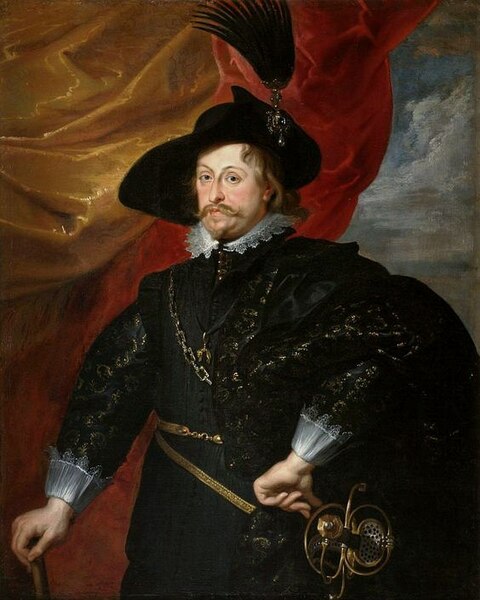
Wladyslaw IV of Poland
by Peeter Paul Rubens, 1620s
in Wawel Castle
@Wikipedia
Wladyslaw IV Vasa of Poland (1595-1648)

His lovers were:
1) Jadwiga Luszkowska (1616-1648)
Polish aristocrat & royal mistress

Daughter of: Jan Luszkowski, a Polish merchant & Anna.

Wife of: Jan Wypyski (d.1647), Starost of Merecz

Natural offspring:
1. Wladyslaw Konstanty Waza 1635-?)
2. a daughter (1636-?)

"Wladyslaw married twice for political reasons. . . He was poor marital material. His relaxed attitude toward morality and religion offended his strict father, and his numerous sexual dalliances earned him a reputation for loose morals. His one prolonged romantic attachment with Jadwiga Luszkowska, a burgeher, whom he took to Warsaw and who appeared with him in puclin or occasion. Wladyslaw IV married off his mistress to a court official to please his wife, Cecilia Renata, but continued to visit her at her husband's country estate. He had several short-lived affairs after his first wife's death and at least one illegitimate child." (The Polish-Lithuanian State, 1386-1795: 150)
Zygmunt II August of Poland
Zygmunt II August of Poland (1520-1572)

His lovers were:
1) Anna Zajączkowska.

2) Barbara Giżycka.

"Sigismund consoled his last years with a string of sexual liaisons, which did nothing to enhance his reputation. A daughter born to his mistress, Barbara Gizanka, in 1571, provoked grumbling that her mother was a whore and the king was not her father. . . ." (Lukowski & Zawadski: 82)

3) Barbara Radziwill.
" . . . His mistress was Jerzy Radziwill's daughter Barbara (1520-1551), whom he secretly married. Barbara died childless at age thirty-one, allegedly poisoned by Zygmunt's mother, Bona Sforza. . . ." (Falk: 553)

4) Diana di Cardona.

5) Mademoiselle Relska.

6) Mademoiselle Weiss.

7) Zuzanna Orłowska.

Zygmunt I of Poland.

His lover was:
Katarzyna Telniczenka.

Zygmunt II August of Poland.

His lovers were:
1) Barbara Gizycka (1550-1589).
Polish courtier.

"He sought to remedy the evil by liaisons with two of the most beautiful of his countrywomen, Barbara Gizanka and Anna Zajanczkowska, the diet undertaking to legitimatize and acknowledge as his successor any heir male who might be born to him; but their complacency was in vain, for the king died childless." (Wikipedia)

2) Barbara Radziwill (1520-1551)
"In the fetes which succeeded the accession of Sigismund II the eyes of the king had been attracted by the extraordinary loveliness of Barbara Radzivill (sic), sister of the palatine of Wilna, and widow of a Lithuanian magnate. The humour and vivacity of this princess charmed Sigismund; and her accomplishments in dancing and her skill as a poetess rendered her fascinations irresistible. . . ." (Freer: 183)
Zygmunt III Vasa of Poland
by Jan Szwankowski, c1590
in Wawel Castle
@Wikipedia
Zygmunt III Vasa of Poland.

His lover was:
Urszula Meyerin
Urszula Meyerin (1570-1635).

Princes & Princesses of Poland.
Aleksander Benedykt Sobieski
Polish prince, nobleman, diplomat, writer & scholar
Aleksander Benedykt Sobieski
Son of: Jan III Sobieski of Poland & Marie Casimire Louise de la Grange d'Arquien.

His lovers were:
Maximiliane von Lamberg
Countess Esterle
1) Anna Aloysia Maximiliane von Lamberg (d.1738)
Countess Esterle 
Lover in 1696-1699.

Austrian aristocrat & royal mistress.

Daughter of: Kaspar Friedrich von Lamberg-Kunstadt, Austrian aristocrat & Marie Frantiska Terezie Hyzrlova z Chodu, Czech aristocrat.

Wife of:
1. Count Franz Michel Hiserle (Esterle) von Chodau, mar 1695, div 1697
2. Count Gustav Hannibal von Oppersdorff, mar 1698)
" . . . Later that year [1702] the prince remained in Olawa and he didn't accompany his brothers in an expedition to Saxony, however, he did travel to Wroclaw where he had an affair with the former mistress of Augustus II Anna Aloysia Esterle." (Wikipedia)
Angelique Duparc
by Adam Manyoki, 1714
@Warsaw Royal Castle
French ballerina, actress & royal mistress.

Wife of: Charles Debargues, French dancer, choreographer & ballet master.
Elzbieta Sieniawska
3) Elzbieta Sieniawska (1669-1729)
Lover in 1696-1698.

"In 1696-1698, after the death of his father, Aleksander almost constantly accompanied his mother. Started an affair with Elzbieta Sieniawska . . . ." (Museum of King Jan III's Palace of Wilanov)

Anna Cetner, Countess Potocka (1758-1814)

Daughter of: I. Cetner, a Polish nobleman.

Wife of:, 
1. Prince Josef Sanguszko, Grand Marshal of Lithuania (d.1781)

2. Prince Kazimierz Nestor Sapieha

3. Count Kajetan Potocki

4. Charles-Eugene de Lorraine, mar 1803
[Bio1] [Bio2]

Jozef Anton Poniatowski.

His lover was:
Helena Massalska (1763-1815)

The Cynosure of All Eyes: "'To this court the Princess Charles came, preceded by her reputation for wit, beauty, and coquetry---the cynosure of all eyes. Her Polish birth, her elegance, her talents, her patriotism, enchanted her countrymen. Her deserted palace was speedily restored to be one of the most elegant in Warsaw, and she became for the first time the absolute mistress of a great house. Her uncle, who spoilt her, gave her magnificent horses, and she rode out daily (which had been a forbidden exercise) with a brilliant cavalcade of Polish gentlemen. A theatre was added to the palace, in which she gratified her love of acting. Freed from the control under which she had lived at Bel-0Eeil, the princess abandoned herself without restraint to this life of pleasure. She forgot the past, her husband and her child: in fact, the Princess Charles de Ligne no longer existed; what remained was Helen Massalska.'" (The Edinburgh Review, Volume 167:17)
Karolina Rzewuska
Karolina Rzewuska (1795-1885)

Wife of: Hieronim Sobanski.

Her lovers were:
1) General Johann de Witt
Lover in 1818.

"In contest for Mickiewicz's attentions---which, it seems, led to some nasty rivalries and underhanded tactics---no one was as successful as Karolina Sobanska, the mistress of General Witt. Like her Lithuanian namesake, she was older than the poet, by some four years, and no less stunning than Kowalska: 'What grace, what a voice, and what bearing!' Nee Rzewuska, she came from one of Poland's most distinguished---and as far as Russia was concerned, loyalist---families. Her brother Henryk was an accomplished storyteller and soon author of arguably the best Polish prose of the period; her sister Ewelina (Hanska) eventually became the wife of Balzac. After receiving a brilliant upbringing in Vienna, Karolina married Hieronim Sobanski, a rich landowner and Odessa businessman, from whom she separated quickly but did not immediately divorce. Witt's marital status was analogous. Nonetheless, the two insisted on flaunting their socially exceptionable liaison, which did not preclude (mutually acceptable) infidelities. Despite ostracism by the city's ladies, Sobanska's salon, or, rather, the mistress herself, proved impossible to resist, as Pushkin had learned some two years later." (Koropecky: 64)

2) Adam Mickiewicz.

Maria Feodorovna Lubomirska (1773-1810)
Polish beauty.

Wife of: 
1. Protazy Antoni Potocki
2. Valerian Zubov
3. Fedor Petrovich Uvarov.

Her lovers were:
1) Pyotr Dolgorukov.

2) Valerian Zubov.

Maria Kalergis (1822-1874)
Polish noblewoman, pianist & patron of the arts

Daughter of: Frederyk Karol von Nesselrode & Tekla Nalecz-Gorska

Wife of: Jan Kalergis, A rich landowner

"Mariya Kalergis was the niece of Count Nesselrode, foreign minister to Nicholas I. In 1839 she married the Greek diplomat Johann Kalergis, but she soon separated from him. Some years later she married Count Sergey Mukhanov, who was appointed intendant of the imperial theaters two years later. Neil Cornwell writes of Countess Kalergis-Mukhanova: 'Sometimes referred to as a gifted pianist, sometimes as a courtesan---a kind of aristocratic nineteenth-century groupie---or even a spy, she is reputed to have been a pupil of Chopin, the sometime mistress of Liszt, Alfred de Musset, Gautier (who wrote Symphonie en blanc majeur to her), and Heine. . . ." (Taylor: 43)

Her lovers were:
1) Alfred de Musset (1810-1857)
French dramatist, poet & novelist
Anatoly Nikolaievich Demidov
1st Principe di San Donato
2) Anatoly Demidov, 1st Principe di San Donato (1813-1870)
Russia industrialist, diplomat and arts patron.

Cyprian Norwid
3) Cyprian Norwid (1821-1883)
Polish poet, painter, dramatist & sculptor

4) Franz Liszt (1811-1886)
Hungarian virtuoso pianist, composer & arranger.

5) Gautier.

6) Gustave Blome.

7) Heine.

Napoleon III of the French
8) Napoleon III of the French

Marina Mniszech.
Her lover was:
Cossack ataman Zarutsky

"Mijhail's first priority was to restore order and end foreign occupation of territories seized during the Time of Troubles.  The first of these two tasks was soon accomplished.  Most importantly, in mid-1614, the government captured near Astrakhan the Cossak ataman Zarutsky, his mistress, the Polish Marina Mniszech (wife of the first two Pseudo Dmitirs), and her son, The Tiny Brigand. This little 'family' was brought to Moscow.  There the Tiny Brigand was hanged; Zarutsky was impaled on a sharp stake; and Marina was sent off to imprisonment and died shortly afterwards."  (A History of Russia, Vol 1: 161)
Olga Stanislavovna Potocka
Olga Stanislavovna Potocka (1803-1861)
Polish noblewoman.

Her lovers were:
Pavel Dmitrievich Kiselov
her brother-in-law:
Mikhail Semenovich Vorontsov
". . . Also in Odessa were Sofya's twenty-two-year-old sister, Olga, and her recently acquired husband, General Lev Naryshkin, who was Vorontsov's cousin. Olga was as beautiful as her sister, but 'in her beauty there was nothing maidenly or touching. . . in the very flower of youth she seemed already armoured with great experience. Everything was calculated, and she preserved the arrows of coquetry for the conquest of the mighty.' Wiegel's last sentence is a hidden reference to a relationship which was well known in Odessa: soon after her arrival Olga became Vorontsov's mistress. Naryshkin, seventeen years older than his wife, lacked the character and energy to complain. . . and, in addition, his affection for his wife was lukewarm: he had long been hopelessly in love with his aunt, Mariya Naryshkina, for many years the mistress of Alexander I." (Binyon: 161) 
Lev Naryshkin
She married General Lev Naryshkin (husband, in 1824).

Wincent Potocki (1749-?)

" . . . Count Potocki, separated from his wife by her illness, became a habitue of the palace of the Princess de Ligne separated by war from her husband, ane before many months had passed from the dates we have mentioned it became notorious that she had fallen desperately in loved with the accomplished chamberlain. It was the first serious passion of her life, and she gave way to it with all the impetuosity of her character, and with even more warmth than was shown by the object of her illicit affection. . . . " (The Edinburgh Review, Volume 17:18)

Personal & Family Background.

"At this brilliant court of Stanislas Augustus no man was more distinguished than Count Vincent Potocki, the son of the Palatine of Kiew, and nephew of the former king, Stanislas Leczinski, consequently first cousin to the late Queen of France. This nobleman held the office of high chamberlain to the king; he was then about thirty-eight years of age, popular in his manners, seductive in his intrigues, and careful of his own interests. He had been twice married: first, in 1766, to Urusla Zamoysa, the daughter of the king's eldest sister, Louise Poniatowska; but this alliance did not last long; it was terminated in a few years by that facility of divorce which was so fatal to Polish society. The count then married, in 1786, a Countess Michielska, by whom he had two sons. When Potocki was summoned to Warsaw in 1788, the countess, who was devotedly attached to him, was obliged by the state of her health to remain in the Ukraine. These circumstance laid a train which ended in a catastrophe. . . . "(The Edinburgh Review, Vol 17:17) 

His lover was:
Helena Massalska.
Zofia Clavone
Comtesse Potocka

Comtesse Potocka
(1760-1822)
Greek slave, spy & 
Polish aristocrat & royal mistress.

Zofia Clavone
Comtesse Potocka
Daughter of: Constantine Clavone & Maria Clavone.

Wife of:
1. Count Joseph de Witt, mar 1766/67, div 1798

2. General Stanislaw-Feliks Potocki
Lover in 1788, 2/mar 1798

3) General Kiselev, mar 1798

Video: Zofia Potocka

"Count De Witt, a descendant of the grand pensionary of Holland, who was governor of the place, received his noble visitor. (La Grade-Chambonas: 177)

Beauty and Destiny?: "Garden of Venus by Eva Stachniak is based on a real life story of a famous courtesan, beautiful Sophie Glavani born in Greece in the middle of the 18th century. The novel is set up in two slightly differing times and circumstances. We get to know Sophie as a girl of simple origin, a sweet young 'Dou-Dou', we watch her become a lover of a Polish minister in Istanbul, a young wife of a Polish noble, and finally the wife of Count Felix Potocki and a Polish countess. She was able to change her status thanks to her beauty, intelligence and shrewdness. The complicated story of Sophie's life is intermingled with history - since her two husbands (Jan de Witt and Count Felix Potocki) and her children were prominent figures in Polish history of the turn of 18th and 19th centuries. Felix Potocki was so much in love with Sophie, his wife, that he built a beautiful garden which he called 'Sophievka' in her name. " (Urban-Klaehn, 2006)

Relationship History.
" . . . Sofya Clavona was a Greek from Constantinople, who had, it was said, been bought from her mother for 1,500 piastres by the Polish ambassador. As she was journeying to Poland with her protector, at Kamenets-Podolsk in the Ukraine she met Major Joseph Witt, who fell in love with her, married her secretly and took her to Paris. The portraitist Elisabeth Vigee-Lebrun saw her here in the early 1780s, noting that she 'was then extremely young and as pretty as it is possible to be, but tolerably vain of her charming face.' Later Sofya attracted the attention of Potemkin, Catherine's favourite, who, besotted with her, made her husband a general and a count, took her as his mistress and bestowed on her an estate in the Crimea. In 1788 she became the mistress of General Stanislaw-Felix Potocki, a claimant to the throne of Poland with huge estates in the Ukraine. He paid Witt two million zlotys to divorce her and married her in 1798, after the death of his wife. He hardly received full value for his money, since she soon began an affair with his son, later living openly with him in Tulchin. Her husband died in 1805, and his son soon afterwards. . . ." (Binyon:  86)

A Beautiful Spy.
"Countess Sophia Potocka, the 'Beautiful Greek' and outstanding adventuress of the age, said to be the 'prettiest girl in Europe.' 'She was a spy and courtesan notorious for her beauty, vice and crimes' who was sold at the age of 14 by her mother, a fruit-seller in Constantinople, and became one of Potemkin's last mistresses before marrying the fabulously wealthy Polish Count Felix Potocki, seducing her step-son and building a huge fortune." (Montefiore: 654)

Countess Potocka's physical appearance & personal qualities at 50.
" . . . Madame Potocka was at that time not far from her fiftieth year. She had, however, by no means yet lost any of her freshness and vigour, and she was in every respect entitled to the reputation of being a very beautiful woman. He figure was tall, commanding, graceful, and extremely well-formed, and there was an unaffected dignity in her deportment which kept familiarity within the proper limits of good breeding. Her features were extremely formed; her black eyes full of expression and vivacity; and an agreeable smile often played upon her lips, which occasionally uncovered a most beautiful set of teeth." (The Journal of a Nobleman: 176)

Countess Potocka's personal & family background.
"The Countess Potocka was a native of Constantinople, where her father, a reputed descendant of the Cantacuzene family, followed the humble calling of a butcher. In spite of industry and activity, he found great difficulty in earning a sufficiency to pay his way, and maintain his wife and his only daughter Sophia. The latter had just entered her fourteenth year, and her growing beauty was the admiration of the whole neighbourhood. . . ." (The Journal of a Nobleman: 176)

Personal & Family Background: ". . . Sofya Clavona was a Greek from Constantinople, who had, it was said, been bought from her mother for 1,500 piastres by the Polish ambassador As she was journeying to Poland with her protector, at Kamenets-Podolsk in the Ukraine she met Major Joseph Witt, who fell in love with her, married her secretly and took her to Paris. The portraitist Elisabeth Vigee-Lebrun saw her here in the early 1780s, noting that she 'was then extremely young and as pretty as it is possible to be, but tolerably vain of her charming face. . . . " (Binyon: 86)


Countess Potocka's husbands
"Count de Witt, a descendant of the grand pensionary of Holland, who was governor of the place, received his noble visiter with every mark of attention. The count, however, no sooner beheld Sophia that he became deeply enamoured of her; and on learning the equivocal situation in which she stood, being neither a slave nor a mistress, but, as it were, a piece of merchandise purchased for 1500 piastres, he wound up his declaration of love by an offer of marriage. The count was a handsome man, scarcely thirty years of age, a lieutenant general in the Russian service, and enjoying the high favour of his sovereign, Catherine II. The fair Greek, as may well be imagined, did not reject the favour of this fortune, but accepted the offer of her suito without hesitation." (The Journal of a Nobleman: 177)

Zofia's spouses & children. 

". . . Sofya married Pushkin's friend General Kiselev in 1821, but separated from him in 1829, supposedly on learning that he had an affair with her sister (who had married general Lev Naryshkin)" (Binyon: 86)

Her lovers were:
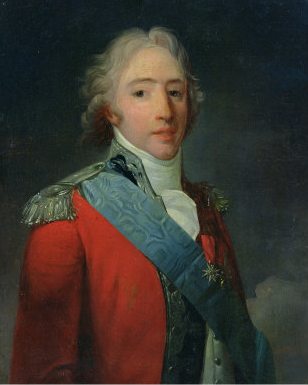
Charles-Philippe, Comte d'Artois
later Charles X of France, c1796
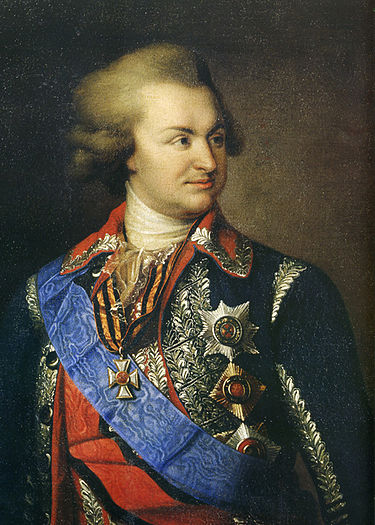
Grigory Potemkin
Prince of Taurida
Lover in 1787-1792.

". . . Later Sofya attracted the attention of Potemkin, Catherine's favourite, who, besotted with her, made her husband a general and a count, took her as his mistress and bestowed on her an estate in the Crimea. . . . " (Binyon: 86)

"In 1787, the Witts traveled to Istanbul, where they were at the outbreak of the Russo-Turkish War. a year later, she was present in the camp of the favorite of Catherine the Great, Grigory Potemkin, and became his lover, a relationship which lasted until his death... She was introduced as the official lover of Potemkin at a ball during his visit to Saint Petersburg 1791. She was sent away by Aleksandra von Engelhardt on the death of Potemkin." (Wartime Spy Ladies)

Jozef Antoni Poniatowski
Prince Poniatowski
Jozef Antoni Poniatowski
Prince Poniatowski

Polish ambassador

Lover in 1772-1778

". . . A Polish ambassador (Karol Boscamp-Liasopolski) bought her from her mother, who was very poor, when she was only a child, because she was very nice looking, talented and witty. He educated her appropriately to accompany him and travelled with her through Poland and Russia. She was a big success. . . . " [Vigee Le Brun]

" . . In 1772, her mother - a vegetable street seller - sold her at the age of 12 to Polish envoy in Constantinople. The girl was this man's mistress until 1778, until the Polish commander Jozef Witte bought her and then married her. . . . " (Boris Wilnitsky Fine Arts)
6) Louis XVIII de France.
Nikolai Novosiltsov
7) Nikolai Novosiltsov.
Russian governor
Nikolai Saltykov
8) Nikolai Saltykov.
Stanislaw-Feliks Potocki
Lover in 1788

"In 1798 Zofia married secondly the Polish nobleman Stanislaw Szczesny Potocki, with whom she had an affair in Jassy, after he managed to help her acquire a legal Catholic divorce with great difficulty. . . They had eight children. . . . " (Wartime Spy Ladies)

" . . . In 1798, Sophie's husband, general (sic) de Witte, lost a considerable sum of money in card gambling, while playing against Polish aristocrat Count Stanislaw Szczesny Potocki. The latter offered de Witte to waive the entire claim if the general would pass on his lady to him. The terms were accepted and Count Potocki promptly made Sophie his second wife, despite the postulations of his friends. . . . " (Boris Wilnitsky Fine Arts)

" . . . Felix Potocki was so much in love with Sophie, his wife, that he built a beautiful garden which he called 'Sophievka' in her name." (Garden of Venus, the real story of Sophie Potocka - a beautiful Polish Countess)

". . . In 1788 she became the mistress of General Stanislaw-Felix Potocki, a claimant to the throne of Poland with huge estates in the Ukraine. He pait Witt two million zlotys to divorce her, and married her in 1798, after the death of his wife. He hardly received full value for his money, since she soon began an affair with his son, later living openly with him in Tulchin. Her husband died in 1805, and his son soon afterwards. . . . " (Binyon: 86)

". . . In Hamburg, Sophie met the Polish magnate Stanislaw Felix Potocki (1752-1805), the very rich palatine of Kiev, who fell in love with her. To marry her, he had to divorce his second wife Josefina Amalia Mniszech. Then he paid a high price to Sophie's husband to buy her and to marry her (1798). They had 3 sons: Alexandre, Boleslaw, Miczyslaw and 2 daughters Sophie and Olga. They settled finally and lived at their estate Tulczim with a wonderful dendrological part called Sophiowka (Sifiyivka) near Uman. This park still exists. Sophie inherited this estate from her husband and died in 1822 in Berlin." [Vigee Le Brun]
Szczesny Jerzy Potocki
10) Szczesny Jerzy Potocki (1776-1810) or (1760-1822)
Zofia's stepson

". . . During her marriage, she had a love affair with her stop son (sic), Szczesny Jerzy Potocki, who was probably the father of her son Boleslaw. After the death of husband in 1805, Zofia Potocka ended her affair with her stepson and devoted her time to her children . . . . " (Wartime Spy Ladies)

[Bio1] [Bio2] [Bio3][Ref4:Culture-Art-History] [Ref5] [Discover Ukraine]
Zofia, Comtesse Potocka's Gallery.
Zofia, Comtesse Potocka
References:
[Ref1:Wartime Spy Ladies
[Ref2:epoznan]
[Ref3:sofiyivka]
[Ref4:batguano]
[Ref5:wilnitsky]
[Ref6:geni.com]
[Ref6:Awesome Women]
[Ref7:Women History]