SAXONY, MEISSEN &THURINGIA.

(1240-1314)
Landgrave of Thuringia
Margrave of Meissen
Count Palatine of Saxony
 |
| Albrecht II von Meissen & Friedrich I von Meissen |
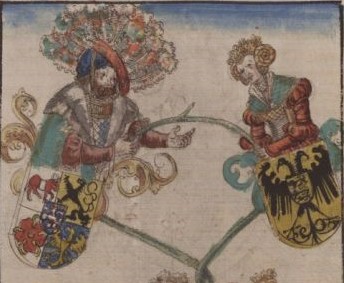 |
| Albrecht II von Meissen & Margherita di Sicilia |
Husband of:
Kunigunde von Isenberg (1245-1286)
Saxon aristocrat, courtier & royal mistress
Lady-in-waiting to Margherita di Sicilia
Daughter of: Otto von Eisenberg & Anna von Kottwitz
Natural offspring:
Daughter of: Otto von Eisenberg & Anna von Kottwitz
Natural offspring:
a. Elisabeth von Meissen
b. Albrecht von Meissen (1269-1301)
c. Elisabeth von Orlamunde
Cunigunde was the daughter of Count Otto von Eisenberg, and his wife Anna von Kottwitz. She attended the Thuringian court as lady-in-waiting to Margaret of Germany, the first wife of Albert I the Forward, Landgrave of Thuringia (1240 – 1314). Beautiful and ambitious, Cunigunde attracted the attention of the landgrave and became his mistress, bearing him an illegitimate son Apitz (Albert) (c1269 – 1301), and a daughter Elisabeth, wife of Count Heinrich II of Frankenstein. Cunigunde is said to have attempted, with her lover’s knowledge, the murder of Landgravine Margaret so that she could usurp her position and honours. After some attempts to poison the lady failed, Cunigunde finally managed to so frighten her mistress (1270), that Margaret fled the court by night to Frankfurt, fearing for her life, and died there soon afterwards. Cunigunde’s marriage with Albert took place soon afterwards (1272), and she concealed Apitz under her robe, as this was supposed to procure for natural children, the privileges of legitimacy. However this marriage brought baneful consequences for Thuringia. Estranged from his legitimate sons, the landgrave disinherited them and proclaimed Cunigunde’s son to be his heir. The Thuringian nobility resisted this, which led to a long succession of military hostilities. The affair was only able to be settled peaceably when Cunigunde died (before May 31, 1286), aged about forty. At this time Albert divided his territories amongst his legitimate sons." (A Bit of History)
" . . . The situation was particularly unpleasant for a wife if her husband kept a concubine he loved. We hear this about Landgrave Albrecht ('the Degenerate') of Thuringia (d.1314), who was married to a daughter of Emperor Frederick II: 'In the year of our Lord 1265, this Albrecht treated Lady Margaret very unjustly on account of a court lady called Kunigunde of Isenberg, who was his concubine and whom he loved.' Incidentally, after the death of his wife, Albrecht married Kunigunde. . . ." (Courtly Culture: Literature and Society in the High Middle Ages: 382)
"German courtier and royal mistress. Cunigunde was the daughter of Count Otto von Eisenberg, and his wife Anna von Kottwitz. She attended the Thuringian court as lady-in-waiting to Margaret of Germany, the first wife of Albert I the Forward, Landgrave of Thuringia (1240–1314). Beautiful and ambitious, Cunigunde attracted the attention of the landgrave and became his mistress, bearing him an illegitimate son Apitz (Albert) (c1269–1301), and a daughter Elisabeth, wife of Count Heinrich II of Frankenstein. Cunigonde is said to have attempted, with her lover’s knowledge, the murder of Landgravine Margaret so that she could usurp her position and honours. After some attempts to poison the lady failed, Cunigunde finally managed to so frighten her mistress (1270), that Margaret fled the court by night to Frankfurt, fearing for her life, and died there soon afterwards. Cunigunde’s marriage with Albert took place soon afterwards (1272), and she concealed Apitz under her robe, as this was supposed to procure for natural children, the privileges of legitimacy. However this marriage brought baneful consequences for Thuringia. Estranged from his legitimate sons, the landgrave disinherited them and proclaimed Cunigunde’s son to be his heir. The Thuringian nobility resisted this, which led to a long succession of military hostilities. The affair was only able to be settled peaceably when Cunigunde died (before May 31, 1286), aged about forty. At this time Albert divided his territories amongst his legitimate sons." (Women of History - E)
c. Elisabeth von Orlamunde
Cunigunde was the daughter of Count Otto von Eisenberg, and his wife Anna von Kottwitz. She attended the Thuringian court as lady-in-waiting to Margaret of Germany, the first wife of Albert I the Forward, Landgrave of Thuringia (1240 – 1314). Beautiful and ambitious, Cunigunde attracted the attention of the landgrave and became his mistress, bearing him an illegitimate son Apitz (Albert) (c1269 – 1301), and a daughter Elisabeth, wife of Count Heinrich II of Frankenstein. Cunigunde is said to have attempted, with her lover’s knowledge, the murder of Landgravine Margaret so that she could usurp her position and honours. After some attempts to poison the lady failed, Cunigunde finally managed to so frighten her mistress (1270), that Margaret fled the court by night to Frankfurt, fearing for her life, and died there soon afterwards. Cunigunde’s marriage with Albert took place soon afterwards (1272), and she concealed Apitz under her robe, as this was supposed to procure for natural children, the privileges of legitimacy. However this marriage brought baneful consequences for Thuringia. Estranged from his legitimate sons, the landgrave disinherited them and proclaimed Cunigunde’s son to be his heir. The Thuringian nobility resisted this, which led to a long succession of military hostilities. The affair was only able to be settled peaceably when Cunigunde died (before May 31, 1286), aged about forty. At this time Albert divided his territories amongst his legitimate sons." (A Bit of History)
" . . . The situation was particularly unpleasant for a wife if her husband kept a concubine he loved. We hear this about Landgrave Albrecht ('the Degenerate') of Thuringia (d.1314), who was married to a daughter of Emperor Frederick II: 'In the year of our Lord 1265, this Albrecht treated Lady Margaret very unjustly on account of a court lady called Kunigunde of Isenberg, who was his concubine and whom he loved.' Incidentally, after the death of his wife, Albrecht married Kunigunde. . . ." (Courtly Culture: Literature and Society in the High Middle Ages: 382)
"German courtier and royal mistress. Cunigunde was the daughter of Count Otto von Eisenberg, and his wife Anna von Kottwitz. She attended the Thuringian court as lady-in-waiting to Margaret of Germany, the first wife of Albert I the Forward, Landgrave of Thuringia (1240–1314). Beautiful and ambitious, Cunigunde attracted the attention of the landgrave and became his mistress, bearing him an illegitimate son Apitz (Albert) (c1269–1301), and a daughter Elisabeth, wife of Count Heinrich II of Frankenstein. Cunigonde is said to have attempted, with her lover’s knowledge, the murder of Landgravine Margaret so that she could usurp her position and honours. After some attempts to poison the lady failed, Cunigunde finally managed to so frighten her mistress (1270), that Margaret fled the court by night to Frankfurt, fearing for her life, and died there soon afterwards. Cunigunde’s marriage with Albert took place soon afterwards (1272), and she concealed Apitz under her robe, as this was supposed to procure for natural children, the privileges of legitimacy. However this marriage brought baneful consequences for Thuringia. Estranged from his legitimate sons, the landgrave disinherited them and proclaimed Cunigunde’s son to be his heir. The Thuringian nobility resisted this, which led to a long succession of military hostilities. The affair was only able to be settled peaceably when Cunigunde died (before May 31, 1286), aged about forty. At this time Albert divided his territories amongst his legitimate sons." (Women of History - E)
"Albert, who for his vices received the surname of the Degenerate... In his early years he was a prince of great hopes, and particularly distinguished himself in the campaign against the Pagans, in Prussia, in 1265. He married Margaret, daughter of the emperor Frederic II, by whom he had three sons and a daughter. She was a princess of excellent character, but had the misfortune to lose the affections of her husband, who was fascinated by the attractions of one of her ladies, named Cunigund von Eisenberg. This woman, who possessed in a high degree the art of pleasing, not content with having deprived her mistress of her husband's love, formed the cruel resolution of putting her completely out of the way, that she might step into her place. Albert was base enough to countenance her design. . . ." (Shoberl. A historical account, interspersed with biographical anecdotes, of the house of Saxony: 37)
 |
| Bernhard II von Sachsen-Jena |
Herzog von Sachsen-Jena 1672.
Son of: Wilhelm von Sachsen-Weimar & Eleonore Dorothea von Anhalt-Dessau
Husband of: Marie-Charlotte de La Tremoille, mar 1662
His lover was:
Marie Elisabeth von Kospoth (1672-1709)
Lover in 1676.
Grafin von Alstädt 1676
Natural offspring:
a. Emilie Eleonore von Kospoth (1674-1709), Grafin von Alstadt 1676
"The marriage of Bernhard and Marie Charlotte was totally unhappy, and, were they seemingly irreconcilable, the duke had decided to marry one of the ladies of his court, Marie Elisabeth of Kospoth. He solemnly promised that he would divorce his wife and marry her, and she ceded to his advances. They had one daughter . . . Meanwhile, Bernhard's efforts to have his marriage annulled were unsuccessful, as no theologian or jurist could give him grounds for divorce; and he appeared to reconcilem himself with Marie Charlotte. Nevertheless, on 20 October 1672 he promised in writing to his mistress that he would never forget her, but would care and protect her as if she were his true wife, and giving her the style of "Lady of Alstädt" and an annual rent of 1000 Taler. Then, in 1674, they were married by a Jesuit priest named Andreas Wigand. Thus, Bernhard became one of the few cases of bigamy among princes. The contract declared the children to be legitimate and noble, until such time as an Imperial Act could bring them to a higher rank. She was given as Morgengabe a sum of 20,000 Taler and assigned the Schloss Dornburg as her residence. She was obliged to keep the marriage secret until the death of the duke's first wife; should she reveal it, the duke would cease to be bound by the contract. On 8 November 1676 Marie Elisabeth was raised by the Emperor to the rank of an Imperial Countess (Reichgräfin), along with her daughter, and any other legitimate children of hers, with the title of Countess of Altstädt (Gräfin von Altstädt) and the style of "hoch- und wohlgebohrne". Marie Elisabeth obtained her Morgengabe, not without some difficulty. She survived her "husband" thirty-eight years." (Wikipedia) |
Ernst I of Saxe-Coburg-Gotha |
(1784-1844)
Duke of Saxe-Coburg-Saalfeld
1806-1844
Duke of Saxe-Coburg-Gotha
1826-1844.
Son of: Franz von Sachsen-Coburg-Saalfeld & Auguste von Reuss-Ebersdorff.
Husband of:
1. Luise von Sachsen-Gotha-Altenburg, mar 1817
2. Marie von Wurttemberg.
"Duke Ernst had finally married in 1817. The bride was a relative, 16-year-old Louise of Saxe-Gotha. It was a marraige for dynastic purposes. She was the only child of Prince Augustus, the reigning Duke of Gotha-Altenburg. Her father's younger brother, Friedrich, was a childless homosexual, which made her the ultimate heir to Gotha-Altenburg. Louise, whose mother had died when she was but two weeks old, was a small, vivacious and intelligent girl. 'With long thick chestnut hair, and large blue eyes, though severely cross-eyed,' one of her nieces wrote, 'but when she smiles and talks, one assumes it to be a freshness in her expression, which suits her rather well.' Because of her pleasant character, Louise was dearly loved by the people of Coburg. But the marriage was an unhappy one, owing to Ernst's continuing extramarital affairs. In the very year of his marriage, Ernst became the father of an illegitimate daughter by his 19-year-old Parisian mistress Sophia Fermepin His reputation was further harmed by the publication, in 1823, of the saucy memoirs of la belle Grecque, his former mistress, Pauline Panam, the mother of another of his may bastards. Out of revenge or out of loneliness, Louise soon started to take lovers of her own." (A Throne in Brussels: Britain, the Saxe-Coburgs and the Belgianization of Europe)
Physical appearance & personal qualities.
". . . A tall young man with the head rather steeping, and covered with a profusion of curly black hair, honoured me by his peculiar distinction, and conversed with me for a long period---this was the Duke of Saxe-Coburg. His conduct was noble, his physiognomy handsome, and his stature elegant. His language, though not fluent, but well-chosen, announced more of assurance than facility in utterance; more confidence than ease. I could easily perceive the marked attention with which the eyes of many ladies present followed his motions, and I felt flattered by the attentions that were exclusively directed towards myself." (Memoirs of a Young Greek Lady: 23)
Randomly seducing mistresses by the dozen.
"The Duke had a violent temper and an extraordinary lifestyle. 'There are few deviations from morality or convention,' wrote his biographer Giles St. Aubyn, 'that he had not pioneered.' Ernest spent much of his youth randomly seducing mistresses by the dozen, siring bastards both at home and abroad. His sister Juliane had married into the Russian royal family, and the Duke found a firm friend in his new brother-in-law, the sinister and brutal Grand Duke Constantine, a grandson of Catherine the Great. It was said that the Dukes Ernest and Constantine amused themselves by kicking hussars to death and firing live rats from cannons in the Marble Palace." (Royal Babylon: 257)
His lovers were:
1) Margaretha Braun (1766-1826?)
Lover in 1838?.
a servant girl
Natural Offspring:
a. Ernst Albert Bruno von Bruneck, Freiherr von Bruneck (1819-1838)
b. Robert Ferdinand Alphons von Bruneck, Freiherr von Bruneck 1856.
b. Robert Ferdinand Alphons von Bruneck, Freiherr von Bruneck 1856.
2) Pauline Panam (1789-1840).
Lover in 1807.
Natural offspring:
1. Ernst (1809-?)
". . . By her account, Duke Ernest seduced her in Paris when she was fourteen. In 1808, at her lover's urgent behest, Panam made the journey from Paris to Coburg. She was told that she would be a lady-in-waiting to the duke's mother... Panam became pregnant by the duke and was sent to Amorbach...to have her baby... She and Duke Ernest continued to have sexual relations on and off for a number of years, and he seems to have loved her as well as lusted after her. . . ." (We Two: Victoria and Albert: Rulers, Partners, Rivals: 106).
" . . . In the French capital Ernst was more successful in affairs of the heart than in affairs of state. He acquired a mistress, Pauline Panam, a French actress of Greek extraction, known as La Belle Grecque, who soon bore him a son. It was the beginning of an ongoing scandal that dogged Ernst for years and was not laid to rest by his many subsequent relations. . . ." (Albert and Victoria: The Rise and Fall of the House of Saxe-Coburg-Gotha: 25)
"At a ball in Paris the handsome and fiery Duke Ernst saw a charming young maiden of fourteen, Pauline Adelaide Alexandra Panam, who was descended from a Greek family settled in Montpellier, and was soon universally known by the name of 'the fair Greek.' The enamoured duke proceeded to vigorous courtship of the fair Greek, offering her his protection, his influence, and his fortune. Another day he proposed to her to become the lady-companion to his sister, the Grand-Duchess Constantine. In fine, the far Greek very soon succumbed to the seductive arts of the duke. In April 1808, the duke returned to Coburg. Mademoiselle Pauline followed her lover, who had promised that his mother would receive her in her court circle. By the duke's command she travelled in male attire." (Caroline Bauer and the Coburgs: 30)
"Albert and Ernest were not the Duke's only sons, but Coburgers were cautious about open references to his illicit amorous life, even after Pauline Panam, one of his discarded mistresses, published her Memoires d'une jeune Grecque in Paris in 1824. At fifteen, she had been slipped into Coburg dressed as a boy. (Among the paintings which had been commissioned for the refurbishment of the Rosenau, Louise would note, was one 'of a Knight who has discovered that his supposed page is really a beautiful girl'.) At sixteen, in March 1809 -- Ernst had been Duke since his father, Francis Frederic, had died in 1806 -- Pauline had given birth to his son, an an earliest Ernst, in Frankfurt, where she had been sent. Leopold had given her some money, and the Dowager Duchess offered her a pension if she refrained from identifying herself with the Duke and named her child Pauline if a girl, and eschewed Ernst if a boy. She ignored the injunction. The Duke's adjutant, Johann Maximilian von Szymborski, offered a settlement of she 'quit' Saxe-Coburg territory. In Dresden and Frankfurt, she received small sums grudgingly given, then went to Vienna and, finally, Paris, where -- as la belle Grecque -- she somehow supported herself, very likely through the 'special protection' of titled admirers and further blackmail of the Duke. . . ." (Uncrowned King: The Life of Prince Albert: 23)
Seduction, Neglect, Abuse & Abandonment: "Pauline Adelaide Alexandre Panam's Memoirs describes her seduction in Paris by Ernst I, Duke of Saxe-Coburg (later the father to Prince Albert), and her subsequent neglect and abuse at the hands of the Duke and his bullying family. Skillfully deploying the rhetoric of sensibility and of Gothic romance, Panam presents herself as a helpless victim of powerful and ruthless forces, driven to publish through the need to raise money for herself and her illegitimate child. Befriended in later years by the elderly Prince de Ligne, himself a memoirist of scandalous renown in France (and a friend of Casanova), Panam was encouraged by him to publish the story of her life, which generated waves of scandal and sympathy across Europe." (Pickering & Chatto)
Personal & Family Background: "Pauline Panam was a fatherless French girl of Greek mercantile extraction and exotic beauty. . . . " (We Two: Victoria and Albert: Rulers, Partners, Rivals: 106)
3) Sophie Fermepin de Marteaux (1797-1885)
Natural Offspring:
a.Bertha von Sophie Reine Permepin de Marteaux (1817-1896)
a.Bertha von Sophie Reine Permepin de Marteaux (1817-1896)
"In October, 1807, the reigning Duke Ernst had gone to Paris with his youngest brother, Prince Leopold, then seventeen years old, to do homage to the all-powerful Emperor Napoleon. Here, in Paris, Duke Ernst began a love intrigue which was soon to become known to all the world, though not redounding to the honor of the House of Koburg-Panam, who was descended from a Greek family resigning in Montpelier, and was soon known universally by the name of 'la belle Grecque.' The amorous duke at once made vigorous court to the beautiful Greek, offering her his protection, his influence and his fortune... One day he proposed to her to become the lady-companion of his sister, the Grand Duchess Constantine, and the outcome of it was that the beautiful Greek very soon succumbed to his artifices...." (Bauer, pp. 27-28)
| Ernst II von Sachsen-Coburg-Gotha |
Ernst II von Sachsen-Coburg und Gotha (1818-1893).
Son of: Ernst I von Sachsen-Coburg und Gotha & Luise von Sachsen-Gotha-Altenburg.
Husband of: Alexandrine von Baden.
His lovers were:
1) Fraulein Steinpflug.
Natural offspring:
Natural offspring:
1. Helene von Sternheim (1839-?)
2) Rosa von Lowenstern.
a circus rider
Wife of Leon Graf Razumovsky von Wigstein, Chamberlain to Duke Ernst II.
2) Rosa von Lowenstern.
a circus rider
Wife of Leon Graf Razumovsky von Wigstein, Chamberlain to Duke Ernst II.
Natural offspring: 1. Kamillo Graf Razumovsky von Wigstein (1852-?)
3) Victoire Noel.
Natural offspring:
1. Karl Raymond Freiherr von Kerschendorf (1848-?)
Ernst II Gallery.
Ernst II Gallery.
 |
| Ernst II von Sachsen-Coburg-Gotha @Wikimedia |
 |
| Ernst II von Sachsen-Coburg-Gotha @Royal Portraits |
 |
| Ernst II von Sachsen-Coburg-Gotha @Royal Portraits |
References:
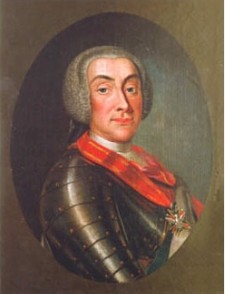 |
| Ernst August I von Sachsen-Weimar-Eisenach |
Ernst August I von Sachsen-Weimar-Eisenach (1688-1748)
Duke of Sachsen-Weimar 1728, Duke of Sachsen-Eisenach 1741, Duke of Saxe-Jena 1741.
Son of: Johann Ernst III von Sachsen-Weimar & Sofie Auguste von Anhalt-Zerbst.
Husband of:
1. Eleonore Wilhelmine von Anhalt-Kothen, mar 1716
2. Sofie Charlotte von Brandenburg-Bayreuth, mar 1734
His lover was:
Son of: Johann Ernst III von Sachsen-Weimar & Sofie Auguste von Anhalt-Zerbst.
Husband of:
1. Eleonore Wilhelmine von Anhalt-Kothen, mar 1716
2. Sofie Charlotte von Brandenburg-Bayreuth, mar 1734
His lover was:
Friederike von Marschall.
Lover in 1730.
Natural offspring: Ernst Friedrich, Freiherr von Brenn (1731-1810)
Natural offspring: Ernst Friedrich, Freiherr von Brenn (1731-1810)
Karl August von Sachsen-Weimar-Eisenach (1757-1828)

Frau von Heygendorff 1809.
Lover in 1806.
German actress & singer.
Natural Offspring:
1. Karl von Heygendorff
2. August von Heygendorff