 |
| Elena Glinskaya Regent of Russia |
Daughter of: Prince Vasili Lvovich Glinsky & Princess Ana Jaksic, Serbian princess
2nd Wife of: Vasily IV of Moscow mar 1526.
"Elena was born circa 1510 as the daughter of Prince Vasili Lvovich Glinsky and Princess Ana Jakšić. She was married to Vasili III of Russia on 21 January 1526 and reportedly she was chosen by Vasili for, “the beauty of her face and her young age.” To marry Elena Vasili had to divorce Solomonia Saburova and she was forced to take the veil under the name of Sophia at the Nativity Monastery of Moscow. Solomonia and Vasili had had no children in their twenty years of marriage. Elena gave birth to her first child, the future Ivan IV (better known as “the Terrible”) in 1530. A second son, Yuri, was born in 1532. Vasili did not live to see his sons grow up. He died on 3 December 1533. Elena acted as regent for the three-year-old Ivan, although it is unclear if she was ever legally made regent." (History of Royal Women)
"Elena was born circa 1510 as the daughter of Prince Vasili Lvovich Glinsky and Princess Ana Jakšić. She was married to Vasili III of Russia on 21 January 1526 and reportedly she was chosen by Vasili for, “the beauty of her face and her young age.” To marry Elena Vasili had to divorce Solomonia Saburova and she was forced to take the veil under the name of Sophia at the Nativity Monastery of Moscow. Solomonia and Vasili had had no children in their twenty years of marriage. Elena gave birth to her first child, the future Ivan IV (better known as “the Terrible”) in 1530. A second son, Yuri, was born in 1532. Vasili did not live to see his sons grow up. He died on 3 December 1533. Elena acted as regent for the three-year-old Ivan, although it is unclear if she was ever legally made regent." (History of Royal Women)

Master of the Horse; Member of the Boyar Council 1534
Son of Prince Feodor Vavila
" . . . The Regent Elena was strong-willed like her uncle, and inevitably there were quarrels. When she took as her lover the young and handsome Prince Ivan Obolensky, Prince Mikhail Glinsky protested vigorously. It was unseemly; it was disgraceful; it was against state policy. It was also a threat to his own position as the wielder of power behind the scenes. He argued so persistently that Elena used the only weapon left to her. He was summoned before the Boyar Council and accused of wanting to rule despotically. Arrested on August 5, 1534, he was sentenced to life imprisonment, having enjoyed supreme power for a little more than seven months. He died, according to the chroniclers, in 'the stone building behind the Kremlin Palace' on September 15, 1536, having outlived Prince Yury by little more than six weeks. Elena ordered that he should be buried quietly, without honors, in the Church of St. Nikita on the farther side of the Neglinnaya River. Once again the chroniclers remembered that an attempt was made to remove the marks left behind by his chains. A few months later Elena suffered a change of heart, and the body of the man who had once held all the reins of power in his hands was dug up and reburied in the Troitsa-Sergeyevsky Monastery with all the pomp appropriate to the burial of a great prince. The young and personable Prince Obolensky was now the power behind the throne. His sister Agrafena was Ivan's nurse. The Regent Elena had appointed him Master of the Horse and a member of the Boyar Council. He was therefore in a position to dominate the small circle around the Regent, and since Ivan liked and trusted him, and Elena loved him to distraction, there appeared to be no reason why Prince Obolensky should not continue in power. The Boyar Council, consisting of about fifteen members, was torn by factions, with the Belsky and Shuisky families playing the leading roles. As the only member of the Boyar Council continually in touch with the throne, Prince Obolensky was able to maneuver the councillors according to his wishes. His power, as he knew, depended on the survival of Elena. If she died, he could expect to feel the full weight of all the enmities he had aroused, and to this extent he was at the mercy of the councillors." (Ivan the Terrible: 33)
The Princess-Regent's lover & prime minister.
" . . . Prince John Obolensky, surnamed Ovchina, (a sheep's-skin), was the lover and prime minister of the Grand-Duchess Helen, widow of the Grand-Duke Basily IV, and regent, during the minority of her son, the Grand-Duke John IV. He had distinguished himself by his talents, courage and patriotism; and being overthrown by a revolution of the court, he was strangled in a dungeon." (A Handbook of the Principal Families in Russia: 51)
"Ivan Vasil'evich, better known as Ivan IV or Ivan the Terrible, was born on August 25, 1530... He was the son of Grand Prince Vasilii (Basil) III, the titular ruler of what was still known then as the Kingdom of Muscovy, and Ielena Glinskaia, member of the well-known boyar (princely) family of Glinskiis... Ivan's father died when he was but three years old and his mother and her lover, Prince I. Ovchina-Telep-nev Obolenskii, ruled as regents until 1537, when apparently she was poisoned by boyar plotters,. . . ." (Blumberg, 1995, p. 126)
"But with the accession of a young heir in the charge of a Grand Princess in her early twenties, the direction of the central government slackened. Whether on Elena's initiative or that of the boyars, a new member was added to the Council in January 1534, Prince Ivan Telepnev Obolensky, and it was soon rumoured that he was the Grand Princess's lover. Acting together with her, Obolensky proceeded to eliminate potential dangers such as the younger brothers of Vasily III, Iuri of Dmitrov and Andrei of Staritsa (who might as well become rivals of the younger Grand Prince). . . ." (Ivan the Terrible)
"Ivan Vasil'evich, better known as Ivan IV or Ivan the Terrible, was born on August 25, 1530... He was the son of Grand Prince Vasilii (Basil) III, the titular ruler of what was still known then as the Kingdom of Muscovy, and Ielena Glinskaia, member of the well-known boyar (princely) family of Glinskiis . . . Ivan's father died when he was but three years old and his mother and her lover, Prince I. Ovchina-Telep-ev Obolenskii, ruled as regents until 1537, when apparently she was poisoned by boyar plotters. . . ." (Blumberg, 1995, p. 126)
Elena's physical appearance and personal qualities.
". . . She was young, eager, well-educated. She was not so devout as Salomonia, and she had a fund of gaiety which kept Vasily amused and happy. The court would be rejuvenated by her presence. She brought excitement and pleasure to a court that had become monotonous and stuffy." (Ivan the Terrible)
Elena's personal & family background.
"Vasily III entered upon his marriage joyfully and lightheartedly. His bride was Princess Elena Glinskaya, by origin Lithuanian, now living as a refugee in the Russian court. She was the ward of her uncle, Prince Mikhail Glinsky, whose adventurous career had led him to fight in the armies of the Emperor Maximilian and Albert of Saxony. His ward was about twenty, strong-willed, exuberant, beautiful. To please her the Grand Prince shaved off his beard, even though the Orthodox Church regarded it as a sin for a man to shave off his beard. But though he doted on her, he was not especially enamored of her family. Prince Mikhail Glinsky was at that time spending his days in a Russian prison; he had been arrested for treason, he was in chains, and his lands were confiscated. He was not finally released until February 1527." (Ivan the Terrible)
Affair's aftermath.
Elena's personal & family background.
"Vasily III entered upon his marriage joyfully and lightheartedly. His bride was Princess Elena Glinskaya, by origin Lithuanian, now living as a refugee in the Russian court. She was the ward of her uncle, Prince Mikhail Glinsky, whose adventurous career had led him to fight in the armies of the Emperor Maximilian and Albert of Saxony. His ward was about twenty, strong-willed, exuberant, beautiful. To please her the Grand Prince shaved off his beard, even though the Orthodox Church regarded it as a sin for a man to shave off his beard. But though he doted on her, he was not especially enamored of her family. Prince Mikhail Glinsky was at that time spending his days in a Russian prison; he had been arrested for treason, he was in chains, and his lands were confiscated. He was not finally released until February 1527." (Ivan the Terrible)
Affair's aftermath.
" . . . Prince Vasily Vasil'evich Shuisky, one of the executors of Grand Prince Vasily's will, took control of the Council and within seven days Ivan's governess, Agrafena Chelyadnina, a sister of Telepnev Obolensky, and Obolensky himself suffered the fate he had inflicted on members of Ivan's family: he was starved to death in the prison to which he had condemned Mikhail Glinsky." (Ivan the Terrible)
"Elena died on 3 April 1538. Shortly afterwards, her lover, Telepnev-Obolensky, was arrested. Power was seized by the two Shuysky brothers, Ivan and Vasily Vasil'evich, who released Ivan Fedorovich Bel'sky and Andrey Mikhaylovich Shuysky from prison (they had been arrested by Elena). . . ." (Prince A.M. Kubsky's History of the Grand Prince of Moscow: 9)
"Elena died on 3 April 1538. Shortly afterwards, her lover, Telepnev-Obolensky, was arrested. Power was seized by the two Shuysky brothers, Ivan and Vasily Vasil'evich, who released Ivan Fedorovich Bel'sky and Andrey Mikhaylovich Shuysky from prison (they had been arrested by Elena). . . ." (Prince A.M. Kubsky's History of the Grand Prince of Moscow: 9)
(d.1579)
Empress of Russia
1579
Her lover was:
Prince Devletev."Ivan IV continued to repudiate the authority of the Russian Orthodox Church, and decided to take a sixth wife in 1579. However, unlike his previous marriages, this marriage was different as his 6th-wife was a widow of a prince who served in the Livonian War. Ivan was attracted by her beauty and sweet nature, but a few months after the marriage, he discovered to his horror, that she was having an affair with a prince named Devletev. The fate of the lovers were sealed given the despotic nature of the much-feared king. He forced Vasilisa to watch her lover being impaled, and then buried her alive in a cloister." (Internet Stones)
 |
| Eudoxia Lopukhina @Wikipedia |
(1669-1731)
Empress of Russia
Daughter of Feodor Abramovich Lopukhin & Ustinia Bogdanovna Rtishcheva.
Wife of Pyotr I of Russia, mar 1689, div 1698.
Her lover was:
Stepan Glebov (d.1718).
Lover in 1709-1718
"In 1696, during his prolonged journey to Western Europe, Peter asked his Naryshkin relatives to persuade Eudoxia to enter a monastery. This could not be effected until 1698, when she was finally banished to the Intercession Convent of Suzdal.[1] The local hegumen, however, allowed her to live there much as a lay woman would. She even found herself a lover, an officer named Stepan Glebov. nine years later, when Peter the Great got the news about their affair, he sentenced Glebov to execution by quartering. According to the legend, the Emperor also ordered the soldiers to force Yevdokiya to watch her lover's death." (Wikipedia)
"In 1698, after he learned that her father was plotting against the state, Peter forced Evdokiya into a convent in Suzdal (120 miles from Moscow). The former tsarina, however, continued to lead a secular life in the monastery. In 1709, she had an affair with Major Stepan Glebov, who was sent to Suzdal to conduct an army draft, but who instead found himself in a long-lasting love story. "Their happiness lasted for 9 years, until in 1718 Peter found out about the affair from other nuns put under questioning. Caught and tortured, Major Glebov confessed to having an affair with Evdokiya, insisting it was all his initiative, trying to protect his love. Evdokiya was taken to Glebov’s execution, and legend has it that soldiers forcibly kept her eyes open so that she could not turn away from the gruesome sight of her lover suffering (he was executed by impalement). Sadly, Evdokiya was not the only Peter’s mistress to suffer from his cruelty – another one, Lady Hamilton, was executed because of the same reasons – she dared to have another love affair." (Russia Beyond the Headlines)
She was the first wife of Peter the Great of Russia. He divorced Yevdokiya in 1698, and banished to the Convent of the Intercession in Suzdal. Yevdokiya was allowed to live like a lay woman outside a the monastery.
In 1709, Yevdokiya met a captain of the guards, Stepan Glebov. They fell in love with each other and lived together secretly. When Czar Peter learned about his ex-wife's affair, he had Stepan arrested, tortured and killed by impalement in 1718.
In 1709, Yevdokiya met a captain of the guards, Stepan Glebov. They fell in love with each other and lived together secretly. When Czar Peter learned about his ex-wife's affair, he had Stepan arrested, tortured and killed by impalement in 1718.
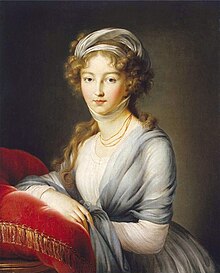 |
| Elizabeth of Russia @Wikipedia |
(Luise von Baden)
(1779-1826)
Daughter of: Karl Ludwig von Baden & Amalie von Hessen-Darmstadt.
Wife of Aleksander I of Russia, mar 1793
Her lovers were:
1) Adam Jerzy Czartoryski (1770-1861)
Lover in 1798/99.
Polish aristocrat, statesman & author.
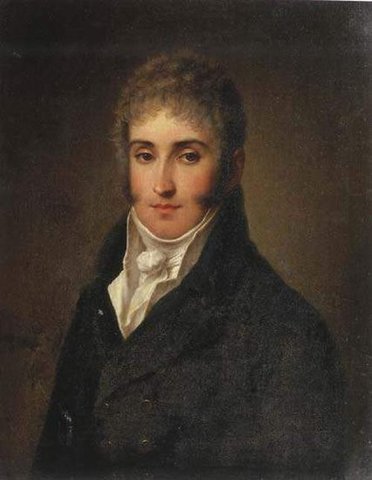 |
| Adam Jerzy Czartoryski |
1) Adam Jerzy Czartoryski (1770-1861)
Lover in 1798/99.
Polish aristocrat, statesman & author.
 |
| Adam Jerzy Czartoryski @Wikipedia |
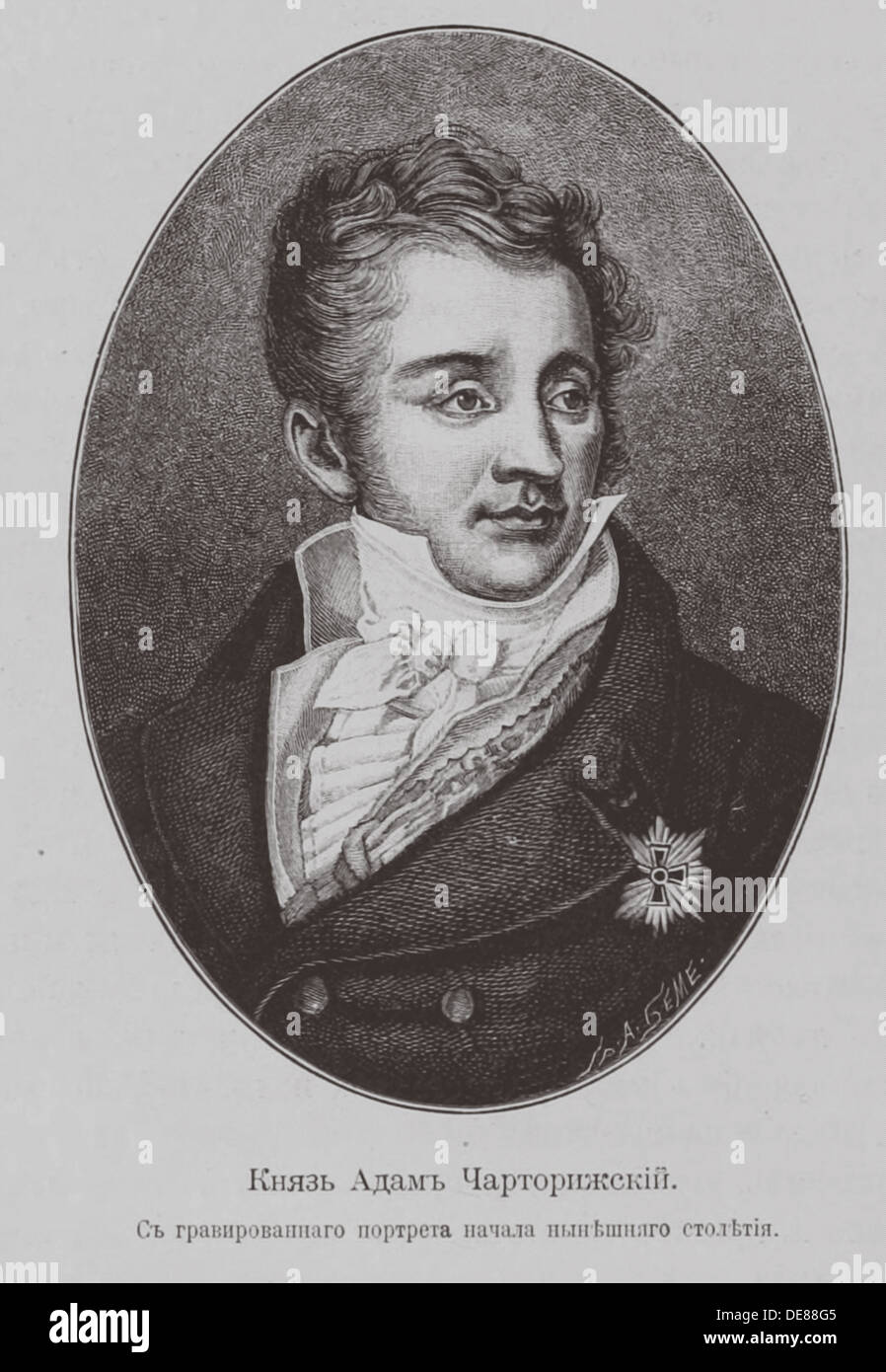
Husband of:Anna Zofia Sapieha. mar 1817.
"His [Alexander I] marriage was not a source of comfort, either. Alexander was married unhappily to Elizabeth of Baden, a German princess with ash blonde hair and sparkling eyes, who was described by one as 'certainly one of the most beautiful women in the world.' The two looked like angels together---Cupid and Psyche, Catherine the great had said. But they were not well matched, and ended up living almost separate lives. Elizabeth, for her part, was stuck in a foreign country, feeling, as she put it, ' alone, alone, absolutely alone.' Both were certainly having affairs on each other: the tsar with his mistress Maria Narishkina, and some speculated ever his sister, Grand Duchess Catherine; and Elizabeth with a number of people, ranging from soldiers to certain 'ambiguous intimacy' with a lovely countess. Empress Elizabeth also had an affair with one of the tsar's advisers, Prince Adam Czartoryski, the Polish patriot who had come to Russia as a hostage after the destruction of Poland and won Alexander's trust. The tsar, however, never seemed disturbed by his wife's relationship with his adviser, and in fact, by most accounts, encouraged it as only fair, given the liberties he was taking himself." (Vienna, 1814: How the Conquerors of Napoleon Made Love, War, and Peace)
"His [Alexander I] marriage was not a source of comfort, either. Alexander was married unhappily to Elizabeth of Baden, a German princess with ash blonde hair and sparkling eyes, who was described by one as 'certainly one of the most beautiful women in the world.' The two looked like angels together---Cupid and Psyche, Catherine the great had said. But they were not well matched, and ended up living almost separate lives. Elizabeth, for her part, was stuck in a foreign country, feeling, as she put it, ' alone, alone, absolutely alone.' Both were certainly having affairs on each other: the tsar with his mistress Maria Narishkina, and some speculated ever his sister, Grand Duchess Catherine; and Elizabeth with a number of people, ranging from soldiers to certain 'ambiguous intimacy' with a lovely countess. Empress Elizabeth also had an affair with one of the tsar's advisers, Prince Adam Czartoryski, the Polish patriot who had come to Russia as a hostage after the destruction of Poland and won Alexander's trust. The tsar, however, never seemed disturbed by his wife's relationship with his adviser, and in fact, by most accounts, encouraged it as only fair, given the liberties he was taking himself." (Vienna, 1814: How the Conquerors of Napoleon Made Love, War, and Peace)
"On May 18, 1799, Elizabeth gave birth to a daughter, Maria. Everyone in the palace was soon laughing at the Grand Duchess's expense: The infant had black hair and black eyes. At the baptism, when Countess de Lieven presented the baby Maria to Paul, the Emperor asked in a dry voice: 'Madame, do you believe that a blond husband and a blond wife can have a dark-haired baby?' Flustered she stammered: 'Sire, God is all powerful.' By now Adam Czartoryski's career in Russia was definitively compromised. Paul gave him a diplomatic mission in Sardinia. 'Send him as soon as possible,' he ordered Rostopchin, who noted it in the journal of imperial decisions. The farewells of Adam Czartoryski and Alexander were heartbreaking. Then shortly after losing her lover, Elizabeth lost her daughter as well. 'As of this morning, I no longer have a child, she is dead!' she wrote her mother on July 27, 1800. 'Mama, it is horrible beyond all expression to lose one's child; I cannot give you any details of this calamity today.' A little later: 'It is a long time since I have spoken to you of Mauschen [Maria], but not an hour of the day passes without my thinking of her, and certainly not a day without my giving her bitter tears. It cannot be otherwise lo long sa I live, even if she were to be replaced by two dozen children.'" (Alexander of Russia: Napoleon's Conqueror: 44)
"In the summer of 1799, Elizabeth became pregnant. Everyone at court were rejoicing for the upcoming birth of an heir. She gave birth in the spring of the following year, but to the disappointment of everyone at court, the baby was a daughter. She was dark-haired and dark-eyed as opposed to the baby's blond parents that the Emperor Paul remarked how could two blond parents have a dark-haired baby. Malicious people at court began to gossip that the baby's father was not Alexander, but instead it was his best-friend, a Polish prince named Adam Czartoryski. Prince Czartoryski was handsome and intelligent and he was attracted to the then Grand Duchess Elizabeth. It was said that Alexander encouraged his best-friend's affection towards his wife so that he could be free to pursue other women. Whether Elizabeth did succumb to the charm of the handsome Polish prince was debatable. There was no strong evidence to suggest that Czartoryski and Elizabeth had sexual relations. But almost certainly, he was in love with Elizabeth and he admitted this on his journals. Nevertheless, his association with Alexander (and Elizabeth) caused him the ire of Emperor Paul and he was sent on a diplomatic mission in Italy." (Arrayed in Gold)
"Empress Catherine II died in 1796, disappointed that her eldest grandson and his wife had not produced a son, and Alexander’s father Paul became Emperor. Elizabeth Alexeievna did not like her father-in-law nor his policies and avoided his court as much as possible. Alexander and Elizabeth Alexeievna’s marriage started to falter and she sought affection with her husband’s friend Polish Prince Adam Czartoryski, a Polish noble. In 1799, Elizabeth Alexeievna gave birth to a daughter Maria Alexandrovna, who had dark eyes and dark hair like Prince Adam Czartoryski and unlike the blond-haired and blue-eyed Elizabeth Alexeievna and her husband. Sadly, the child died when she was 13 months old. In 1801, the behavior and policies of Emperor Paul led to a conspiracy to overthrow him. Paul was assassinated and his eldest son became Emperor Alexander I. Elizabeth Alexeievna fulfilled her duties as Empress, but by this time their marriage was really one in name only. Alexander started a long-term affair in 1803 and Elizabeth Alexeievna resumed her affair with Prince Adam Czartoryski. This affair lasted until Elizabeth Alexeievna began a new affair with Captain Alexis Okhotnikov. In 1806, Elizabeth Alexeievna gave birth to another daughter, Elizabeth Alexandrovna, who died of an infection when she was 17 months old. Rumors circulated that Elizabeth Alexandrovna was really the daughter of Alexis Okhotnikov. In 1807, Alexis Okhotnikov was killed and suspicions arose that either Emperor Alexander I or his brother Grand Duke Konstantin Pavlovich had ordered him killed." (Arrayed in Gold)
"Both were certainly having affairs on each other: the tsar with his mistress, Maria Narishkiva (sic), and some speculated even his sister, Grand Duchess Catherine; and Elizabeth with a number of people, ranging from soldiers to a certain 'ambiguous intimacy' with a lovely countess. Empress Elizabeth also had an affair with one of the tsar's advisers, Prince Adam Czartoryski, the Polish patriot who had come to Russia as a hostage after the destruction of Poland and won Alexander's trust. The tsar, however, however, never seemed disturbed by his wife's relationship with his adviser, and in fact, by most accounts, encouraged it as only fair, given the liberties he was taking himself." (Vienna, 1814: How the Conquerors of Napoleon Made Love, War, and Peace at the Congress of Vienna: 27)
Lover in 1803-1807.
"Elizabeth Alexeievna, for her part, found solace in her relationship with Adam Czartoryski, who had returned to Russia at Alexander I's ascension to the throne. This liaison ended when she started a love affair with a handsome staff captain, Alexis Okhotnikov (1780-1807). All the correspondence between Elizabeth and Alexis Okhotnikov (and some of her diaries) were destroyed by the Emperor Nicholas I after her death. The affair with Okhotnikov had a tragic end. The staff captain died in 1807 after an attempt on his life. Many contemporaries[who?] considered that Alexander I or his brother Grand Duke Konstantin had ordered him killed. On 16 November 1806, Elizabeth gave birth to a second daughter. There were rumors that the newborn, Grand Duchess Elizabeth Alexandrovna, was not a child of Emperor Alexander but of Okhotnikov. After his death, Elizabeth Alexeievna felt more abandoned than ever and poured out all her affection on her daughter Elizabeth, "Lisinka". Fifteen months later, the little girl died suddenly of an infection blamed on teething. "Now," wrote Elizabeth to her mother, "I am not longer good for anything in this world, my soul has no more strength to recover from this last blow.'" (Wikipedia)
" . . . After her affair with Czartoryski, the twenty-eight-year-old Elizabeth had fallen in love in love with a Guards captain, Alexis Okhotnikov, aged twenty-three. and become pregnant. This infuriated the unstable Constantine, who, devoted to Alexander, almost certainly ordered the captain's murder (without the tsar's knowledge): Okhotnikov was stabbed coming out of the theatre. The empress visited him before he died and afterwards gave birth to a daughter Lisinka, her delight. But Lisinka died at the age of two, leaving Elizabeth poleaxed." (The Romanovs: 1613-1918: 292)
"Meanwhile, Elizabeth, who was by this time at the height of her beauty, was craving for love and affection. She had fallen in love with a handsome Guard officer, Alexei Okhotnikov, who was said to be the love of her life. Alexei called her in French: "My little wife" and "My friend, my wife, my God, my Elise, I love you.' . . . . " (Gem, 2011)
". . . Elizabeth abandoned herself to her own tender feeling for a handsome officer of the Guard, one Alexis Okhotnikov. He died mysteriously, stabbed as he left a theater, and the Empress had a mausoleum erected over his grave. . . . " (Alexander of Russia: Napoleon's Conqueror: 74)
"Tsar Alexander was rumored to have had a role (from advance knowledge to outright complicity) in his father's assassination. Tsarina Elisabeth's lover Alexis Okhotnikov was knifed to death outside the theatre in 1807. Alexander's brother, Grand Duke Constantine, was rumored to have been behind his death. When a third brother, Nicholas, succeeded Alexander as tsar, he destroyed the letters between Elisabeth and Okhotnikov and some of her diaries. From these facts I have constructed the story of the letter stolen by Tatiana and Gregory Lindorff." (Vienna Waltz: n,p.)
Natural offspring.
". . . Elizabeth became pregnant, and obviously Alexander was not the father. The child was a girl who was also named Elizabeth. Nevertheless, Alexander declared that the child was his, but during the baptismal ceremony, according to the Dowager Empress, he felt quite ambivalent and showed little attention to the infant. Alexei and Elizabeth's affair lasted for only two years. He died after an attempt in his life. She felt abandoned and lonely than ever and turned to her only solace, her daughter Elizabeth. Unfortunately, the little girl died after fifteen months. . . ." (Gem, 2011)
Affair's end & aftermath.
" . . . Like her mother, Ulrike, Natalya was a beauty; she caught the attention of the empress's lover, Aleksey Okhotnikov, an officer of the Chevalier Guards. He was murdered in October 1806, supposedly on the instance of the the Grand Duke Constantine, and in January 1807 Natalya married Nikolay Goncharov. . . ." (Binyon: 280)
Affair's effect on lovers' family, other people & society.
: ". . . Alexander was not disturbed by all the talk about this affair. Having long espoused the theory of reciprocal freedom in their marriage, he even encouraged his wife to be unfaithful; that would, after all, justify his own conduct. According to Baron de Barante, the could had even made a compact in writing 'to agree upon this emancipation.'" (Alexander of Russia: Napoleon's Conqueror: 74)
"Empress Catherine II died in 1796, disappointed that her eldest grandson and his wife had not produced a son, and Alexander’s father Paul became Emperor. Elizabeth Alexeievna did not like her father-in-law nor his policies and avoided his court as much as possible. Alexander and Elizabeth Alexeievna’s marriage started to falter and she sought affection with her husband’s friend Polish Prince Adam Czartoryski, a Polish noble. In 1799, Elizabeth Alexeievna gave birth to a daughter Maria Alexandrovna, who had dark eyes and dark hair like Prince Adam Czartoryski and unlike the blond-haired and blue-eyed Elizabeth Alexeievna and her husband. Sadly, the child died when she was 13 months old. In 1801, the behavior and policies of Emperor Paul led to a conspiracy to overthrow him. Paul was assassinated and his eldest son became Emperor Alexander I. Elizabeth Alexeievna fulfilled her duties as Empress, but by this time their marriage was really one in name only. Alexander started a long-term affair in 1803 and Elizabeth Alexeievna resumed her affair with Prince Adam Czartoryski. This affair lasted until Elizabeth Alexeievna began a new affair with Captain Alexis Okhotnikov. In 1806, Elizabeth Alexeievna gave birth to another daughter, Elizabeth Alexandrovna, who died of an infection when she was 17 months old. Rumors circulated that Elizabeth Alexandrovna was really the daughter of Alexis Okhotnikov. In 1807, Alexis Okhotnikov was killed and suspicions arose that either Emperor Alexander I or his brother Grand Duke Konstantin Pavlovich had ordered him killed." (Arrayed in Gold)
"Both were certainly having affairs on each other: the tsar with his mistress, Maria Narishkiva (sic), and some speculated even his sister, Grand Duchess Catherine; and Elizabeth with a number of people, ranging from soldiers to a certain 'ambiguous intimacy' with a lovely countess. Empress Elizabeth also had an affair with one of the tsar's advisers, Prince Adam Czartoryski, the Polish patriot who had come to Russia as a hostage after the destruction of Poland and won Alexander's trust. The tsar, however, however, never seemed disturbed by his wife's relationship with his adviser, and in fact, by most accounts, encouraged it as only fair, given the liberties he was taking himself." (Vienna, 1814: How the Conquerors of Napoleon Made Love, War, and Peace at the Congress of Vienna: 27)
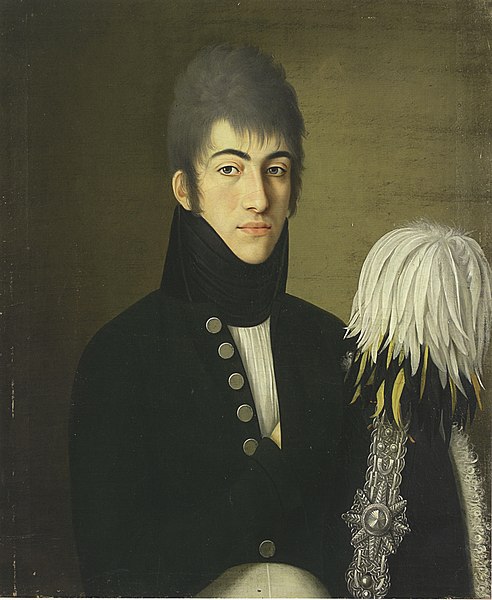 |
| Aleksei Okhotnikov @Wikipedia |
2) Aleksei Okhotnikov (1780-1807)
Lover in 1803-1807.
"Elizabeth Alexeievna, for her part, found solace in her relationship with Adam Czartoryski, who had returned to Russia at Alexander I's ascension to the throne. This liaison ended when she started a love affair with a handsome staff captain, Alexis Okhotnikov (1780-1807). All the correspondence between Elizabeth and Alexis Okhotnikov (and some of her diaries) were destroyed by the Emperor Nicholas I after her death. The affair with Okhotnikov had a tragic end. The staff captain died in 1807 after an attempt on his life. Many contemporaries[who?] considered that Alexander I or his brother Grand Duke Konstantin had ordered him killed. On 16 November 1806, Elizabeth gave birth to a second daughter. There were rumors that the newborn, Grand Duchess Elizabeth Alexandrovna, was not a child of Emperor Alexander but of Okhotnikov. After his death, Elizabeth Alexeievna felt more abandoned than ever and poured out all her affection on her daughter Elizabeth, "Lisinka". Fifteen months later, the little girl died suddenly of an infection blamed on teething. "Now," wrote Elizabeth to her mother, "I am not longer good for anything in this world, my soul has no more strength to recover from this last blow.'" (Wikipedia)
" . . . After her affair with Czartoryski, the twenty-eight-year-old Elizabeth had fallen in love in love with a Guards captain, Alexis Okhotnikov, aged twenty-three. and become pregnant. This infuriated the unstable Constantine, who, devoted to Alexander, almost certainly ordered the captain's murder (without the tsar's knowledge): Okhotnikov was stabbed coming out of the theatre. The empress visited him before he died and afterwards gave birth to a daughter Lisinka, her delight. But Lisinka died at the age of two, leaving Elizabeth poleaxed." (The Romanovs: 1613-1918: 292)
"Meanwhile, Elizabeth, who was by this time at the height of her beauty, was craving for love and affection. She had fallen in love with a handsome Guard officer, Alexei Okhotnikov, who was said to be the love of her life. Alexei called her in French: "My little wife" and "My friend, my wife, my God, my Elise, I love you.' . . . . " (Gem, 2011)
". . . Elizabeth abandoned herself to her own tender feeling for a handsome officer of the Guard, one Alexis Okhotnikov. He died mysteriously, stabbed as he left a theater, and the Empress had a mausoleum erected over his grave. . . . " (Alexander of Russia: Napoleon's Conqueror: 74)
"Tsar Alexander was rumored to have had a role (from advance knowledge to outright complicity) in his father's assassination. Tsarina Elisabeth's lover Alexis Okhotnikov was knifed to death outside the theatre in 1807. Alexander's brother, Grand Duke Constantine, was rumored to have been behind his death. When a third brother, Nicholas, succeeded Alexander as tsar, he destroyed the letters between Elisabeth and Okhotnikov and some of her diaries. From these facts I have constructed the story of the letter stolen by Tatiana and Gregory Lindorff." (Vienna Waltz: n,p.)
Natural offspring.
". . . Elizabeth became pregnant, and obviously Alexander was not the father. The child was a girl who was also named Elizabeth. Nevertheless, Alexander declared that the child was his, but during the baptismal ceremony, according to the Dowager Empress, he felt quite ambivalent and showed little attention to the infant. Alexei and Elizabeth's affair lasted for only two years. He died after an attempt in his life. She felt abandoned and lonely than ever and turned to her only solace, her daughter Elizabeth. Unfortunately, the little girl died after fifteen months. . . ." (Gem, 2011)
Affair's end & aftermath.
" . . . Like her mother, Ulrike, Natalya was a beauty; she caught the attention of the empress's lover, Aleksey Okhotnikov, an officer of the Chevalier Guards. He was murdered in October 1806, supposedly on the instance of the the Grand Duke Constantine, and in January 1807 Natalya married Nikolay Goncharov. . . ." (Binyon: 280)
Affair's effect on lovers' family, other people & society.
: ". . . Alexander was not disturbed by all the talk about this affair. Having long espoused the theory of reciprocal freedom in their marriage, he even encouraged his wife to be unfaithful; that would, after all, justify his own conduct. According to Baron de Barante, the could had even made a compact in writing 'to agree upon this emancipation.'" (Alexander of Russia: Napoleon's Conqueror: 74)