Thursday, April 5, 2018

Royals Married to Commoners----

Queen Maxima of the Netherlands
born Máxima Zorreguieta Cerruti of Buenos Aires, Argentina.
Married King Willem-Alexander of the Netherlands in 2002

20th century marriages.

Married Shah Mohammed Reza Pahlavi of Iran in 1959.


Queen Sonja of Norway.
born Sonja Haraldsen.

Married King Harald V of Norway in 1968.

Image result for harald v
Queen Sonia & King Harald V of Norway
@Google
"Queen Sonja was the daughter of a merchant who married the future King Harald V of Norway in 1968. At first, Harald's father was against the marriage because she was a commoner, but fast-forward 50 years, and the King and Queen still rule Norway." (Cosmopolitan)
Queen-Shabanu Soraya Esfandiary-Bakhtiari, Tehran 1953.jpg
Empress Soraya of Iran
Empress Soraya of Iran.
a.k.a. born Soraya Esfandiary-Bakhtiary.

Married Shah Mohammed Reza Pahlavi of Iran, mar 1951, div 1958.
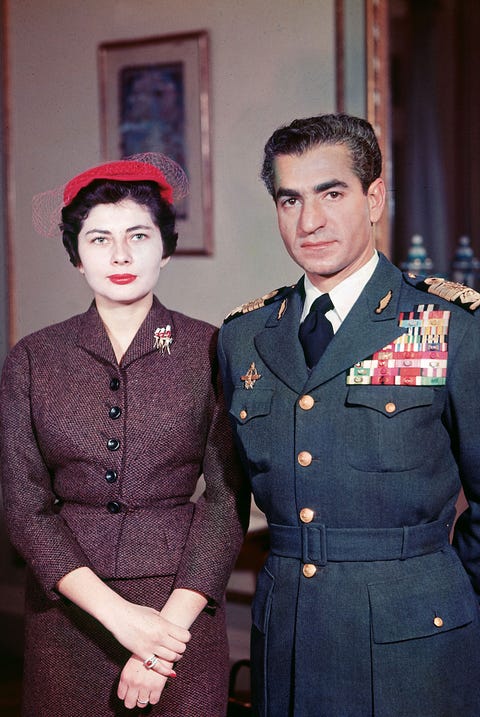
image
Empress Soraya & Shah Mohammed Reza
@Cosmopolitian
"She became an Iranian queen when she married Shah Mohammad Reza Pahlavi in 1951. The daughter of a German mother and a father who was a member of Iran's powerful Bakhtiari family, Queen Soraya was the Shah's second wife and later became an actress. She went on to star in two films, I Tre Volti and She, after the couple's divorce in 1958." (Cosmopolitan)
Image result for Queen Elizabeth The Queen Mother
Elizabeth the Queen Mother
@Google
born Lady Elizabeth Bowes-Lyon of Scotland.
Married Prince Albert, Duke of York, later King George VI of the United Kingdom, in 1923.
File:Duke and Duchess of York, 1925 (13613767415).jpg
Prince Albert & Elizabeth
Duke & Duchess of York
"Prince Albert, the future King George VI, married Elizabeth Bowes-Lyon, the future Queen Mother, on April 23rd, 1923. Although she was the daughter of the Earl and Countess of Strathmore and Kinghorne, Elizabeth was legally considered a commoner and was reluctant to submit to the trappings of royal life. She refused Prince Albert's proposals of marriage twice, before eventually accepting to marry him in January 1923." (History Today)
File:Hope Cooke, Queen of Sikkim (LOC ppmsca.30180).jpg
Queen Hope of Sikkim
born Hope Cooke.
"New York socialite Hope Cooke married the crown prince of the tiny Himalayan kingdom of Sikkim in 1963 in a real-life story that has been compared to the Rodgers and Hammerstein musical “The King and I.” Cooke was born on June 24, 1940 in San Francisco. Her mother, a pilot, died in a plane crash when Cooke was just two years old, and she was raised by her grandparents in New York. She met Palden Thondup Namgyal, the widowed crown prince of Sikkim, during a 1959 trip to India as a college student. They fell in love and married in 1963 and she became the Gyalmo, or queen consort, when her husband took the throne in 1965 and became Chogyal, or king. Sikkim was annexed by India in 1973 and Cooke returned to the United States with their two children. She divorced her husband in 1980 and he died two years later. Cooke recounted her life in a 1981 autobiography, “Time Change.”" (Punch)
King Palden Thondup Namgyal of Sikkim
Married King Palden Thondup Namgyal of Sikkim (1923-1982) in 1963

"While traveling through India in 1959, 20-year-old Sarah Lawrence College freshman Hope Cooke met Palden Thondup Namgyal, the Crown Prince of tiny Himalayan nation Sikkim, at the bar of Darjeeling's Windermere Hotel. When they married two years later, Hope renounced her American citizenship; two years after that she became a queen, styled as Her Highness Hope La, the Gyalmo of Sikkim. The marriage was tumultuous, plagued by political strife and infidelity, and while the two didn't officially divorce until 1980, the marriage was reportedly already over by the time the monarch was abolished and Sikkim was annexed to India in 1975."
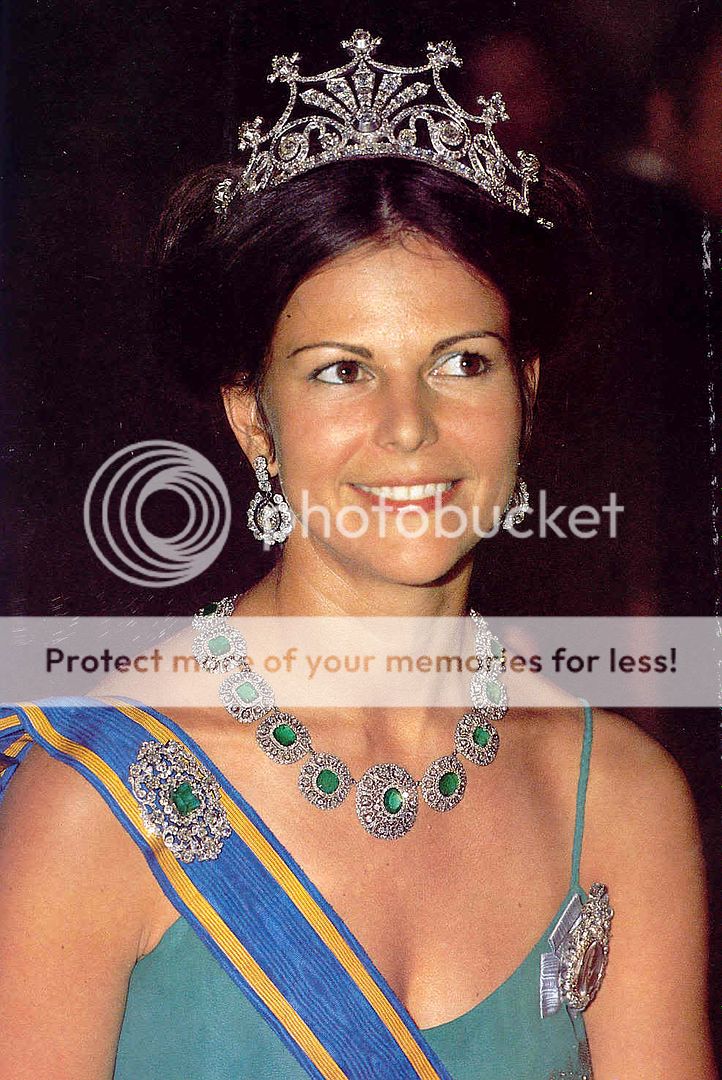
Queen Silvia of Sweden
@Georgia Papadon
Queen Silvia of Sweden. (1943-Present)
born Silvia Renate Sommerlath of Heidelberg, Germany
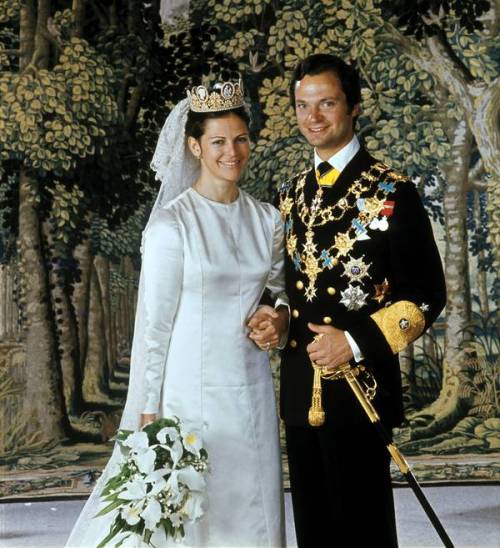
Carl XVI Gustaf & Silvia of Sweden
Married King Carl XVI Gustaf of Sweden in 1976
Grace Kelly 1955.jpg
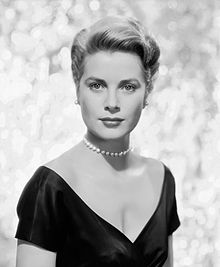
Princess Grace of Monaco
Princess Grace of Monaco.
born Grace Kelly.
Prince Rainier III.jpg
Rainier III of Monaco
Married Rainier III, Prince of Monaco in 1956.

"Arguably the most famous film star in the world, Academy Award-winning actress Grace Kelly somehow became even more famous when she married His Serene Highness Rainier III, Prince of Monaco. Grace was in the south of France for the Cannes Film Festival screening of her film The Country Girl (which would eventually win her a Best Actress Oscar) and her PR team set up a photoshoot for Paris Match at the palace. Her first meeting with Prince Rainier was captured on film and the rest is history—the two were engaged by Christmas and married that April. Though the principality of Monaco is now a household name, at the time, it was a small, remote country and deemed unimportant enough that no representatives from any European royal houses attended the wedding. Grace lived in Monaco, never acting again, until her untimely death at the age of 52 in a car accident." (Town & Country Magazine)
File:Lilian baels.png
Princess Lilian of Belgium
Princess Lilian of Belgium (1916-2002)
born Mary Lilian Baels of London, England.
Leopold III of Belgium
Married King Leopold III of Belgium (1901-1983)in 1923.

19th Century Marriages.
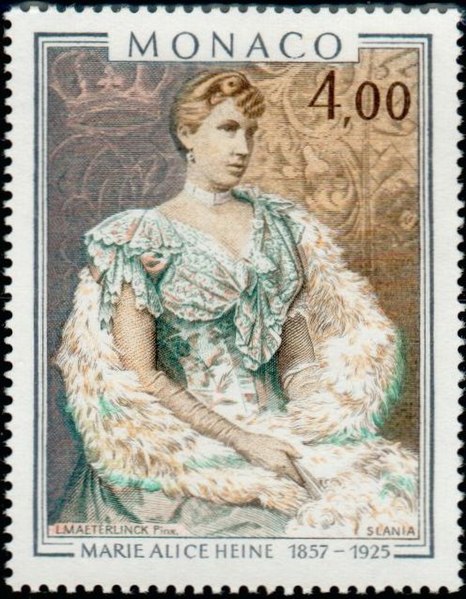
File:AliceHeine.jpg
Princess Alice of Monaco
Princess Alice of Monaco.
born Alice Heine (1858-1925)
Image result for albert i of monaco
Albert I of Monaco
Married Albert I of Monaco in 1889.

"Before Grace Kelly, there was another American Princess of Monaco: Alice Heine of New Orleans and widow of the Duc de Richelieu. Alice married His Serene Highness, Prince Albert I of Monaco in 1889. To their marriage she brought a strong business acumen and worked hard to change the reputation of the principality from that of a gambling den to a place of culture. It was Alice who established the Opera house and installed a director who brought the world’s greatest operas to Monaco. Alice and Albert’s relationship cooled soon after their marriage, and she took a series a lovers, the most notorious being Isidore de Lara. Fed up with his wife, Albert made their break public when he slapped Alice in the face at the Opera when she stopped to whisper to her lover. She packed her bags in 1902 and left Monaco forever." (The American Heiress)


"These were her entire titles:

Her Serene Highness Princess Alice, The Princess of Monaco, Duchess of Richelieu, Fronsac, Valentinois, Mazarin, Mayenne and Estouteville, Princess of Château-Porcien, Marquise of Jumilhac, Baux-de-Provence, Guiscard and Chilly, Countess of Carladès, Thorigny, Longjumeau, Ferrette, Belfort, Thann and Rosemont, Baronness of Buis, Saint-Lô, la Luthumière, Hambye, Massy, le Calvinet and Altkirch, Lady of Saint-Rémy, Matignon and Issenheim." (Alice Heine, the penultimate Duchess of Richelieu)


NON-REIGNING ROYALTY.
Related image
Marie Chantal
Crown Princess of Greece
@Google
Marie-Chantal, Crown Princess of Greece. (1968-Present)
born Marie-Chantal Miller.
THE LAST SPARTAN: Crown Prince Pavlos of Greece
Pavlos, Crown Prince of Greece
@Pinterest
Married  Pavlos, Crown Prince of Greece.

"The daughter of American-born duty-free magnate Robert Miller, Marie-Chantal Miller grew up a true citizen of the world; she was raised with family homes in Hong Kong, Paris, London, and New York, Gstaad, and Yorkshire. Miller married Pavlos, Crown Prince of Greece—son of the deposed King Constantine of Greece—in 1995, and became Her Royal Highness the Crown Princess of Greece, Princess of Denmark. They now have five children and Marie-Chantal is founder and creative director of an eponymous luxury children's clothing brand." (Town & Country Magazine)

Prince Daniel.jpg
Prince Daniel, Duke of Västergötland
Daniel Westling.
Prince Daniel, Duke of Västergötland
Crown Princess Victoria June 8, 2013 (cropped).jpg
Victoria
Crown Princess of Sweden
Married Victoria, Crown Princess of Sweden.


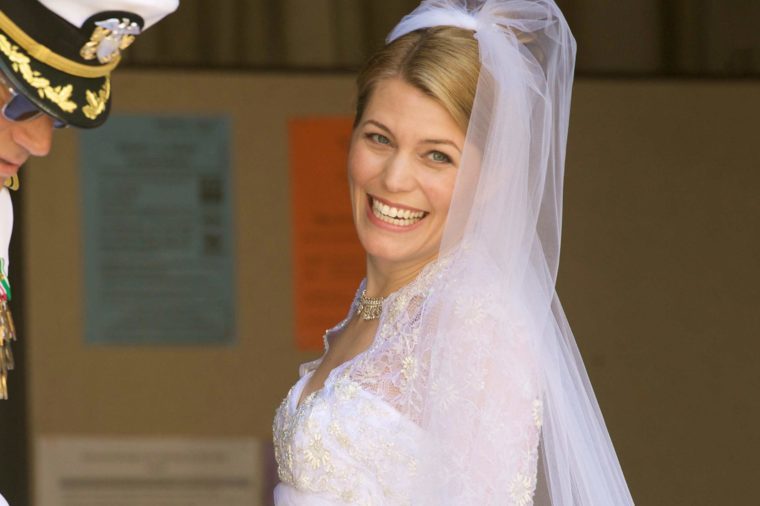
Kelly
Hereditary Princess of Saxe-Coburg-Gotha

@Google
Kelly, Hereditary Princess of Saxe-Coburg und Gotha (1975-Present)
Ceremony And Arrivals: Wedding of Prince Carl Philip of Sweden and Sofia Hellqvist
Hubertus
Hereditary Crown Prince
of Saxe-Coburg und Gotha

@Zimbio
Married Hubertus, Hereditary Crown Prince of Saxe-Coburg und Gotha.

"An American investment banker with an MBA from UCLA, Florida-born Kelly Jeanne Rondestvedt married Hereditary Prince Hubertus of Saxe-Coburg-Gotha in 2009 at a wedding attended by King Carl XVI Gustaf and Queen Silvia of Sweden and Princess Astrid of Belgium, becoming Her Highness Hereditary Princess Kelly of Saxe-Coburg und Gotha. While you might not have heard of the house of Saxe-Coburg-Gotha, the royal houses of Europe have: its most famous members were Prince Albert and his first cousin (and wife) Queen Victoria, who ruled under the House of Saxe-Coburg-Gotha. It wasn't until 1917, at the height of anti-German sentiment during World War I, that King George V decided to change the name of his house from Saxe-Coburg-Gotha to the present name: Windsor." (Town & Country Magazine)
Anita Stewart, Princess of Braganza.jpg
Anita Rhinelander Stewart
Anita Rhinelander Stewart.
Duchess of Viseu in Portugal
File:Miguel of Braganza.jpg
Prince Miguel
Duke of Viseu
1. Prince Miguel, Duke of Viseu, married in 1909.
"Another American heiress who held all the cards was Anita Rhinelander Stewart. In 1909 she met Prince Miguel de Braganza, whose father was referred to as the Pretender to the Portuguese throne, and three months later, they were engaged. At first it was announced that the marriage would be morganatic, but Anita refused to accept anything less than the title of princess. And she got it: Emperor Franz Josef of Austria-Hungary, who extended hospitality to the exiled Braganzas, created the tenacious American the Duchess Vizeu & Princess de Braganza in her own right." (The American Heiress)

Wallis, Duchess of Windsor.

American socialite

"The American who would have been queen of England, twice-divorced Wallis Simpson famously so enchanted King Edward VIII of England that he abdicated the throne to marry her. (As head of the Church of England, the idea of Edward marrying a divorcée was anathema for religious, legal, and—at the time—moral reasons.) While she never held the title of HRH, after marrying Edward she became the Duchess of Windsor and the two went into merry, glittering exile in places like the Bahamas, Florida, New York, and Paris. Though her relationship with the British royal family remained fractured, when Wallis died in 1986 the funeral was attended by Queen Elizabeth, Prince Charles, and Queen Elizabeth the Queen Mother. Her final blessing was performed by the archbishop of Canterbury—a firm sign of royal respect—and she was buried next to Edward at Frogmore in Windsor." (Town & Country Magazine)

Foto oficial de Sofía
Princess Sofia
Duchess of Varmland

@Pinterest
Sofia Hellqvist.
Princess Sofia of Sweden, Duchess of Värmland.
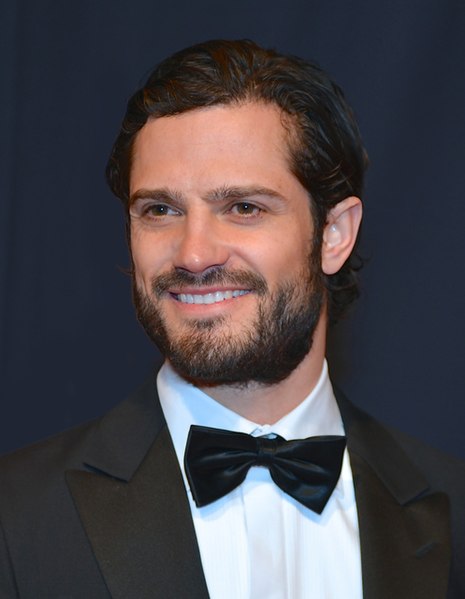
Carl Philip of Sweden
Duke of Varmland

@Wikipedia
Married Prince Carl Philip of Sweden, Duke of Varmland.

Princess Sarah Zeid of Jordan.

"With a degree in International Relations, an MSC in Development Studies, and an impressive resume that includes stints at the United Nations, Sarah Butler of Texas might not have seemed like the most likely candidate to marry a Middle Eastern prince. Nonetheless, she found her happily ever after in Prince Zeid bin Ra'ad Zeid al-Hussein—a member of the Jordanian House of Hashemite and Crown Prince of Iraq—becoming Her Royal Highness Princess Sarah Zeid in 2000. The couple has three children and live in New York, where Prince Zeid works as the United Nations High Commissioner for Human Rights and Princess Sarah raises awareness for causes including Every Newborn Action Plan, the White Ribbon Alliance for Safe Motherhood, and the Women's Rights Division at Human Rights Watch." (Town & Country Magazine)

Alexandra von Furstenberg. (1972-Present)

Alexander Prinz von Furstenberg
@Wikimedia
Married Prince Alexandre von Fürstenberg, mar 1995, div 2002.
Prince Alexander von Furtenberg (1970-living2013) German with his 1st wife Alexandra Miller  (1967-living2013) USA on their wedding day 1995. 1st son of Prince Egon of Fürstenberg (1946-2004) Germany & 1st wife Diane Simone Michelle Halfin (1946-living2013) Belgium-Jew.
Alexandra Miller &
Alexander Prinz von Furstenberg

@Pinterest
"Younger sister to Marie-Chantal of Greece (as well as sister to Pia Getty), Alexandra Miller married Prince Alexandre von Fürstenberg in 1995. With her daughter Princess Talita as high-society's newest it-girl, her mother-in-law as Diane von Fürstenberg (she married Prince Alexander's father Prince Egon in 1969) and her brother-in-law as the future king of Greece, we'd bet those are some fabulous family reunions." (Town & Country Magazine)

Princess Lee Radziwill.
"Jackie Kennedy's younger sister Lee Radziwill was born Caroline Lee Bouvier in tony Southampton, New York. Her second marriage—in 1959, just before JFK officially announced his candidacy for the Presidency—was to Polish prince Stanisław Albrecht Radziwill. Long considered the prettier, more vivacious sister—though Jackie was known as a fashion icon, Lee had a more inherent sense of style and eventually was named to the International Best Dressed List's Hall of Fame—Lee still lived much of her otherwise vibrant life in Jackie's shadow. (She had an affair with Aristotle Onassis before he became involved with Jackie and was reportedly furious when her sister married him.) Her marriage to Prince Radziwill lasted 15 years and produced two children, Anthony and Tina; now in her 80s, Lee divides her time between New York and Paris." (Town & Country Magazine)

Christopher O'Neill.

Married Princess Madeleine of Sweden.
Anna Gould.jpg
Anna Gould 
Anna Gould
Comtesse de Castellane, Duchesse de Sagan
married
Paul Ernest Boniface de Castellane (carte de visite).jpg
Boniface de Castellane
1. French count Boniface "Boni" de Castellane, mar 1895, div 1906

2. French Helie de Talleyrand-Perigord, Duc de Sagan, Boni's cousin, mar 1908.
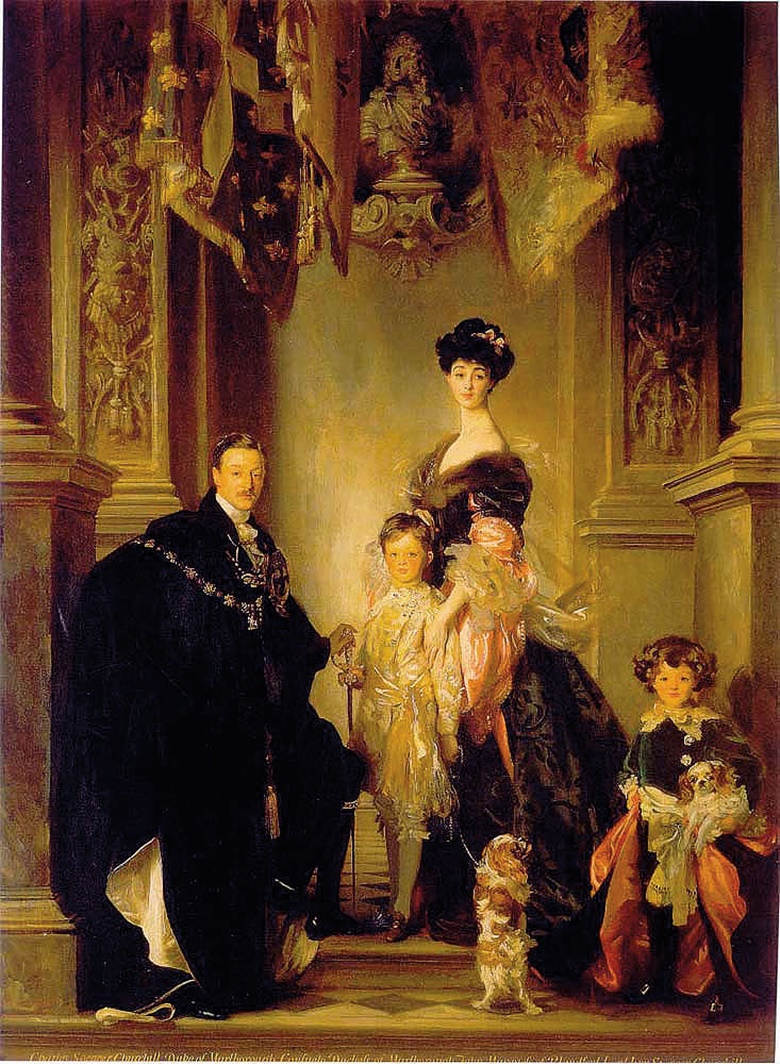
Image result for consuelo vanderbilt
Consuelo Vanderbilt
Consuelo Vanderbilt married
Duchess of Marlborough

1. Charles Spencer-Churchill, 9th Duke of Marlborough, mar 1895, div 1921
Jacques Balsan
2. Jacques Balsan, married in 1921
File:Agnes-Joy-2.jpg
Agnes, Princess of Salm-Salm
Agnes, Princess of Salm-Salm. (1844-1912)
born Agnes Elisabeth Winona Leclerc Joy of Vermont, USA.
"Agnes Leclerc Joy, born in Franklin, Vermont, married Prince Felix of Salm-Salm on August 30, 1862 at St. Patrick’s Church in Washington, DC"  (Unofficial Royalty)
Prince Felix of Salm-Salm
Married Prince Felix of Salm-Salm.

Alice Green.

Married in 1855
Prince Ángel de Iturbide y Huarte of Mexico.
"The Rosedale estate in Georgetown was the grand home of Alice Green, granddaughter of Revolutionary War General Uriah Forrest and great-granddaughter of Maryland Governor George Plater.[1] This belle was basically American royalty, which was great for when she married Don Angel Maria de Iturbide y Huarte, the exiled prince of the Mexican imperial line and a student at Georgetown University. By the time the lovebirds met and wed, Angel’s father, Agustin the First, had been deposed and executed.[2]  Although Alice’s husband and their son, Agustin, had a technical claim to the throne, few suspected that Agustin I’s nine-month rule would bring his descendants anything." (Boundary Stones)
Appletons' Waldersee Mary.jpg
Mary Esther Lee
Mary Esther Lee married
Princess Friedrich of Schleswig-Holstein-Sonderburg-Augustenburg
Countess of Waldersee
Prinsen af Noer.jpg
Prince Friedrich of Schleswig-Holstein-Sonderburg-Augustenburg
1. Prince Friedrich of Schleswig-Holstein-Sonderburg-Augustenburg, mar 1864.
Image result for Alfred Graf von Waldersee
Count Alfred von Waldersee
2. Count Alfred von Waldersee, mar 1874
File:Elizabeth-Patterson-Bonaparte Gilbert-Stuart 1804.jpg
Elizabeth Patterson
@Wikipedia
Elizabeth Patterson (1785-1879)
American socialite.

"Elizabeth Patterson, born in Baltimore, Maryland, married Jerome Bonaparte (brother of Napoleon), later King of Westphalia, on December 24, 1803 in Baltimore, Maryland." (Unofficial Royalty)

File:Jérôme Bonaparte (Kinson).jpg
Married Jerome Bonaparte in 1803.
John Owen Dominis

John Owen Dominis (1832-1891).
of Schenectady, New York.
Queen Liliuokalani of Hawaii 
Married in 1862 Queen Liliuokalani of Hawaii (1838-1917)

Princess Salwa Aga Khan. (1988-Present)

born Kendra Spears of Seattle, USA

Married Prince Rahim Aga Khan, mar 2013


"After years spent modeling for Prada, Calvin Klein, Chanel, Yves Saint Laurent and Givenchy, Seattle-born Kendra Spears became Princess Salwa Aga Khan when she married Prince Rahim Aga Khan—eldest son of the current Aga Khan—in 2013 at Geneva's Château de Bellerive. The couple, who live in Switzerland, have two children, and Princess Salwa still works as a model under her maiden name: she has appeared on the cover of Vogue Espana, Tatler, Elle France, and Vogue China and is the face of the Armani Code fragrance campaign."


Rita Hayworth.

Married Prince Aly Khan.
"Hayworth was one of Hollywood's brightest stars when she met Italian-born Prince Aly Khan, son of the Aga Khan (the Imam of Ismaili Muslims and a direct descendant of the Prophet Muhammad). The two married a year after meeting—despite the fact that Hayworth had just ended her relationship with Orson Welles—and their tempestuous union lasted fewer than four years and produced one daughter, philanthropist and Alzheimer's crusader Yasmin Aga Khan." (Town & Country Magazine)

Wednesday, March 7, 2018

Swedish Aristocrats----

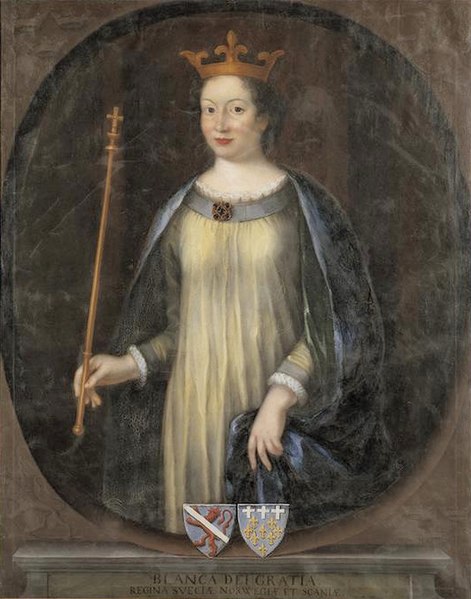
Blanche de Namur
Queen of Sweden
& Norway
Painting of Blanche of Namur, Queen of Sweden and Norway, done by  Albert Edelfelt. She’s shown bouncing her young son, the future King Haakon VI, on her lap.:
Blanche of Namur
Queen of Sweden
& son Haakon VI
@ Pinterest
Her lover was:
Bengt Algotsson
Duke of Finland; Duke of Halland; Governor of Skane

". . . Magnus, surnamed 'Smel,' the flatterer or caresser, and his Queen, Blanche of Namur, are said both to have been infatuated with a youth named Bengt, that is Benedict, Algotsson, and to have resolved on disinheriting Prince Eric in order to make Bengt---already created Duke of Halland, and appointed Stadtholder of Scania---their heir. . . ." (Women of Europe in the Fifteenth and Sixteenth Centuries, Volume 1:6) [Bio2:Minata]

" . . . In 3.18 she mentions the elevation of another man, who might be Bengt Algotsson, Magnus's favorite and advisor, who was made duke of Finland and Halland, and governor of Skane. He was despised by the spiritual and aristocratic magnates for his cruelty and for his sequestration of church properties, and the Hanseats also thought he was acting against their interests. His policies led to Erik Magnusson's rebellion against his father in 1356, while all this time, in Denmark, Valdemar was waiting for his cur to exploit Magnus's weakness." (The Revelations of St. Birgitta of Sweden, Volume II, Volume 2: 11-12)

"One of the first recorded instances of same-sex love in Sweden is found in the revelations of Sankta Bridget. She accuses King Magnus Eriksson (ruled 1332-1363) of unnatural intercourse with a nobleman, Bengt Algotsson. Bridget accuses the king of 'loving men more than God or your own soul or your own spouse.' His queen was Blanche of Namur. Sankta Bridget was a powerful person in the political intrigues of these years. She had a political purpose in her way of presenting her religious ideas." (Encyclopedia of Gay Histories & Cultures: 852)

SWEDISH ARISTOCRATS.

Son ofLt. Col. Anders Erik Munck af Fulkila & Hedwig Juliana Wright.

His lovers were:
1) Anna Sofia Ramstrom (1738-1786)
Maid-of-honour to Sophie Magdalena af Danmark, Queen of Sweden
2) Giovanna Bassi (1762-1834)
 Italian ballerina; Prima ballerina of the Swedish Ballet

Daughter ofAngela Bassi, Italian ballerina.

Wife of: Peter Henrik Schon, a German-Swedish merchant, mar 1794
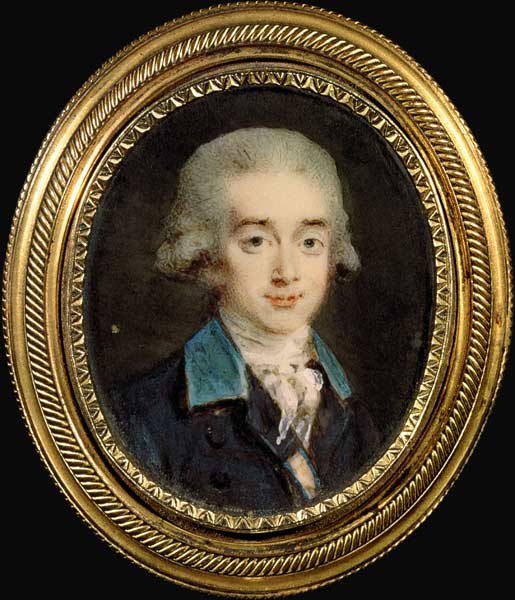
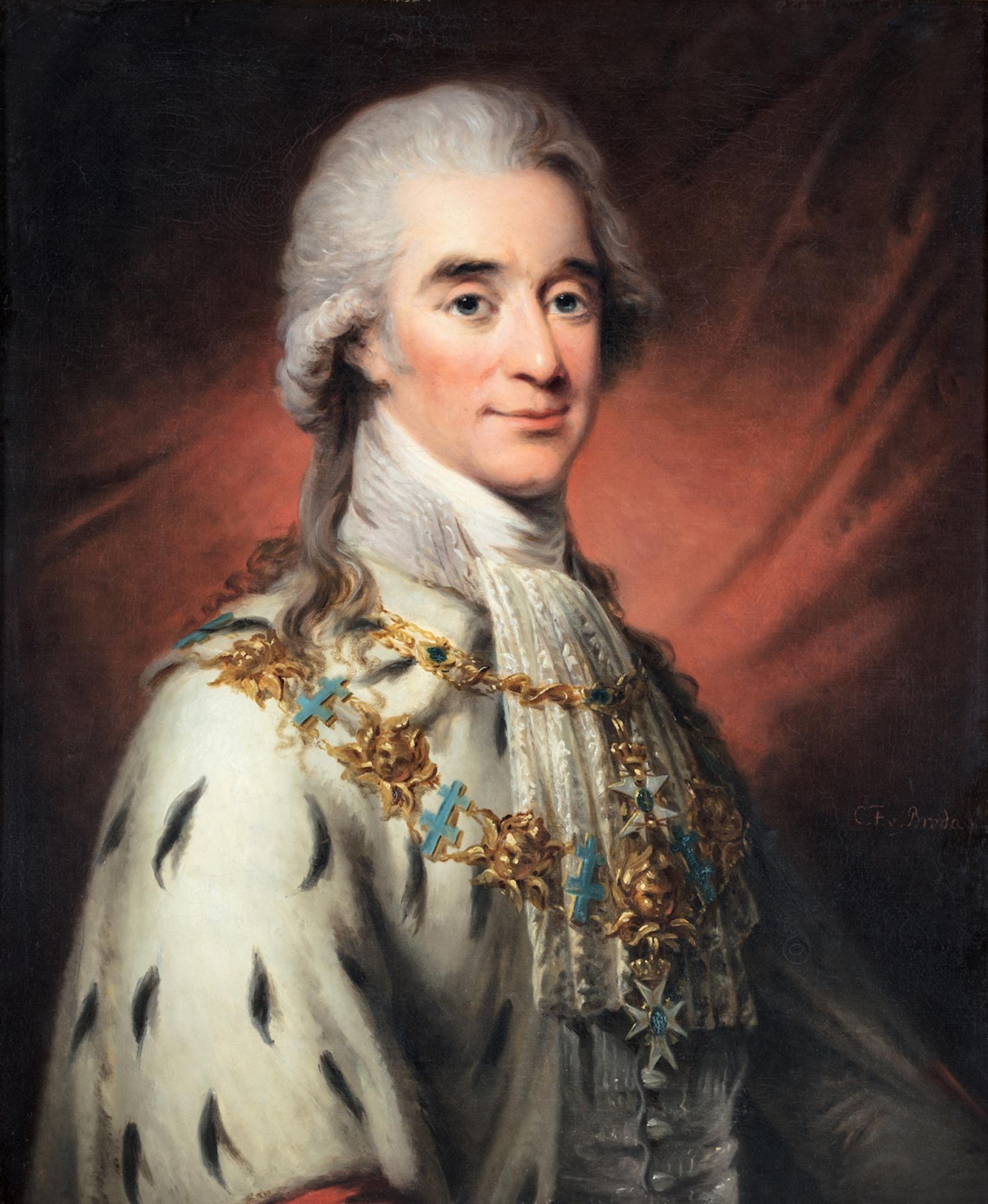
axel von fersen | Portrait miniature of Count Hans Axel von Fersen (1755-1810) (oil on ...
Axel von Fersen
the Handsome Axel
@Pinterest
(1755-1810).
Swedish count, diplomat & statesman

Lieutenant General in Royal Swedish Army
Swedish Lord of the Realm
Marshal of the Realm 1801
Chancellor of Uppsala University 1799

Axel von Fersen
the Handsome Fersen
@Art Prints on Demand
Axel's personal and family background.
"On New Year's Day 1774 a young Swedish nobleman, Count Axel Fersen, made his first appearance at Versailles. Born on 4 September 1755, he was two months older than Marie Antoinette; he had been making the Grand Tour of Europe for several years, in the course of which he had met her brother, the Archduke Leopold, in Florence. Fersen spoke fluent French, in which language he wrote, as well as Italian, German and English. He was the son of an aristocratic mother and the Marshal of the Armies, 'the richest man in Sweden,' supposedly with £5000 a year, to the £3000 of the next-richest man. . . ." (Marie Antoinette: The Journey: 110)

Axel was the eldest of four children of the lovely, tall and slender Sophia de la Gardie, daughter of one of Sweden's ruling families, which had served king and country ever since it arrived from Languedoc. She had done her best by her brood as she flitted from the castles of Maalsaker to Ljung, from Lofstad to Steininge or to Stockholm, where she was Mistress of Robes. Axel's father, Frederick Axel of Fersen, was, during the reign of King Adolphus Frederick, the most powerful man in Sweden, intellectual, intelligent, and liberal, qualities not inherited in the like degree by his two boys and two girls." (Under the Golden Lilies: 252)

"The Fersen family was of old Livonian origin, and had made its mark in Swedish history in the successive reigns of Christina, Charles X, and Charles XI. Three of its members were distinguished in the Council of the kings, and were made senators, three in the army; each of the latter became a Field Marshal." (A Friend of the Queen17)

Fersen's physical appearance and personal qualities.
"Count Fersen, who was then (1774) in his nineteenth year, attracted attention by his manly beauty and fine expression, although the latter was rather cold; but, as Tilly remarks, 'Women do not dislike impassive faces when they may hope to animate them.'  The young Swede's countenance was of this kind.  His large, limpid eyes, shaded by thick black lashes, had the calm outlook of the northern people, the impress of whose melancholy he bore; but this did not always or completely conceal the warmth of a generous nature quite capable of passion. He had a small mouth, with expressive lips; a straight, well-formed nose; the fine, thin nostrils that are sometimes a sign of shyness, or, at least, the impress of nobility and simplicity; his attitude was in every respect that of a true gentleman." (A Friend of the Queen9)

"In addition to his native tongue, the impossibly handsome teen, tall and slender, with a narrow face, soft brown hair, strong dark brows, and hazel eyes that alternately appeared blue, green, or brown, spoke fluent French, Italian, German, and English. These qualities, combined with his melancholy aura, and later his military heroism, made him the ultimate chick magnet. Georgiana, Duchess of Devonshire, praised his 'most gentleman-like air.' Another female acquaintance found him 'a burning soul with a shell of ice.'. . . ." (Royal Romances: Titillating Tales of Passion and Power in the Palaces of Europe)

Admirers among his fellow men.
But he had admirers among his own gender as well. The comte de Tilly considered Fersen 'one of the best-looking men I ever saw,' despite, or perhaps because of, his 'icy countenance,' which women undoubtedly hoped to melt. The duc de Levis described Count von Fersen as looking like the hero of a novel---but not a French one, as the Swede was too serious and discreet. Nor was he foppish or fey, like so many of his English and French counterparts. And Marie Antoinette's famed freseur, Leonard Hautier, described the count as being like Apollo---someone who excited amorous feelings in women and jealous ones in men." (Royal Romances: Titillating Tales of Passion and Power in the Palaces of Europe)
axel von fersen | ... ・フォン・フェルセン - Axel von Fersen the Younger
Axel von Fersen
the Younger
@Pinterest
Fersen was dazzlingly good-looking.
" . . . Fersen was dazzlingly good-looking. He was tall and slim, with a narrow face, intense dark eyes beneath strongly marked eyebrows and a slightly melancholy air.  These were romantic looks, which caused the Duc de Levis to write that he looked like the hero of a novel---but not a French novel since Fersen was too serious. Another part of his attraction was what Georgiana Duchess of Devonshire called 'the most gentleman-like air'; the Count was always extremely concerned to present an elegant appearance." (Marie Antoinette: The Journey: 110)

His manly beauty & fine expression attracted attention.
"Count Fersen, who was then in his nineteenth year, attracted attention by his manly beauty and fine expression, although the latter was rather cold; but, as Tilly remarks, 'Women do not dislike impassive faces when they may hope to animate them.' The young Swede's countenance was of this kind. His large, limpid eyes, shaded by thick black lashes, had the calm outlook of the Northern people, the impress of whose melancholy he bore; but this did not always or completely conceal the warmth of a generous nature quite capable of passion. He had a small mouth, with expressive lips; a straight well-formed nose; the fin, thin nostrils that are sometimes a sign of shyness, or, at least, of caution and reserve. His manners ore the impress of nobility and simplicity; his attitude was in every respect that of a true gentleman." (A Friend of the Queen: 9)

An adulterous womanizer & bon vivant.
" . . . An adulterous womanizer and bon vivant to the end of his days, a deeply conservative royalist who refers to the commoners only as "rabble" (shades of Nicolas Sarkozy), his blinkered self-righteousness gives a wondrously lopsided view of the French Revolution. He is acute on the diplomatic intrigues and the mass insanity of crowds but scarcely mentions the starvation and dire straits of the populace in a country crushed by debt and taxes — in large part because of the king's decision to militarily support the American revolutionaries. After the executions, Fersen returned to his rich estates and government career in Sweden. Here, a pure work of fiction might wind down with remembrance, philosophizing and old age. But history chose another ending: In 1810 in Stockholm, Fersen himself is killed by an outraged mob. . . ." (LA Times)

"It is worth digressing a little from the correspondence to rectify the entirely false image often presented of Fersen as a libertine who had scores of casual mistresses while he venerated the Queen of France from afar, never daring to touch her for fear of contaminating the royal blood line. This is hardly a credible hypothesis. Royal liaisons were almost de rigueur in his family; he was himself descended from the kings of Sweden by just such a liaison. For him, princesses were made of flesh and blood; they were not untouchable idols. The Comte de Bouille, who passed into the service of Sweden after the French Royal Family's arrest at Varennes in 1791, remarked after seeing the Fersen family at Stockholm that they 'always had to mix grandeur into their love affairs'. He had no doubt about the nature of Axel von Fersen's relationship with the Queen of France. 'It must be said, in praise of this favourite, that the decency and inalterable calmness of his bearing could never give rise to the most active malice. His devotion to the Queen, aided by his phlegmatic nature, guaranteed him from becoming intoxicated by his success, which he justified by unfailing prudence and discretion. He was such indeed as a queen's lover should always be.'" 
(I Love You Madly: Marie Antoinette & Count Fersen)

His lovers were:
1) Amalie Frederika von Baden.
Eleonore Sullivan
Lady Crawford
Timblr
2) Eleonore Sullivan (1750-1833)
Italian adventuress, courtesan & royal mistress
Lover in 1789-1799.

Daughter ofA tailor in the Republic of Lucca.

Wife of:
1. Martini, Dancer in a travelling theater company
2. Sullivan, an Irish officer.

Intermittent love affair.
" . . . Mme Sullivan was mistress of wealthy Scotsman Quintin Craufurd. Fersen's diary shows that it was during preparations for the Royal Family's escape that he began a liaison with this femme fatale, which continued intermittently for several years. Craufurd had been in England since some time in May, and during the week preceding the Royal Family's escape, Fersen's notes in Swedish in his diary that he 'stayed there' three times after going to see Eleonore. In later years he is less cryptic, writing 'slept' (couche in French) to indicate the nights he spent with her. They were remarkably infrequent, in fact, since they are only ever noted during Craufurd's rare absences. In June 1791 Fersen also notes his visits 'chez Elle' -- Marie Antoinette -- at the Tuileries, without always recording the time that he left her, which could indicate that he also 'stayed' with her. On 16 June he arrived 'chez Elle' at 6:30 p.m., and gives no more details; normally he expands on the weather, his meals, when he returned home. The following day starts simply with 'to Bondy and Bourget'." (I Love You Madly)

" . . . Around April 1789, Eleonore became Fersen's lover, although she remained involved with Craufurd, who for the next several years would have no inkling of her affair. . . ." (Royal Romances: Titillating Tales of Passion and Power in the Palaces of Europe)

"Fersen had a mistress during the years that he was friendly with the Queen. This was the beautiful Italian adventuress, Eleanor Sullivan, who was a 'kept woman'. . . ."  (Sanderson)

"Fersen's connexion with Crawford was produced through a beautiful lady, whom both gentlemen passionately adored; and this fact speaks against any amour between the queen and Fersen. The name of the celebrated beauty was Franchini; she was a native of Lucca, and appeared at the court of Stuttgart as a danseuse, where she gained the favour of Duke Charles. Her three children were ennobled by the name of Franquemont, and one daughter married Count d'Orsay, and was the mother of the celebrated dandy of that name and of the Duchess de Guiche-Grammont. The Franchini, after leaving the court of Stuttgardt (sic), proceeded to the East Indies, where she married a gentleman of the name of Sullivan, appeared under that name in Paris, and eventually formed a liaison with Quinti Crawford, who kept up a brilliant establishment in Paris. It was a Crawford's house that Count Fersen formed her acquaintance." (Remarkable Adventurers and Unrevealed Mysteries, Vol 1: 216)
Elizabeth Foster
Duchess of Devonshire
British society hostess and patron of arts

Daughter ofFrederick Hervey, 4th Earl of BristolBishop of Derry & Elizabeth Davers.

Wife of:
1. John Thomas Foster (1747-1796), an Irish politician, mar 1776, sep 1781

"However, the Queen was not without rivals even at the start of her relationship with Fersen. It was during his voyage in Italy with Gustav III that he met Lady Elizabeth Foster, separated from her husband and children and in exile because of the scandal caused by her relationship with the Duke of Devonshire, husband of her best friend, Duchess Georgiana. Their menage a trois would fuel gossip in England until Georgiana's death; their life together was punctuated by the continental journeys of the two women to give birth in secret to their illegitimate children. Marie-Antoinette's close friend Mme de Polignac wa also close to Georgiana and Lady Elizabeth, and she supervised the education of these children, who were placed with families in France under false names. The Queen had received Lady Elizabeth at Versailles, in the process acquiring another fervent English admirer. Lady Elizabeth talks of Marie-Antoinette in her letters to Fersen during the Revolution as 'our unhappy friend' and 'she whom we love'; despite what has been said and surmised, she never shared Fersen's favours with the Queen." (I Love You Madly)

"It was certainly true that Lady Elizabeth Foster fell for Fersen and tha he was drawn to her beauty and sympathized with her predicament; but they were never lovers. Although Lady Elizabeth praised the 'very, very amiable' Fersen in her letters to Georgiana, their physical contact extended to a single kiss on the cheek one evening at a ball when she was in a melancholy mood. The following day he gently let her down in case shad been expecting a declaration of love. 'Today we all went to a party. He drove by me; he then expressed himself as fearful of having offended me, but without urging any sentiment but respect & tenderest attachment; he only said he hoped I could do justice to his sentiments; they were such as could never change.' That evening, although they were alone for a few minutes (one feels sure that Lady Elizabeth had contrived it), Fersen did not seize the occasion to kiss her or even take her hands. 'I do not pretend that I shall not regret him,' she wrote to Georgiana. 'He is in every respect amiable & estimable; but you live in my heart, dearest. I confess my weaknesses so you teach me to correct them.' The following year she wrote in her diary that while she was 'attached' to Fersen, she had never even been tempted for a moment to do what she regretted doing with the Duke of Devonshire." (I Love You Madly)

4) Emilie de Geer.


5) Emily Cooper.
Hedwig Elisabeth of Holstein-Gottorp
Queen of Sweden

Karl XIII of Sweden
@ Nationalmuseum, Stockholm

Wife ofKarl XIII of Sweden (1748-1818)

" . . . He [Axel] is famous as a lover and had affairs with various women, especially the Italian-born adventuress Eleanore Sullivan, and the Royal Duchess Hedwig Elizabeth Charlotte of Holstein-Gottorp, married to the future King Charles XIII of Sweden. It is not known when her affair with Axel von Fersen occurred, it is only known that she wished to resume it when Fersen returned to Sweden after the death of Marie Antoinette and that Fersen refused to do so. King Charles was in his turn the lover of the cousin of Axel, Augusta von Fersen." (World Heritage Encyclopedia article @ Project Gutenberg)

7) Madame de Brancas.
8) Madame de Korff.
9) Madame de Matignon.
Daughter ofBreteuil.
10) Mademoiselle Hunter.
11) Marianna la Grua.
Wife ofSpanish Ambassador to Swedish Court.

12) Marie-Antoinette of AustriaQueen of France.

Marie-Antoinette's physical appearance.
"But, above and beyond ll, the young Dauphiness shone with a radiant lustre.  A young future queen by the right of her marriage, she already wore the crown by right of her beauty.  'Let us picture to ourselves a dazzlingly fair complexion, in which the tints of the earliest summer roses are blended; large, prominent eyes of azure blue; a forehead crowned with luxuriant fair hair, bearing the impress of majesty and frankness, gave the noblest expression to her whole countenance.  This was enhanced by the perfect shape of her nose.  The only defect in the face of the lovely Princess was the slight protrusion of the lower lop; but this was a distinctive feature of the house of Austria, and reminded all that she was the daughter of Maria Theresa.  Her figure was shapely and tall for her age; her neck and bust were perfect; her hands beautiful; her legs and feet worthy of the Venus de Medicis. Her movements were easy and graceful, her whole person was delightfully harmonious, so that none could behold her without admiration, because she was always desired to please all whom she saw.'"  (A Friend of the Queen14)

First encounter.  
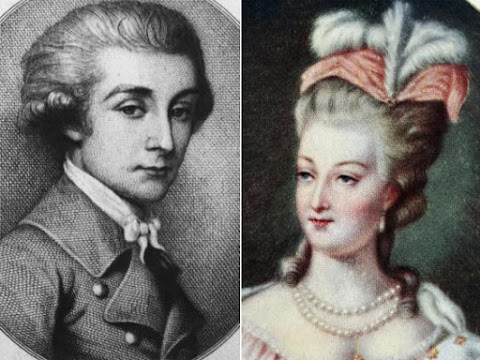
"Count Axel de Fersen met Marie-Antoinette for the first time at a masked ball at the Opera in 1774. He made a strong impression on the queen at the time and she exclaimed “He’s an old acquaintance” when she met him again at the French court four years later. After moving to Versailles, in 1779 he joined the circle of intimate friends of the queen and gained her backing. He thus obtained the post of colonel of a German infantry troop sent to fight with the rebels in the American War of Independence in 1780. After his return from America and thanks to the intercession of the queen and of Gustavus III, king of Sweden, he was appointed colonel of the Royal Swedish regiment in 1783. He divided his time between the court and his regiment."(Chateau de Verseilles)
Marie Antoinette, her children, Axel Fersen and Madame de Tourzel as seen in L’Enfant Roi (1922)  >source: my scan:
Marie Antoinette, her children, Axel Fersen
and Madame de Tourzel
as seen in L'Enfant Roi (1922)
@Pinterest
First meeting at a ball.
"For close upon four years Marie Antoinette had been Dauphiness, passing her time in the surface-stir and profound monotony of a future queen's existence, in, but not of the Court, where Madame du Barry reigned, and where Louis XV, then near his death, could barely drag himself about, when a trifling event, whose future consequences no one, not even the parties interested, foresaw, took place at a ball given by her on the 10th of January 1774. The ambassador from Sweden to the Court of France presented to the Dauphiness one of his countrymen, a young Swede, who was travelling to complete his education---Count John Axel Fersen. The daughter of Maria Theresa could not fail graciously to receive the young foreigner, whose presence promised t dispel a little of the dullness of the ceremonial entertainments prescribed by etiquette; especially as the personal merit of this foreigner, the bearer of an illustrious name, whose renown had reached France, justified his welcome." (A Friend of the Queen: 8)
Related image
@Tweed and the Gentlemen's Club
"One cannot know for certain, then, exactly, when Fersen became the Queen's lover, although it is suggested here that he did, either in the high summer of 1783 or, if his long absence (and the Queen's early pregnancy) was an inhibition, the following year...." (Marie Antoinette: The Journey: 110)

"Marie Antoinette and Swedish soldier Hans Axel von Fersen were both still teenagers when they met each other at a masquerade ball in Paris on January 30, 1771. . . At the ball, Marie Antoinette and Axel von Fersen took off their masks and talked to each other and that meeting began their friendship. She invited Axel von Fersen to Versailles and he quickly became one of her favorite guests. He traveled to Versailles as often as he could, but his military career soon transformed into a diplomatic post that took him to England for several years. . . Axel von Fersen remained in Paris throughout 1791 and in this year he and Queen Marie Antoinette grew closer, and some historians assert that this is when they became lovers. . . . "  (A Love Story for Valentine's Day -- Marie Antoinette and Count Axel von Fersen)


"The young nobleman was, from the first, a prime favourite at the French court, owing partly to the recollection of his father's devotion to France, but principally because of his own amiable and brilliant qualities. Queen Marie Antoinette, who had first met Fersen when they both were age(d) 17 (January 1774), was especially attracted by the grace and wit of 'le beau' Fersen, who had inherited his full share of the striking handsomeness which was hereditary in the family. It is possible that Fersen would have remained at Versailles, following the American war, but he was commanded by his own sovereign, that at Pisa, that he desired him to join his suite.  Fersen accompanied Gustav III of Sweden in his tour of Italy and France, and returned homw with him in 1784." (World Heritage Encyclopedia article @Project Gutenberg)


"Anna Soderhjelm, who credited Fersen with several mistresses he never had, states in her book that his affair with Eleonore began at the beginning of the Revolution in 1789 -- in other words, that he was unfaithful to Marie Antoinette quite systematically for more than two years. There is absolutely nothing in Fersen's papers to support this assertion; but then Sodehjelm also declares that he wrote only twice to the Queen during the summer of 1789, when as we have seen he was in touch with her constantly. In 1789 and 1790, despite their extremely difficult circumstances, Fersen and Marie Antoinette were happy together. He spent his time with her at Saint-Cloud whole Eleonore was in Paris or London, and he did not correspond with Eleonore at this time. Since he always wrote regularly to his platonic female France -- Mme de Matignon, Lady Elizabeth Foster and Mme de Korff -- he would certainly have written to her had their liaison already begun. The first letter to Eleonore Sullivan in his register in on 13 August 1791, several weeks after he had last seen her in Craufurd's salon in Brussels. It would seem that he had no intention of pursuing an affair with her, or he would most certainly have written to her regularly after they parted, as he did in later years." 
(I Love You Madly)

13) Constance-Wilhelmine von Ludolf, Comtesse de Saint-Priest 
(1752-1807)
Daughter of Wilhelm Moritz Heinrich von Ludolf, Ambassador of Naples in Constantinople, and Catherine Chabert.
Francois-Emmanuel de Guignard
Count of Saint-Priest
@Wikipedia

Wife of: Francois-Emmanuel de Guignard, Comte de Saint-Priest (1735-1821), mar 1774

"
Axel Fersen was involved with a number of women during the course of his life. Not all of them let go gracefully. The comtesse de Saint-Priest was one of them. Evidently, she was another of Fersen's mistresses, and not happy at being replaced by Eleonore Sullivan. She wrote to him, "I've been seeing much of Madame de Canillac recently. I don't know why but I'm sure she's been your mistress, too. I remember your telling me that she had a lover nobody suspected and that he was English - but I am certain that he was a lovable Swede... I dined with the Prince of Wales the other night, my dear Count. He told me that when he knew you you were as good-looking as Lord Randon. But all the women in the room said that you had greatly altered and had become very ugly. After that charming overture nobody spoke of you anymore... The Prince then told us that he had once seen Madame Sullivan do a dance with castenets with the Spanish Ambassador. He said that she looked so ridiculous he thought he'd split his sides laughing. He didn't exactly sing Madame Sullivan's praises. He thinks she looks like an apple vendor and he went on to tell us all sorts of unpleasant things about her.'" (Important to Madeleine)

14) Yekaterina Nikolaievna Mentchikova.

Axel von Fersen Gallery
Count Axel von Fersen
@ Nationalmuseum Stockhom
Count Axel von Fersen


Carl Wilhelm Seele (1765-1803)
Pomeranian merchant.

His lover was:

"In 1789, the young royal secretary Carl Wilhelm Seele was her lover: Seele was called l'Adonis de la Roture and known for changing clothes three or four times a day to 'coming, going and riding to demonstrate his beauty." (Wikipedia)
Charlotta Eckerman
Charlotta Eckerman (1759-1790)
Swedish singer & courtesan.

Her lovers were:
1) Baron van der Bork, Dutch ambassador to Sweden.

2) Gustaf Mauritz Armfelt.

3) Carl XIII of Sweden
Lover in 1779-1781

Personal & Family Background: Charlotta was the daughter of Bengt Edvard Eckerman, a cavalry captain of the Royal Scanian Hussars, and the writer Catharina Ahlgren. (Wikipedia)

Fredrik Sparre (1731-1803)

His lover was:

Finnish & Swedish courtier & diplomat.

"In connection with Gustav III's journey to the resort town of Spa in 1789, the young baron Gustaf Mauritz Armfelt (175701814) became the principal favourite in the immediate circle of the king.  Like Gustav's former closest confidant, the crown equerry Adolf Freri.

His lovers were:

"Four years Anna-Dorothea's senior, Gustav d'Armfelt was as big a man as Peter, but his poor proportions---his burly, broad-shouldered body was too big for his short legs---hardly comprised the heroic specifications for dreams. He was handsome, no doubt, when he was younger, but dissipation was already taking its toll of his rugged good looks. Yet Anna-Dorothea found the attentions of the famous philanderer flattering, and in no time, he was her favorite escort. D'Armfelt was excellent company, and his conversation, larded with what he knew and had seen firsthand and spiced with names of international repute, opened a welcome window onto Western Europe for Anna." (By Influence & Desire: 42)

2) Mademoiselle L'Eclair.
Magdalena Charlotta Rudenschold, 1823
3) Magdalena Rudenschold (1766-1823)

" . . . Armfelt's chief intermediary at Stockholm was his mistress, the frivolous but amiable Magdalena Rudenskild, through whom he hoped to persuade the young king to write a letter to Catherine II, inviting cooperation. The government discovered the plot by opening Armfelt's letters. . . (T)he other conspirators were arrested in Sweden at the end of 1792, and put upon their trial. Armfelt, Ehrensvard, and Magdalena Rudenskold were condemned to death. . . The death sentences were indeed remitted in the cases of Ehrensvard and Magdalena Rudenskold, but the unfortunate lade was pilloried in the great square of Stockholm, to the intense indignation of the public, who regarded her degrading punishment as a mean act of vengeance on the part of the rejected lover, it being notorious that the duke-regent had solicited the lady's favours in vain some years before. . . ." (Bain: 383)

" . . . D'Armfelt's mistress, Madeleine de Rudenschold, paid a pretty krona for remaining faithful to the absent d'Armfelt. Wild with jealousy, the scorned regent had her convicted on a false charge. She spent half a day in the public pillory on Stockholm's main square before being exiled to a small Baltic island." (By Influence & Desire: 42) 

Gustaf Mauritz Armfelt Gallery
Louise-Christine Rasmussen
Countess Danner

Her lovers were:
1) Carl Berling.

2) Frederik VII of Denmark 
Lover in 1830s to 1840s
Sophie von Fersen
Sophie von Fersen (1757-1816)

Swedish noble & lady-in-waiting.

Her lovers were:
1) Evert Wilhelm Taube af Odenka:

She married Adolf Ludwig Piper (in 1777).
Ulrik Frederik Gyldenlove

His lover was
Peder Griffenfeld.